Read More




In the late 1970s, Chinese leader Deng Xiaoping introduced a transformative economic ethos: “Let some people get rich first.” This strategy deliberately prioritized the rapid development of China’s eastern coastal provinces, working under the long-term vision that these wealthy hubs would eventually help lift the landlocked inland provinces out of poverty.
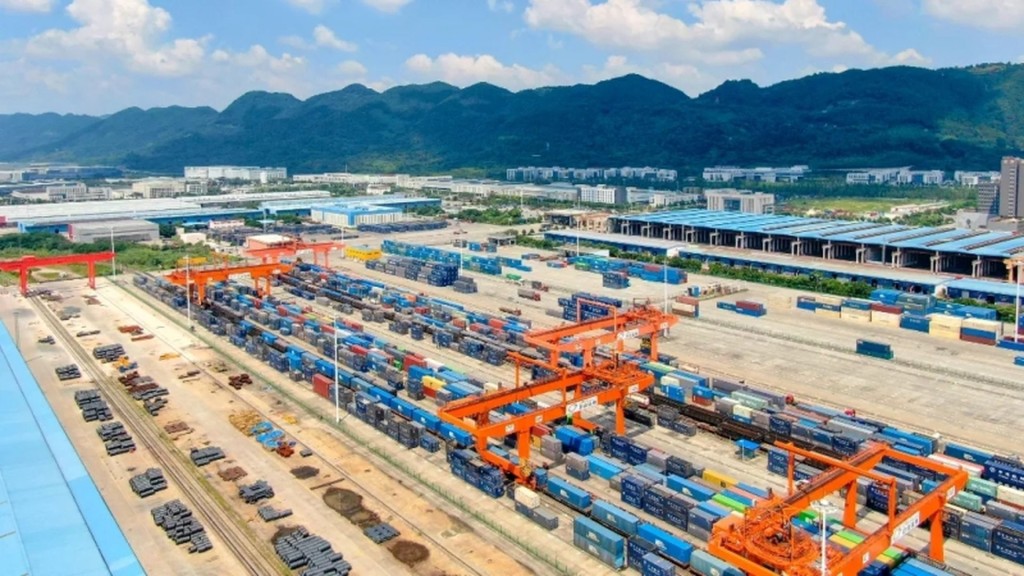
Decades later, that secondary phase is playing out on an unprecedented geopolitical scale. Beijing has structurally shifted its focus toward its western interior, integrating these rugged regions into global trade networks via the Belt and Road Initiative – most notably through the New Western Land-Sea Corridor.
This vast logistics network weaves together Chongqing, Guangxi, Guizhou, Gansu, Qinghai, Xinjiang, Yunnan, and Ningxia, linking China’s deep interior directly to international markets.
At the heart of this geographic rebalancing is the Pinglu Canal, a monumental 134-kilometer mega-project.
Historically, despite being a coastal province, the Guangxi Zhuang Autonomous Region lacked an internal river network that flowed directly into the ocean.
Inland barges were forced to detour hundreds of kilometers eastward through the Pearl River Delta to reach global markets, creating a severe economic bottleneck for the entire southwestern region. By cutting through this terrain, the Pinglu Canal will shorten the shipping route from inland Guangxi to the Beibu Gulf by over 560km.
Earlier this month, the canal successfully entered its crucial water-testing phase, keeping it firmly on track for its official opening in September.
This logistical shortcut poses an immediate structural challenge to Hong Kong. As southwest China’s feeder traffic is diverted directly toward expanding Beibu Gulf ports, Hong Kong’s traditional dominance as the primary southern gateway faces inevitable competitive pressure.
However, evaluating the Pinglu Canal purely as a local threat misses the broader geostrategic paradigm. As geopolitical and geoeconomic friction between China and Western powers intensifies, Beijing is aggressively pivoting its trade relationships toward the emerging economies of the Global South.
Crucially, the Association of Southeast Asian Nations has already solidified its status as China’s largest trading partner since 2020. The New Western Land-Sea Corridor is engineered precisely to lock in this economic synergy between southwestern China and Southeast Asia.
This shifting landscape is where Hong Kong’s true value proposition re-emerges. Rather than acting as a simple, high-volume cargo transit point, the city must leverage its highly sophisticated professional services ecosystem. By offering high-end financing, legal arbitration, maritime insurance, and complex supply chain management for the booming traffic flowing through the new corridor, Hong Kong can evolve alongside the nation’s changing trade architecture.
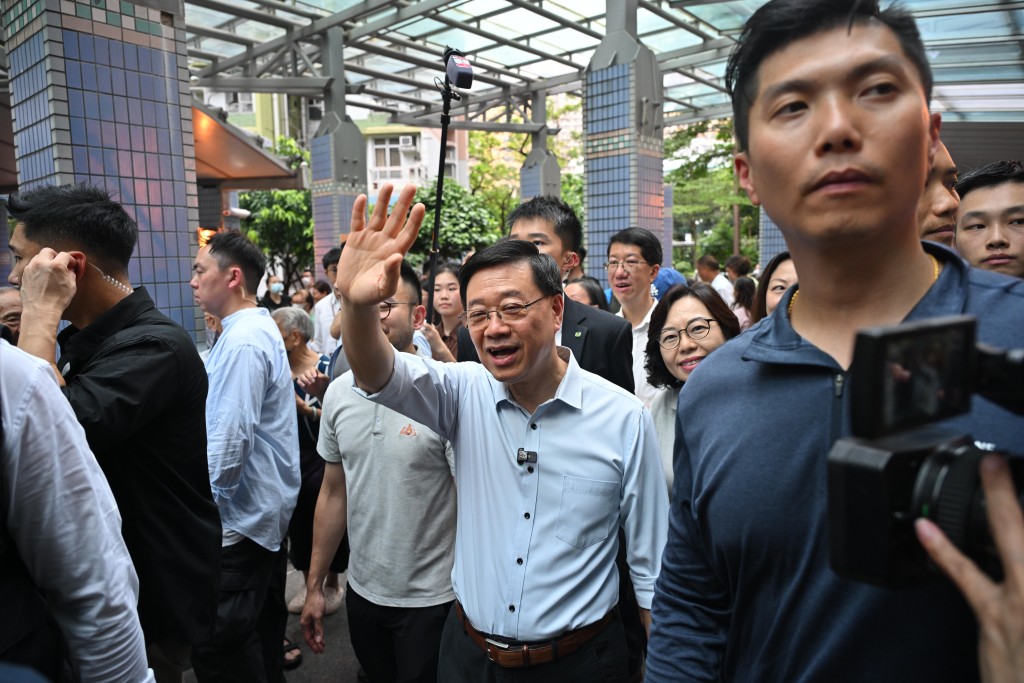
Recently, Chief Executive John Lee Ka-chiu led a high-level government delegation on a three-day official visit to Fujian, during which they finalized six cooperation documents covering 28 joint initiatives across key sectors, including financial services, logistics, civil aviation, health care, and Chinese medicine. This cooperation model between the SAR and the Chinese province can serve as a blueprint for Hong Kong in exploring deeper economic synergy with Guangxi.