
Read More



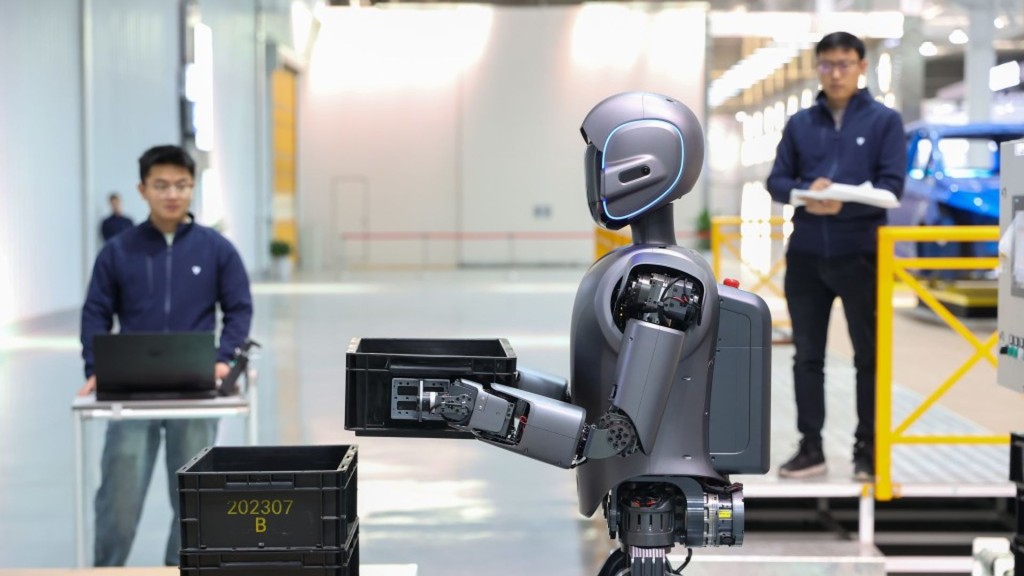







Although the prohibition is temporary - lasting until a "broad-based campus debate" is held to arrive at a formal policy on their use - HKU's reaction brings up legitimate concerns over generative artificial intelligence, or AI, of which OpenAI's ChatGPT is arguably the most popular since its launch took the internet by storm.
It is true that such technology can transform the world and make it far more efficient.
It is not necessarily correct for HKU vice president Ian Holliday to ban the use of the chatbot or similar tools by students due to plagiarism fears as prohibiting somebody from doing something is negative by nature.
But then, Holliday's concerns are shared elsewhere.For example, a student in the UK was reported to have used ChatGPT to finish one of his university essays with a pass of 2.2.
On one hand, the student may be credited for being smart enough to apply the latest technology at his disposal to accomplish a task since development of technology is supposed to make life easier, not more difficult.On the other hand, the incident has highlighted a serious question about a human quality called originality.
In that particular case, there apparently exists a conflict between the two important elements.Holliday is attempting to resolve the conflict with a ban. But a ban, despite being temporary, does not actually resolve the issue - it just postpones it to be resolved at a future date.
Holliday effectively admitted the dilemma in his message to teaching staff and students.Unexpectedly, one of the greatest scientists of our time, Stephen Hawking, also expressed concern about expansive use of AI.
This was despite the fact that Hawking had been relying on the help of AI for communication in his final years. Back in 2014, the theoretical physicist told the BBC that he found the "primitive" form of AI-based communication tool specially designed for him "very useful" and that he could communicate more quickly than before despite his motor neurone disease.However, Hawking was concerned that "full artificial intelligence" may threaten mankind's existence once it could "take off on its own and re-design itself."
Then, humans would be too slow to match.Before us are two eminent thoughts, one embracing AI with wide-open arms, the other finding it useful but with caution.
A line may have to be drawn. But an even more difficult question is: is mankind able to reach a consensus on this divided issue?This is not a new issue at all. The same question was raised in the 1987 American science-fiction movie RoboCop - only that OpenAI's breakthrough with its ChatGPT has heightened the sense of urgency.