Read More










ImmD crackdown targets moonlighting domestic helpers arresting 17
19-05-2026 17:52 HKT

One dead, four injured in Jordan flat fire, 200 residents evacuated
22-05-2026 00:48 HKT
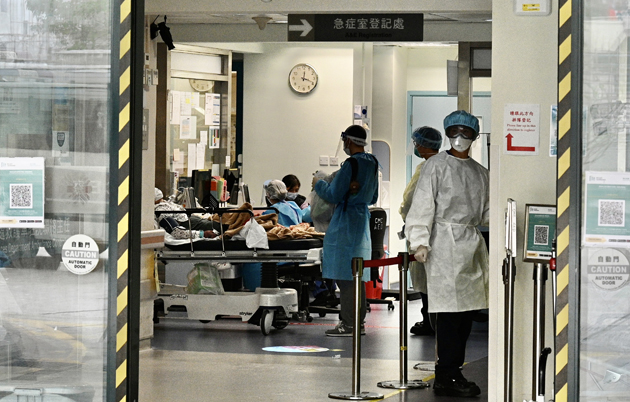
Official daily counts of new Covid cases have been rising alarmingly.
But what is the actual picture, as some residents frightened by the prospect of being isolated at Penny's Bay or newly built facilities may choose not to report their positive results?
University of Hong Kong researchers provided an estimate a day ago, suggesting that as many as 1.7 million people may have already been infected since the start of the fifth-wave outbreak.
That is simply stunning - but is their estimate credible?
It would have been more convincing if the HKU team had been able to explain how it arrived at the figures.
Stopping short of explaining their computation, maybe they think the calculation would be too complicated for laymen to understand.
Perhaps it need not be so sophisticated. There is another set of numbers - as reliable as the statistics of hospital admissions and fatalities - to which statisticians might consider referring: the number of workers taking days off due to Covid infection.
Even if there were errors, they would not underestimate or inflate the situation by too much.
Consider the MTR Corporation, which has about 10,000 operational staff. As of yesterday, the total number of those infected increased to about 1,500 - or about 15 percent of the operational force.
If the MTRC is also representative of others in terms of staff size, does it follow that - given a labor force of around 3.8 million people - about 570,000 workers could have already been infected during this Omicron wave?
An earlier study by Imperial College London suggested that Omicron is so transmissible that it has a reproduction number of three.
Assuming Omicron has been reproducing itself in Hong Kong at a similar rate, the number of people infected would also be around 1.7 million.
A problem with the HKU estimate is that it appeared to be purely academic, too lofty for the purpose.
My crude estimate is by means authoritative, though it is based on empirical evidence.
As lockdowns have become controversial in the SAR, experts are also divided in their opinions.
Numbers aside, there is also the issue of when to begin universal Covid testing.
For example, expert Ivan Hung Fan-ngai said the best time to conduct the testing was when outbreaks began or are about to end. This followed a proposal by HKU researchers that universal testing should be postponed to the middle or end of April.
Short of an official announcement, speculation has been rife and generating a lot of uncertainty. The latest reports point suggest universal testing may take place from March 26 to April 3 and last nine days - spanning April Fools Day.
Before a formal announcement is made, everything remains short of being official.
Perhaps the only thing Chief Executive Carrie Lam Cheng Yuet-ngor has been certain about is that the imminent lockdown will not be wholesale and the kind of "no-entry, no-exit" strategy seen elsewhere will not happen here.
The assurance may help to ease anxiety. An early announcement would be even better.