Read More











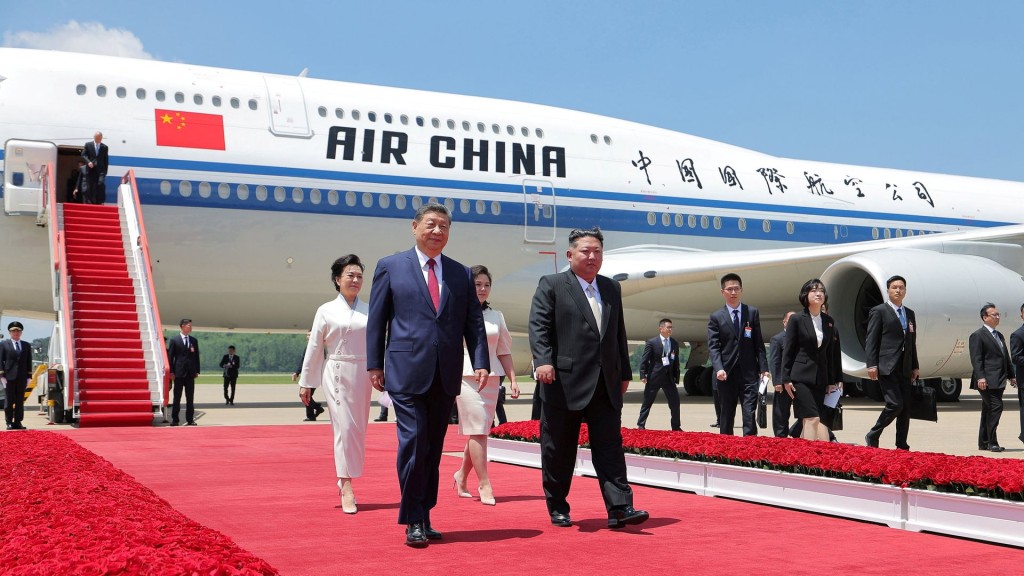
The world was a very different place the last time President Xi Jinping visited Pyongyang. It was 2019, when US President Donald Trump was engaging with North Korean leader Kim Jong Un over denuclearization talks, with Xi acting as a key broker between the two.
However, the Trump-Kim negotiations proved fruitless. The subsequent Joe Biden administration pursued a more aggressive policy against both North Korea and China. Washington brought Japan and South Korea together at the historic Camp David summit in 2023, discussed a NATO-like nuclear sharing arrangement, and began regularly sending nuclear-armed submarines to South Korea to deter the North’s nuclear threat.
Pyongyang responded to these trilateral threats by seeking security guarantees from the Kremlin, signing a mutual defense treaty with Russia during President Vladimir Putin’s visit to North Korea in 2024. In return, North Korean troops were sent to the front lines of the Ukraine war to fight alongside Russian soldiers.
China was alarmed by these moves. It had long advocated for the denuclearization of the Korean Peninsula and sought to avoid being drawn into the kind of Cold War bloc confrontation it had experienced and paid a heavy price for in the 1950s. Consequently, Beijing downgraded its relations with Pyongyang for a period. However, an increasingly complex and volatile geopolitical landscape has forced Beijing to reassess its Northeast Asian strategy.
Furthermore, South Korea has rolled out plans to construct nuclear-powered submarines following US approval. This move could create an unbroken wall of advanced, US-allied underwater surveillance right on China’s doorstep. This development has prompted Japan to look into building its own nuclear-powered submarines as well.
Under the new Takaichi administration, Tokyo has accelerated its remilitarization and officially reopened the debate on revising its long-standing Three Non-Nuclear Principles, namely: to not possess, not produce, and not allow nuclear weapons onto its territory.
The pursuit of greater undersea naval power by South Korea and Japan would pose a threat to China. Analysts worry about an escalating arms race – which may already be underway – and the potential risk of undermining regional non-proliferation commitments.
Recognizing that North Korea will not give up its nuclear capabilities, Xi has adopted a pragmatic policy by quietly dropping Beijing’s traditional doctrine on denuclearization. Instead, he showed his support by personally flying to Pyongyang to celebrate the 65th anniversary of their treaty of friendship – the only mutual defense treaty China maintains with any country. Trump may want Xi to help bring Kim back to the negotiating table, but the regional balance of power has changed dramatically from seven years ago.
With Pyongyang’s nuclear status rendered irreversible by Moscow’s backing, and with Seoul and Tokyo expanding their military capabilities with Washington’s encouragement, Beijing cannot afford to stand idly by. China must adopt a more assertive strategy: reinforcing its ties with the North, deterring Japan, and doing so without pushing South Korea completely into the arms of the United States. Only by doing so can it gain better leverage in an increasingly competitive strategic environment in Northeast Asia.