
Read More
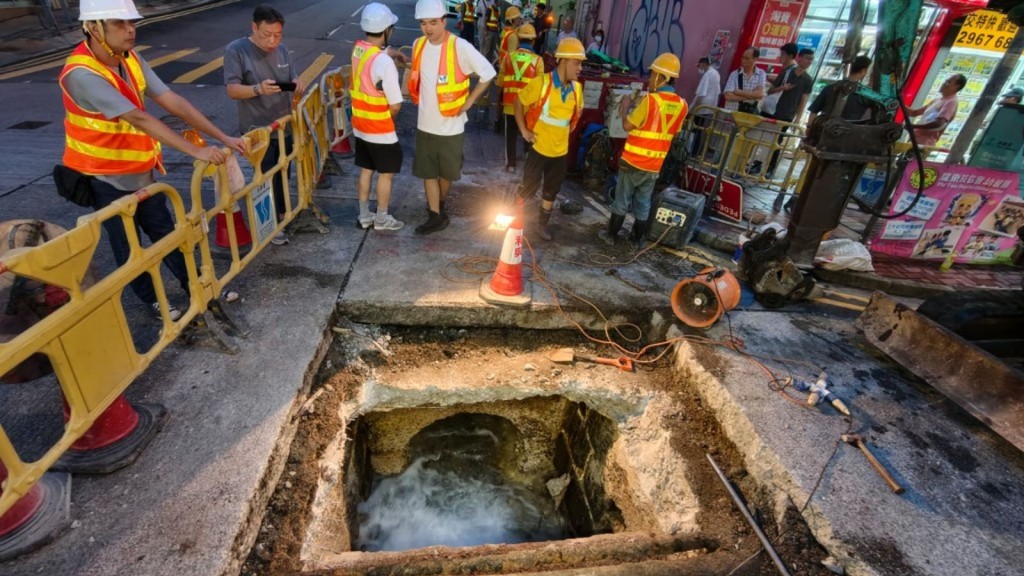
A recent major water main failure in Shau Kei Wan left over 10,000 households and local businesses without fresh water for more than 30 hours. The outage forced eateries to suspend operations and disrupted daily life across multiple residential estates. While the Water Supplies Department dispatched emergency water tankers, water bags and Care Teams to cushion the immediate impact, the prolonged disruption highlighted a stark reality: despite Hong Kong’s status as a global financial centre, the physical infrastructure buried beneath its pavement is showing dangerous signs of systemic fatigue.
ADVERTISEMENT
SCROLL TO CONTINUE WITH CONTENT
Brittle metal and hidden leaks
The official explanation for the outage points directly to the core problem: an aging cast-iron pipe. After decades of continuous service under heavy urban traffic, these legacy materials become brittle and prone to catastrophic, sudden failure without preliminary warning signs. What made the Shau Kei Wan incident particularly alarming was the complexity of leak detection; the escaping fresh water drained silently into storm sewers and discharged into the sea, delaying critical repairs.
This incident is far from an isolated mishap. While overall water main bursts in Hong Kong have declined significantly over the past two decades thanks to targeted rehabilitation programmes, localized outages in older districts – such as Wan Chai, Eastern District and Kowloon City – remain a recurring headache.
These disruptions expose primary structural vulnerabilities: decades of rapid high-density development have created an insanely crowded subterranean environment where water mains closely intersect with gas lines, high-voltage cables, MTR tunnels and drainage systems, making emergency excavations slow and complex. Despite advancements in monitoring, the city still relies heavily on reactive fixes after a burst occurs, rather than preemptively replacing fragile segments before they disrupt thousands of residents’ lives.
Predictive mapping and accelerated replacement
Temporary water wagons and official apologies are insufficient to maintain public trust in a high-density metropolis. To resolve these structural vulnerabilities once and for all, the Hong Kong SAR government must transition from emergency management to a modernized, predictive infrastructure strategy.
First, the WSD must aggressively accelerate the retirement of legacy cast-iron and asbestos-cement pipes in old urban quarters. While multi-year replacement schemes are underway, measures for critical high-density residential zones should be fast-tracked with higher budget priority.
Second, the government should adopt recommendations from utility specialists to construct a comprehensive, three-dimensional digital map of the city’s underground utilities. Utilizing real-time acoustic sensors, artificial intelligence-driven pressure monitoring, and smart digital twins – dynamic virtual models – within the Water Intelligent Network will allow engineers to detect micro-leaks long before a pipe fractures.
Finally, inter-departmental coordination during utility repairs must be streamlined to avoid logistical bottlenecks in busy traffic corridors. Hong Kong’s economic vitality relies entirely on the reliability of its public utilities. By investing heavily in predictive technology and replacing aging subterranean networks, the city can ensure its foundational infrastructure matches its world-class ambition.