
Read More
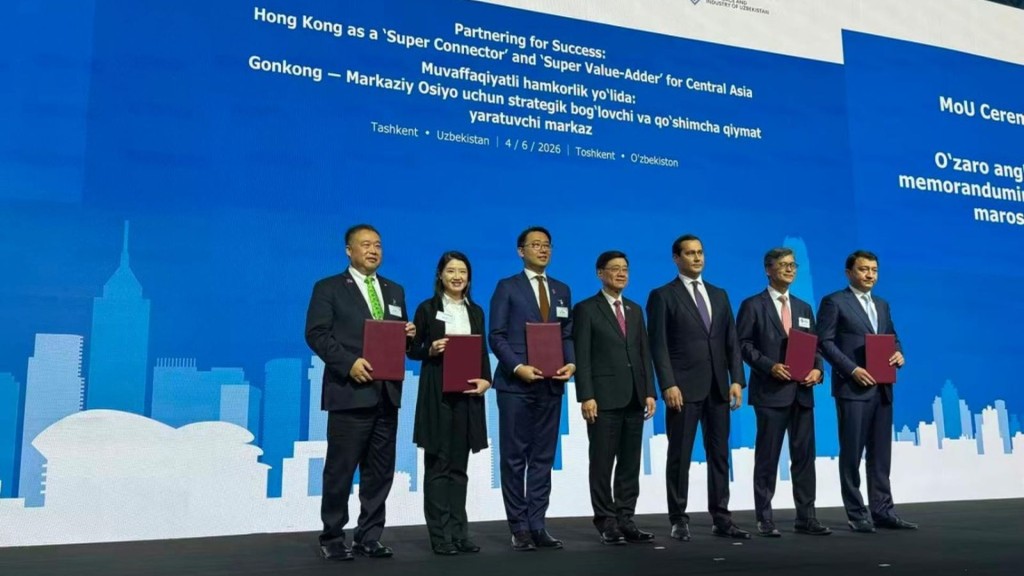
The recent conclusion of Chief Executive John Lee Ka-chiu’s delegation to Central Asia marks a resounding economic victory for Hong Kong – securing 96 cooperation agreements and memorandums of understanding worth over US$1.65 billion across vital sectors.
ADVERTISEMENT
SCROLL TO CONTINUE WITH CONTENT
However, beneath the impressive financial figures lies another significant triumph: the elevation of the local media industry to the forefront of global outreach to tell good Hong Kong stories.
The narrative surrounding the media industry has been dominated by challenges. The widespread usage of artificial intelligence, impact of social media platforms, and shifting reader habits have forced local media to reevaluate their survival strategies. Yet, the Central Asian tour has illuminated a clear, transformative path forward: media must step out of their comfort zones, transcend traditional models, and actively build bridges to the international stage to embrace new chances while bringing overseas opportunities back to Hong Kong.
The inclusion of prominent media figures – the chairman of the Newspaper Society of Hong Kong Tammy Tam Wai-yi and the chairman of Hong Kong News Executives’ Association Cheung Sau-wan – in the Central Asia delegation underscores the high regard the administration holds for the press. Hong Kong’s media, renowned for its high credibility and international outlook, is an indispensable partner in governance and global engagement.
Hong Kong media organizations have signed eight MoUs with various stakeholders in Kazakhstan and Uzbekistan. Notably, The Standard, operating under Sing Tao News Corporation, secured agreements with Freedom Horizons in Kazakhstan and the Tashkent City Municipality in Uzbekistan. The partnerships encompass joint research, executive interviews, digital promotion, and the active marketing of foreign investment, tourism, and the Belt and Road Initiative.
By taking on this proactive role, media organizations like Sing Tao News Corporation are doing much more than broadening their readership – they are actively solidifying foreign investors’ confidence in both Hong Kong and mainland China. When the media articulates the good stories of Hong Kong to the world, they pave the way for mutually beneficial economic cooperation.
The strategic choice of Central Asia makes media engagement even more critical. Amid sluggish economic growth and geopolitical friction in the West, the five Central Asian nations represent a beacon of opportunity. As developing nations with massive populations, strong financing needs, and stable political environments friendly to China, they are ideal partners for Hong Kong.
This is where the media’s role, in conjunction with the government’s aim in establishing Hong Kong as a “super connector” and “super value-adder,” becomes paramount.
For the SAR, the press can effectively decipher the strategic significance of these emerging markets for the general public and business community. For Central Asia, as well as the wider world, it can accurately broadcast Hong Kong’s robust business environment.
The synergy between the government and the press must only deepen. Future large-scale forums and international events hosted by the administration must continue to leverage the formidable power of local media. For the media industry, this is not just a civic duty; it is a golden opportunity to transform and upgrade. By embracing this vital role in connecting the world and telling good stories of Hong Kong, the media will also be the joint author of a prosperous and stable new chapter for the city.