
Read More
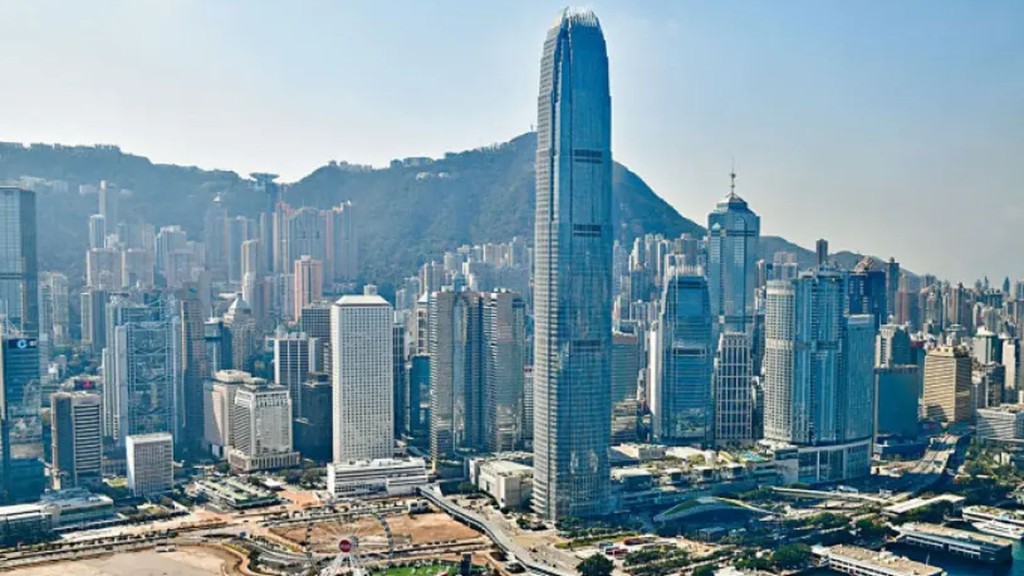
A major recalibration is underway across Asia’s financial landscape. Following years of post-pandemic capital and talent migration toward Singapore, the tide is rapidly turning back toward Hong Kong. One of the catalysts is a series of landmark tax reforms to Hong Kong’s Unified Fund Exemption regime and carried interest framework. By introducing a retrospective 0 percent effective tax rate on qualifying carried interest and performance fees – applicable at both the corporate level and for individual portfolio managers – Hong Kong has executed a decisive policy maneuver.
ADVERTISEMENT
SCROLL TO CONTINUE WITH CONTENT
Hong Kong has overtaken Switzerland to top the global cross-border wealth management ranking, with US$2.95 trillion (HK$23 trillion) in offshore assets. Through 2030, Hong Kong’s offshore wealth is forecast to grow at 9 percent annually, outpacing Switzerland’s 6 percent. The lead is set to widen to nearly US$600 billion by decade’s end.
According to a recent KPMG report, total assets under management in the territory surged 20 percent in 2025 to record highs, driven by a nearly threefold jump in net fund inflows. Industry surveys from the Alternative Investment Management Association confirm that hedge funds and alternative asset managers in Singapore are actively planning staff relocations and establishing regional offices in Hong Kong to capture these unparalleled tax advantages.
Why Singapore is feeling the heat
Hong Kong’s aggressive tax strategy has directly exposed vulnerabilities in rival jurisdictions. Historically, ambiguous tax rules around performance fees led some alternative asset managers – particularly those handling hedge funds, private credit, digital assets, and venture capital – to anchor their primary fund vehicles in Singapore. By eliminating these operational ambiguities and expanding qualifying assets to explicitly include commodities and digital tokens, Hong Kong has created an unrivaled, tax-certain environment.
This pivot has triggered visible concern in Singapore. The Monetary Authority of Singapore has held urgent consultations with financial institutions scrambling to mitigate an outflow of high-earning portfolio managers. While Singapore considers lowering corporate tax tiers for fund management companies, offering direct 0 percent personal tax relief on performance bonuses remains politically challenging in the city-state amid rising domestic living costs. Hong Kong’s willingness to offer direct, individual-level tax certainty on performance income gives it an immediate, structural advantage in the battle for top global investment talent.
Securing the global number-one crown
While tax concessions offer a powerful catalyst, tax arbitrage alone will not permanently secure Hong Kong’s position as the world’s premier wealth management hub. To sustain this momentum and outpace global rivals, the SAR government and financial sector must execute a broader, multi-tiered strategy, by continually expanding the Cross-boundary Wealth Management Connect scheme, seamlessly linking global fund managers with mainland China’s vast high-net-worth market while accelerating capital corridors with the Middle East and the Global South.
Beyond fund structures, Hong Kong must streamline residency, licensing, and concierge services for single family offices, ensuring that incoming capital translates into long-term investments in local capital markets, private equity, and philanthropy. By maintaining clear, institutional-grade regulatory frameworks for digital asset tokenization, virtual funds, and alternative credit, Hong Kong can solidify its role as the undisputed home for modern, next-generation asset allocation. By pairing aggressive fiscal competitiveness with deep structural liquidity and regulatory agility, Hong Kong can maintain its global wealth management crown with the help of financial talent.