






Read More











Singapore mulls tax cuts as top finance professionals return to Hong Kong
25-07-2026 21:22 HKT
HKO to issue T8 signal at 10.10pm as Typhoon Noul threatens
25-07-2026 19:42 HKT


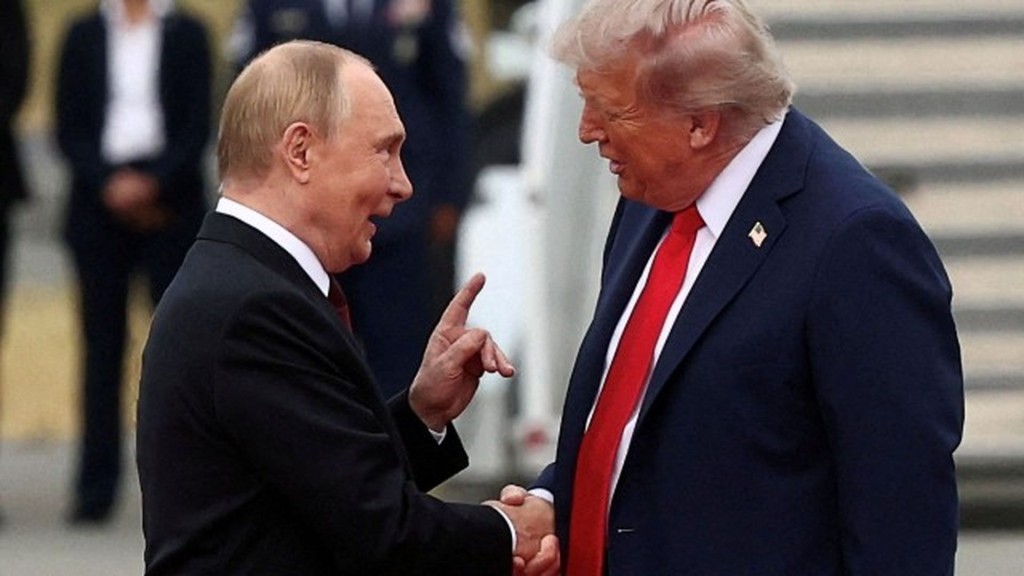
US President Donald Trump and Russian President Vladimir Putin find themselves increasingly trapped in war quagmires, in Iran and Ukraine respectively, having failed to find off-ramps to end conflicts they carelessly started.
US forces struck Iranian radar and drone control sites on Goruk and Qeshm Islands over the weekend. In response, Iran launched ballistic missiles and drone attacks against US military bases in the region, including facilities in Kuwait and Bahrain.
A preliminary 60-day ceasefire framework – that includes lifting the US naval blockade and reopening the Strait of Hormuz, as the global impact of disrupting the critical shipping lane intensifies – has been proposed.
However, Tehran demanded that any ceasefire deal unequivocally encompass all regional fronts – especially Lebanon – before suspending all indirect peace talks with the US on June 1 to protest Israel’s expanding military offensive deep into southern Lebanon.
Trump is reportedly frustrated with Israeli Prime Minister Benjamin Netanyahu and berated him during a heated phone call, calling him “crazy” and warning that Israeli military action in Lebanon is isolating the country globally and complicating a permanent deal with Iran.
With Israel’s ambitions left unconstrained and negotiations over the core Iranian nuclear issue deadlocked, Trump is unlikely to secure a swift deal to mitigate rising oil prices and inflation risks. This failure could potentially undercut his party’s fortunes in the upcoming mid-term elections.
On the other hand, Putin is intensifying airstrikes against Ukraine as Russia’s ground territorial advances remain largely stalled. The June 2 airstrikes on major Ukrainian cities – including Kyiv, Dnipro, Kharkiv, and Poltava – killed at least 22 people.
Russia’s deadly, large-scale airstrikes are seen as an attempt to force Kyiv to the negotiating table. Kremlin spokesperson Dmitry Peskov signaled that the country’s military actions “could end overnight” if Ukraine were to “leave the Russian regions” – referring to the four oblasts claimed by Moscow but still partly controlled by Ukrainian forces.
Severe economic stagnation has forced the Kremlin to seek a settlement to the costly four-year conflict. The country recorded a 0.2 per cent GDP contraction in the first quarter of 2026, with the Ministry of Finance disclosing that the budget deficit surpassed 4.5 trillion rubles in the first three months of the year, approaching nearly 6 trillion rubles by late spring.
Both Trump and Putin miscalculated their respective wars. Trump believed that decapitation strikes against the Iranian leadership would yield a quick victory – similar to the arrest of Venezuelan President Nicolas Maduro. Meanwhile, Putin assumed the West would stand idly by, just as it did when Russia annexed Crimea in 2014, and that the Zelensky leadership would collapse once Russian forces moved on Kyiv. Neither scenario materialized.
The mistakes made by Trump and Putin serve as a stark reminder of the advice from ancient Chinese military strategist Sun Bin, who said: “In the art of attacking a state, conquering the heart is the highest strategy, while besieging cities is the lowest strategy; victory through the mind is supreme, while victory through sheer military force is inferior.”