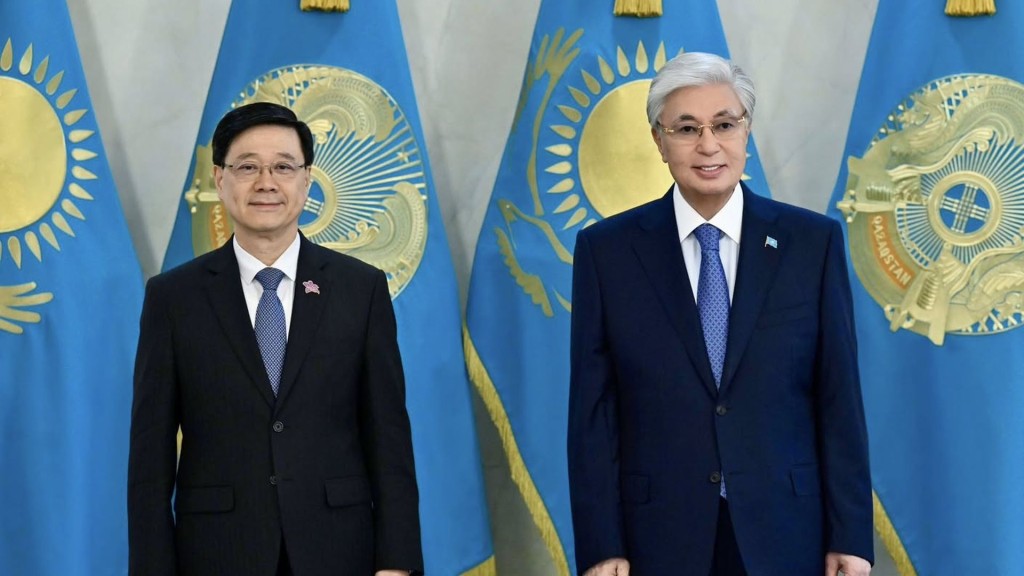
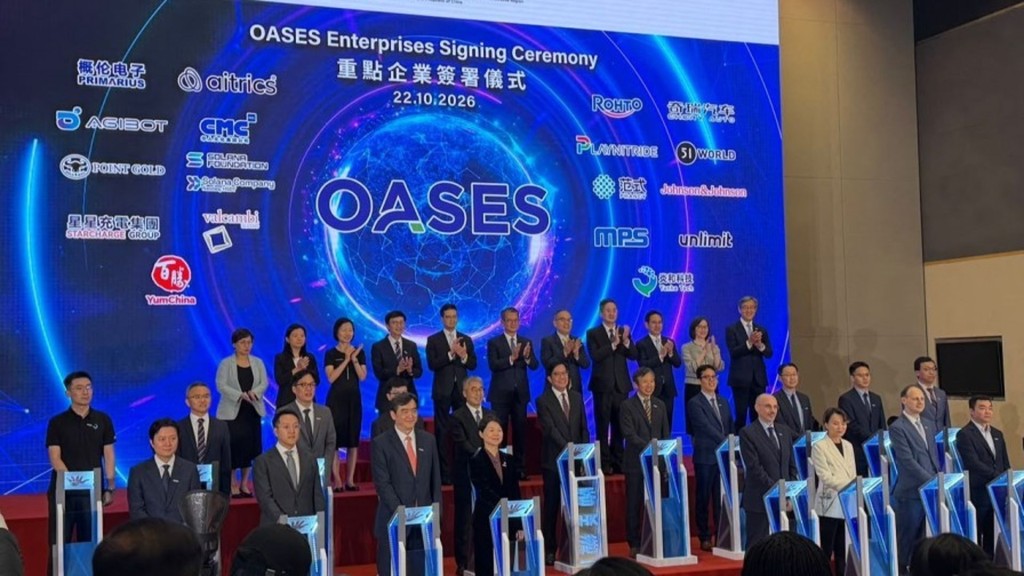
Chief Executive John Lee’s trip to Kazakhstan has been highly strategic and successful. The record-breaking joint government and business delegation of 70 members yielded 43 bilateral agreements and memoranda of understanding with the Central Asian country, all aimed at establishing a “hub-to-hub” partnership model.
The Hong Kong government announced official plans to establish a physical Economic and Trade Office in Kazakhstan, institutionalizing the city’s footprint in Central Asia. Meanwhile, Hong Kong Exchanges and Clearing signed dual memoranda with the Astana International Financial Centre Authority and the Astana International Exchange to actively link capital markets and encourage Kazakh enterprises to list in Hong Kong.
Scramble for minerals
As the scramble for critical minerals intensifies amid increasing geopolitical rivalries, Kazakhstan’s abundant mineral reserves – including gold, uranium, copper, and rare earths – have become strategically important. Hong Kong can leverage its push to become an international gold trading hub to manage the storage, trading, and settlement of Kazakh gold.
During the trip, the two sides reached agreements to push ahead with exploratory discussions on avoiding double taxation and promoting and protecting investments. These talks have laid a solid foundation for the actual regulatory alignment needed for dual-listings and cross-border mineral trading.
Moreover, Cathay Pacific committed to launching direct flights to Almaty in the first quarter of 2027 to significantly enhance commercial travel and logistics. Concurrently, both governments advanced discussions on extending visa-free stays and streamlining entry procedures to boost cross-border tourism and corporate mobility. These measures could allow Hong Kong to position itself as the primary leisure and business gateway for Kazakhstan’s rapidly growing, young and affluent middle class, which possesses a strong appetite for international travel and luxury retail.
In the tech and education sectors, the Lee delegation finalized memoranda on dual-degree programs, collaborative scientific research, and expanded student mobility with Nazarbayev University. It also forged operational links at the Astana Hub tech park, focusing on artificial intelligence computing power developments, green tech, and digital economy ventures.
Rectifying the China fear
These exchange programs align with both sides’ desire to become the premier innovation hubs in their respective regions. They could also deepen mutual understanding between the younger generations of these two distinct cultures, especially as skepticism toward China persists in some sectors of Central Asian societies amid accelerating geopolitical shifts.
Despite government efforts to crack down on persistent anti-Chinese sentiment, scattered protests have erupted in Kazakhstan. These stem from fears of land grabs by Chinese companies and local jobs being taken by Chinese workers. Allegations of human rights abuses in neighboring Xinjiang have also fueled public anger within Kazakh society and other countries across Central Asia.
To rectify this general lack of mutual understanding, The Standard signed a landmark partnership with the Kazakh organization Freedom Horizons. The agreement focuses on developing shared editorial content, exclusive interviews, and deep-dive research pieces centered on Eurasian economic corridors.
Besides promoting Kazakhstan’s emerging financial projects and Central Asia’s broader economic reforms to the Hong Kong and mainland Chinese business communities, Hong Kong media could also help tell the Hong Kong and China stories effectively to the general Central Asian public.