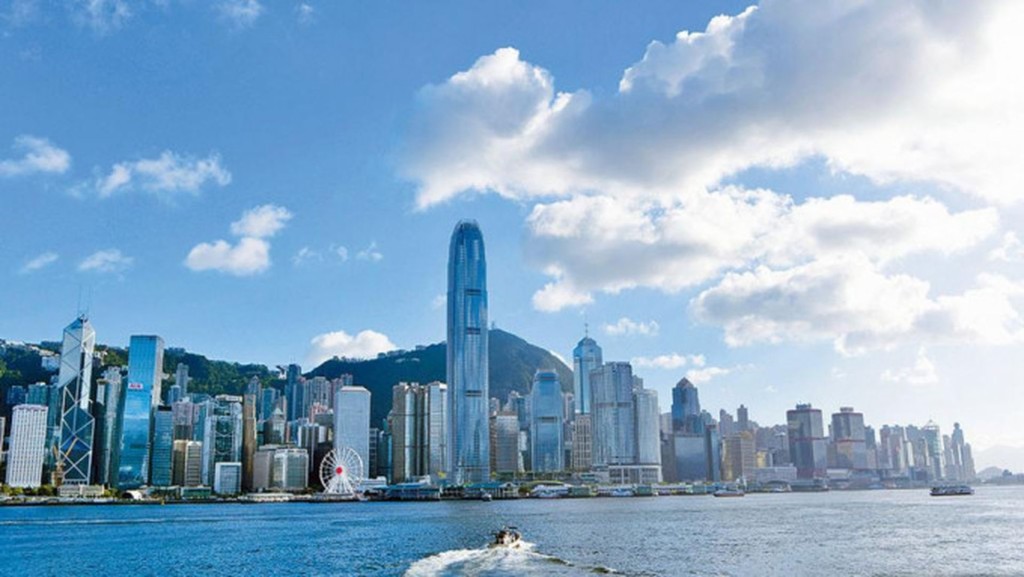
According to a report by an international consulting firm, Hong Kong has officially overtaken Switzerland for the first time as the world’s largest cross-border wealth management hub. Hong Kong held US$2.95 trillion (HK$23.13 trillion) in assets in 2025, narrowly eclipsing Switzerland’s US$2.94 trillion.
Capital flowing from the mainland is the primary driver for the city’s growth, accounting for over 60 percent of Hong Kong’s total cross-border assets under management. Furthermore, surges in the city’s equity markets and initial public offerings significantly expanded asset values.
Coupled with proactive government incentives, such as profit tax concessions for single-family offices, these factors expanded the city’s single-family office ecosystem by 25 percent in the past two years, reaching 3,384 hubs.
China’s economic resilience
The eastward shift of global finance signifies the relocation of the center of gravity for offshore wealth from Europe to Asia, as China’s domestic wealth creation as a global industrial powerhouse remains an unmatched force even amid the economic headwinds.
China recorded 5 percent GDP growth in the first quarter of this year, while Hong Kong’s economy grew by 5.9 percent. Meanwhile, all major Western economies have struggled, with the United States growing by 1.6 percent, the United Kingdom by 0.6 percent, Switzerland by 0.5 percent, Germany by 0.3 percent, and France contracting by 0.1 percent.
Since US President Donald Trump came into office for the second time, he has launched the “Liberation Day” tariff wars against most of the country’s major trading partners. This policy has triggered market volatility and uncertainty, thus weakening the global confidence in the US-led Western institutions. In contrast, China has presented itself as a global stabilizing force, contrasting itself with US unilateralism and trade protectionism, and therefore providing a safe haven for global investors. The US sanctions regime – for example, the restrictions placed against Russia over its invasion of Ukraine – has also prompted more non-Western elites to move their assets to jurisdictions perceived as less vulnerable to US or European asset freezes.
Hong Kong government’s role
Hong Kong’s unique position under one country, two systems has enabled it to become a global “super connector” and the premier financial springboard for investing into the mainland’s booming artificial intelligence and green industries. The Hong Kong government has transitioned from its historical, non-interventionist “laissez-faire” economic model to become an aggressive, proactive architect of its offshore wealth ecosystem.
It launched a policy dedicated to expanding the city’s single-family office network globally in 2023 and started a campaign to attract oil-wealth diversification from the Gulf countries. As a result, around one-third of Hong Kong’s new global family offices originated from outside Greater China, with the Middle East and Europe driving the bulk of this shift.
As Chief Executive John Lee leads a business delegation to Kazakhstan and Uzbekistan, he can promote Hong Kong’s advantages as the world’s largest cross-border wealth management hub to his Central Asian counterparts, so as to further diversify the city’s capital sources.