
Read More

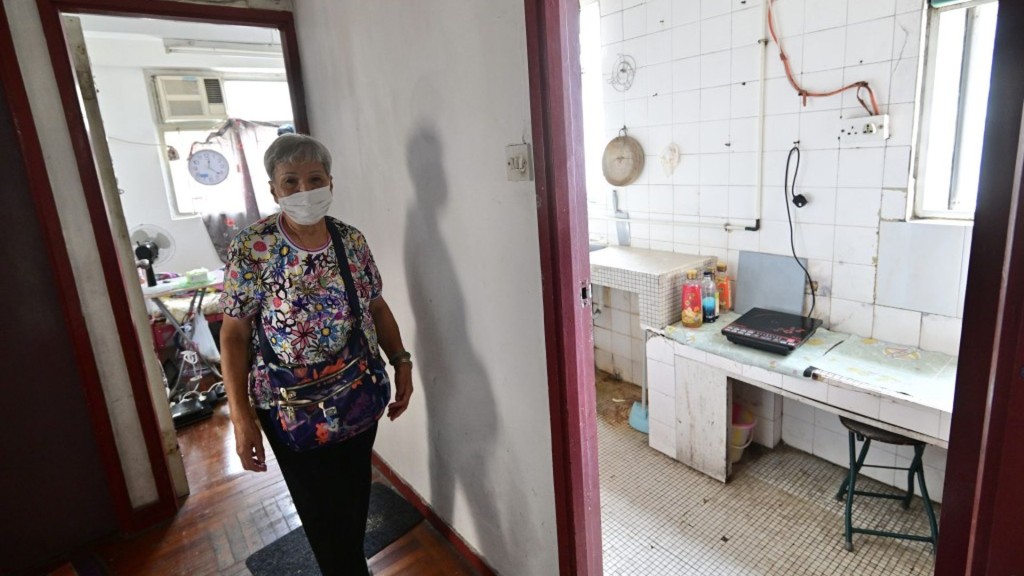



As Chief Executive John Lee Ka-chiu begins his Central Asia visit, Kazakhstan and Uzbekistan offer more than resources – they present a green finance opportunity Hong Kong cannot afford to miss.
Lee’s high-level delegation begins its official Central Asia visit today, with Astana as the first stop and Tashkent as the second. The opportunities are abundant: from dual listings to commodity trading, infrastructure development to manufacturing. Yet one issue demands particular attention – energy transition, particularly how to secure low-carbon energy that satisfies the triad of safety, stability, and security.
Eighty-five percent of global power generation still relies on fossil fuels, and the Iran conflict has exposed the urgency of developing domestic energy sources. This comes as the world races toward carbon neutrality by 2050 – and China by 2060. Power generation, the largest greenhouse gas source, remains the biggest contributor to climate change.
Both Kazakhstan and Uzbekistan possess abundant natural gas. While critics may note this is still a fossil fuel, the reality is that natural gas has been widely used globally to reduce emissions during the transition. The infrastructure is already in place: the West-East Gas Pipeline has long connected Xinjiang to eastern China, and China has been importing Central Asian gas for years.
Kazakhstan holds roughly 14 percent of the world’s uranium reserves and produces over 40 percent of global supply, making it the world’s leading uranium producer – offering a clear pathway to low-carbon nuclear energy. Equally strategic are its vast rare earth deposits, critical to energy transition: used in permanent magnets for wind turbines, batteries for electric vehicles, and solar panel components. As global demand surges, Kazakhstan is positioned as an indispensable supplier for the green economy.
Kazakhstan’s vast steppe boasts some of the world’s highest wind speeds, particularly in the north and center. Its southern territories, meanwhile, receive among the highest solar irradiation levels on earth, with 220 to 300 sunny days per year. Together, these resources offer potential for large-scale clean power generation – sufficient for domestic needs and potentially for export.
The energy imperative has grown more urgent with the rise of AI, which demands enormous power for computation and cooling. Kazakhstan is already rolling out large-scale data centre projects. Its strategic location between Asia and Europe – coupled with a naturally cold climate that slashes cooling costs – makes it an ideal hub serving a vast region.
But resources alone are insufficient. Green financing is needed for the infrastructure, and Hong Kong – as Asia’s leading green bond issuer – is uniquely positioned to deliver. The Hong Kong government recently priced approximately HK$27.6 billion in green infrastructure bonds, attracting over HK$239 billion in orders from global investors, making it oversubscribed by 8.6 times. Meanwhile, carbon credits generated across Central Asia could find a natural trading platform in Hong Kong Exchanges and Clearing’s Core Climate marketplace.
For Hong Kong, this is strategy. As Kazakhstan deepens financial ties with the city – including the first dual listing last year – the green finance corridor between Central Asia and Hong Kong is no longer theoretical. It is taking shape now.