Read More













The world watches the US-Israel strikes on Iran through the lens of geopolitics. But beneath the surface of military escalation lies a deeper tragedy: the systematic destruction of one of humanity’s oldest civilizations.
Iran is once part of the Persian Empire – a culture spanning 6,000 years, home to 29 Unesco World Heritage Sites, and ranking among the top 10 nations for heritage preservation. Today, that legacy lies in ruins.
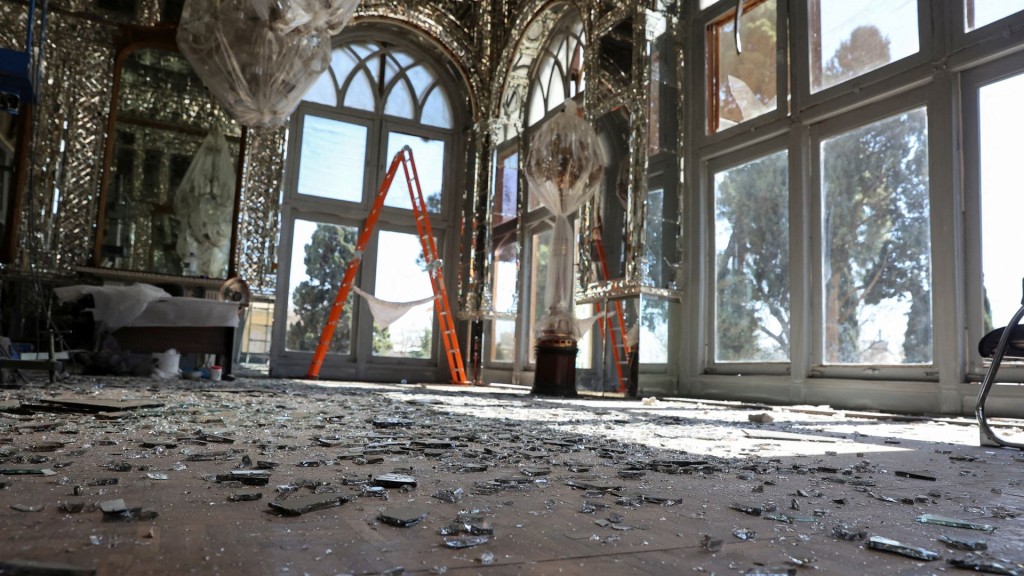
According to Iran’s Ministry of Cultural Heritage, at least 56 historical sites have been severely damaged. In Tehran, the Golestan Palace – a Unesco site and masterpiece of Qajar-era art – has sustained heavy damage. Its legendary Mirror Hall, where countless shards create an infinite universe of reflections, now reflects only devastation.
In Isfahan, the Chehel Sotoun – the “Forty-Column Palace” – lies wounded. This pavilion, where 20 columns are reflected in water to create the illusion of 40, embodies the Persian vision of paradise. Four of Iran’s 29 World Heritage sites are already confirmed damaged.
Persia never confined itself to modern borders. The Achaemenid Empire once stretched from the Balkans to the Indus Valley, establishing the first transcontinental communication network.
Consider the dome – that signature of Islamic architecture. Persians mastered it centuries before the Italian Renaissance. The Safavid dynasty shaped Islamic art from Spain to India, where the Taj Mahal bears Persia’s unmistakable imprint. Even the English word “paradise” comes from Old Persian pairidaeza, meaning walled garden – precisely what Persian architects created in villas like Chehel Sotoun.
Persian mirror work, ayeneh-kari, represents a philosophy: multiplicity reflecting unity, the infinite within the finite. Now those mirrors are shattered. Precious artifacts and manuscripts – illuminated Shahnameh copies, miniature paintings recognized by Unesco – face existential threat.
Unesco has reminded all parties that cultural property is protected under the 1954 Hague Convention and the 1972 World Heritage Convention. Geographic coordinates of all World Heritage sites were provided to parties in conflict to prevent precisely this destruction.
Yet, the bombs continue. Deliberate targeting – or callous disregard for – cultural heritage constitutes a war crime. When the Bamiyan Buddhas fell in 2001, the world mourned. Today, we watch a larger tragedy unfold.
Some damage can be repaired, never perfectly. As one observer noted, “Even if restored, they will never be the same.”
These sites are not only tourist attractions. They are the tangible proof of a glorious past sustaining Iranian identity through conquest and hardship. When a missile strikes Isfahan, it wounds collective memory. It tells people their history is expendable.
Cultural destruction is collective punishment – an attempt to break a community’s spirit by erasing its past.
International law protects heritage not because stones matter more than lives, but because destroying culture is psychological warfare.
The world looks away at its peril. Future generations will ask how we stood by while the heritage of one of humanity’s oldest civilizations was reduced to rubble.
The destruction of Persia is a human loss. The domes of Isfahan, the mirrors of Golestan, the gardens of Shiraz belong to all of us. They are chapters in the story of human creativity.
When those pages are torn, we are all impoverished. Cultural destruction is forever.