





Read More

Green corridor: HK’s next big bet with Central Asia
01-06-2026 05:43 HKT



Authorities make contact with parents of newborn without birth certificate
02-06-2026 13:28 HKT


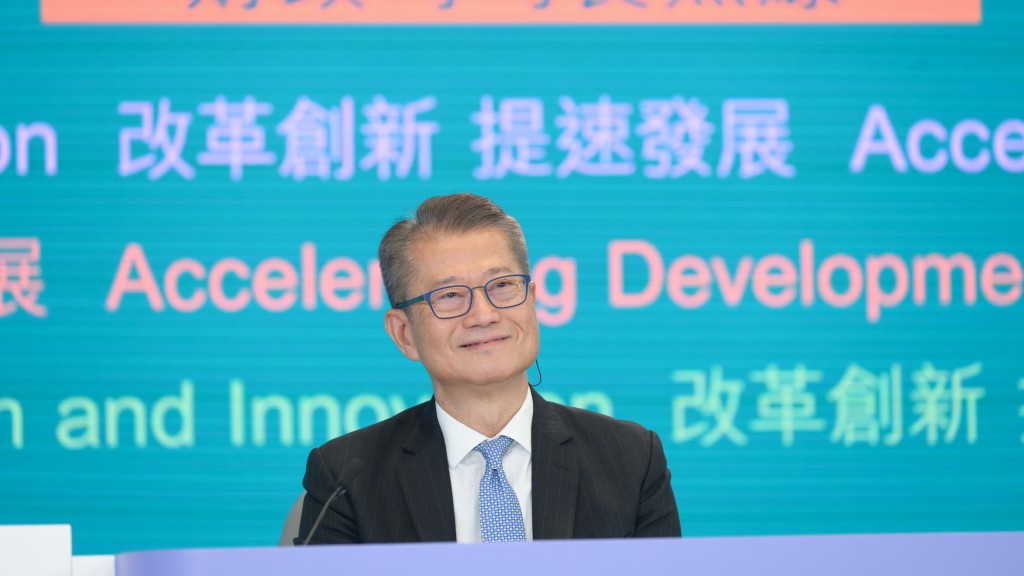
Financial Secretary Paul Chan Mo-po faces a uniquely challenging task as he finalizes the February 25 Budget. The difficulty stems not from scarcity, but from a surplus of success. Hong Kong’s economy has outperformed all expectations, delivering a series of record-breaking figures that have dramatically shifted the fiscal landscape from anticipated deficit to likely surplus. This creates a potent dilemma: managing soaring public expectations for rewards while safeguarding the city’s future against significant, gathering storms.
The backdrop to this boom is geopolitical. As uncertainty simmered in the West with US President Donald Trump’s various unexpected actions and the specter of renewed tariff wars, Hong Kong reaffirmed its pivotal role. Capital flowed east, seeking the stability of the international financial gateway to mainland China. The results were historic. The Exchange Fund’s investment income soared to an unprecedented HK$331 billion in 2025 – a 51 percent year-on-year leap – fueled by a bullish stock market and interest rate cuts.
Simultaneously, import-export values exceed HK$5.24 trillion. Even the property market ended a three-year slide, posting a 3.3 percent growth. This data paints a clear picture of robust recovery, setting a high bar for public anticipation.
This robust performance naturally breeds expectation. The public and business sector rightly wonder how the government will share this windfall. The political and social pressure for one-off sweeteners, tax concessions, or increased spending will be intense. Any suggestion of benefit cuts would be untenable. However, this is precisely where visionary governance must eclipse short-term populism. Distributing the surplus as immediate relief would be a profound misstep. The government’s mandate is not merely to celebrate a good year, but to fortify the city for inevitable future shocks. The reserves, while substantial at over HK$634 billion, are not just a savings account but a strategic buffer for an exceptionally open and vulnerable economy.
The fragility of Hong Kong’s moment is underscored by multiple clear and present dangers. The city’s financial stability is tethered to external anchors – the US dollar peg and holdings like US Treasuries and Japanese bonds. A sharp correction in these markets, a sudden dive in the surging gold and silver markets, or a new global financial spasm would instantly test Hong Kong’s resilience. Furthermore, the long-term fiscal demands are non-negotiable and enormous. The transformative Northern Metropolis project requires deep, sustained funding. An aging population necessitates forward-looking healthcare and social support systems. Most critically, Hong Kong’s competitiveness depends on urgent, heavy investment in technology and innovation – the only real solution to its economic diversification challenges.
Therefore, Chan’s budget must be framed as an investment blueprint, not a giveaway catalog. Targeted, temporary relief for those still struggling is necessary and just. But the central message must be one of strategic fortification. The fiscal surplus is an opportunity to future-proof the city. It is capital to de-risk the economy from global volatility, fund the next engine of growth, and secure social stability for decades. In a world of heightened uncertainty, the sweetest policy is not a cheque today, but demonstrable preparedness for tomorrow. Hong Kong’s budget must resist the allure of the immediate and build decisively for the future.