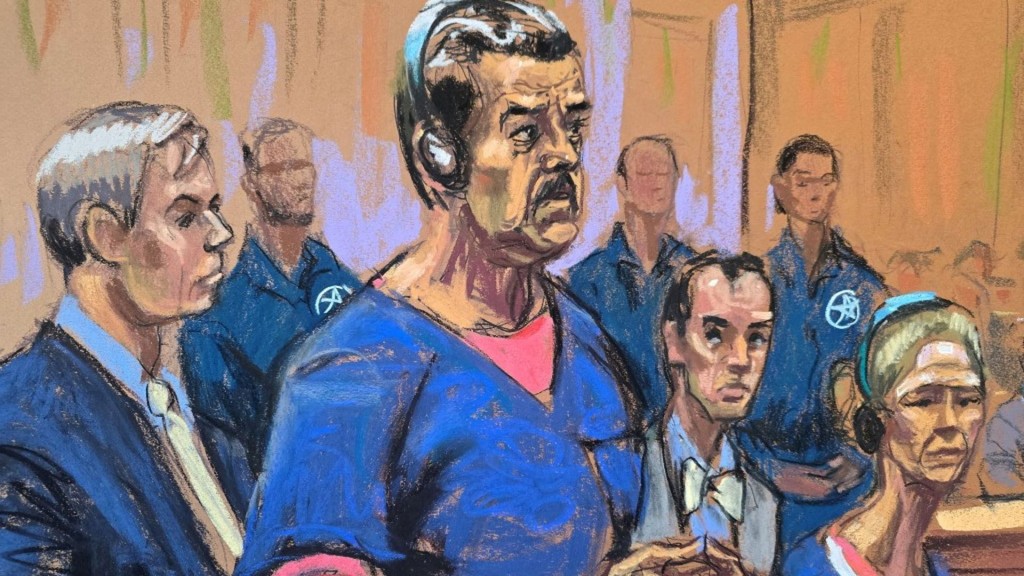
The stage is set in a New York federal courtroom for what the US Department of Justice bills as a landmark victory for the rule of law: the trial of Venezuelan President Nicolas Maduro on charges of narcoterrorism, conspiracy, and weapons violations. The indictment is a sweeping document, alleging a two-decade criminal enterprise that turned the Venezuelan state into a cartel. If convicted, Maduro faces a lifetime in an American prison. Yet, behind the legal theatrics lies a far more consequential drama – one that puts the United States’ own application of law and power on trial, revealing a system where justice is inextricably bound to political will.
The legal facade and the immunity gambit
At the heart of the proceeding is a foundational question of international law: Can one sovereign nation prosecute the sitting leader of another? The principle of head-of-state immunity exists precisely to prevent such politically charged judicial overreach. Maduro’s defense rests on this ground. However, the US has engineered a clever, if cynical, workaround. By leading a coalition of nations to derecognize Maduro’s 2018 and 2024 election victories – recognizing instead opposition figure Edmundo Gonzalez – Washington has politically nullified his official status. It means the shield of immunity is not pierced by a court of law, but revoked by a cabal of powerful states.
The ghost of Noriega and the pattern of power
This is not a novel script. The precedent chills: the 1989 US invasion of Panama to capture strongman Manuel Noriega on drug charges. Then, as now, a former ally, who worked with the Central Intelligence Agency, was recast as a criminal kingpin, his sovereignty obliterated by military might so he could face American justice. The law becomes a weapon of policy, its application a function of power rather than consistent principle. What is deemed a “terrorist” act is defined not by an impartial statute but by who holds the gavel and the gun.
The unasked question: Who judges the judge?
Herein lies the profound hypocrisy that undermines America’s moral standing. The trial is framed as a defense of the rules-based international order. Yet, the act of seizing a foreign leader from his country is itself a profound violation of that order’s core tenet: sovereign equality. President Donald Trump, who labeled Maduro illegitimate, himself openly contemplated “military options” for Venezuela. This is the essence of the critique – it projects the very lawlessness it seeks to punish. By operating as prosecutor, judge, and jailer on a global scale, the US engages in a form of judicial imperialism. It asks the world to condemn Maduro for corrupting Venezuela’s institutions while refusing to acknowledge how its own actions corrupt the institutions of international law.
The verdict in New York will be a historical footnote. The true judgment is already being rendered in the court of global opinion. This trial, for all its detailed evidence, demonstrates that for the powerful, the law remains a malleable tool. It assures allies that American protection is formidable, but it warns adversaries and smaller nations that their sovereignty is conditional. In prosecuting Maduro as a criminal, the US may unintentionally stand accused of a greater crime: substituting the rule of law with the law of the ruler.