Read More
Probably for the first time, Beijing has acknowledged that deep-rooted conflicts in Hong Kong are political rather than socio-economic.
ADVERTISEMENT
SCROLL TO CONTINUE WITH CONTENT
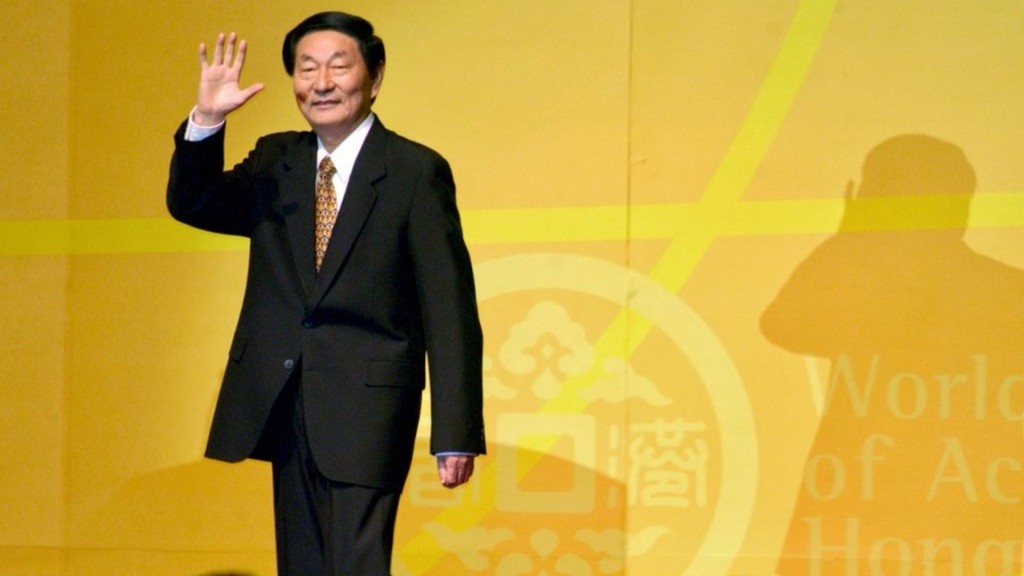
The admission by Hong Kong and Macao Affairs Office deputy director Zhang Xiaoming during a webinar marking the 30th anniversary of the Basic Law promulgation should be welcomed.
It shows that, at least this time, Beijing policymakers did not do things in a hush-hush manner.
Although the SAR is riddled with ills - most notably unaffordable housing and massive wealth disparity - politics and its subsequent strife have taken center stage in recent years.
During the webinar, it was right for Zhang to point this out and say that people were divided and opposed to each other over this issue. But how will this question be answered? Zhang didn't say.
Perhaps it would be too much to expect an official at his level to offer an answer right now. Nonetheless, his readiness to admit the existence of a political problem should be pondered over.
Although the government internet seminar was about the Basic Law, Zhang spent 45 minutes on his speech to the national security law that will soon be finalized by the National People's Congress standing committee for promulgation in Hong Kong.
No longer relying on third-party messengers after meeting them behind closed doors, the deputy director gave a first-hand account of Beijing's thinking.
The narrative was aimed at a population in the middle of the political spectrum, who fear they may lose the protection of one country, two systems - and their freedom.
That's because those already close to Beijing are all too familiar with Zhang's reasoning and their support is unswerving.
As for others on the opposition, they've already formed their views and will not change them.
That leaves only those in the middle ground to appeal to.
Zhang's speech was mild in tone, and did not repeat the wolf-howls of late.
He stressed that the security law for Hong Kong was like an act of self-defense that Beijing was forced into.
He repeatedly referred to remarks by the late paramount leader Deng Xiaoping to justify the need for central government intervention.
He stressed that, while Beijing's self-restraint should not be taken as a show of weakness, the central government had no choice but to intervene because the situation in Hong Kong was urgent.
If it was politically incorrect to say that Hong Kong was handed back - but had not actually returned - to the motherland, Zhang now referenced a "second handover."
Beijing's current thinking is that, with the security law, the curtain to a second handover will be raised and, this time, will be thorough and comprehensive.
And - perhaps anticipating shocks - Beijing will do everything to protect Hong Kong's significance as an international financial center and its business environment.
The speech was straight from the horse's mouth and sought to direct the course of public discussion.
The Civic Party may have condemned the security law as the death knell for one country, two systems with its lawmaker, Dennis Kwok Wing-hang, yesterday contending that cases would have to be tried before a jury in the High Court.
But the opposition has accepted the reality that they will have to live with the security law.
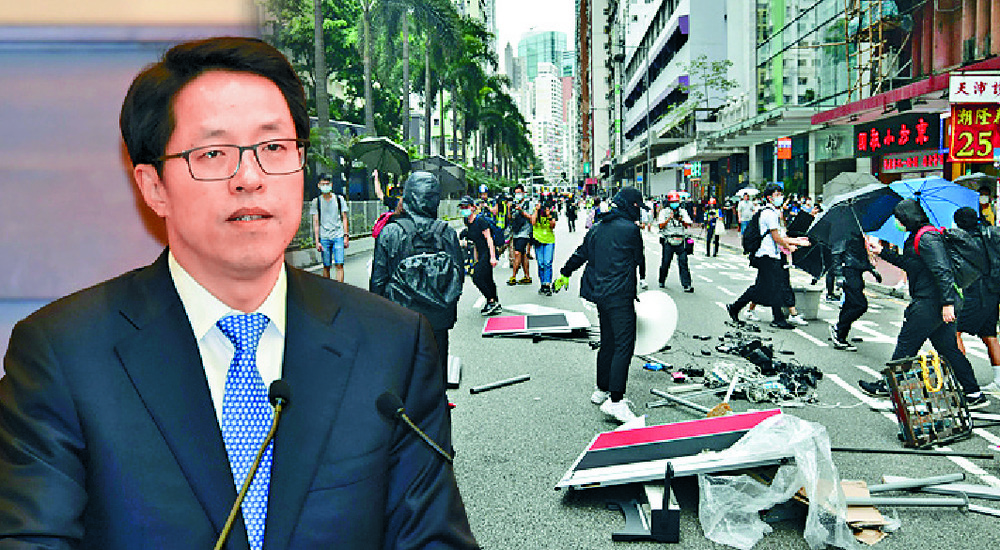
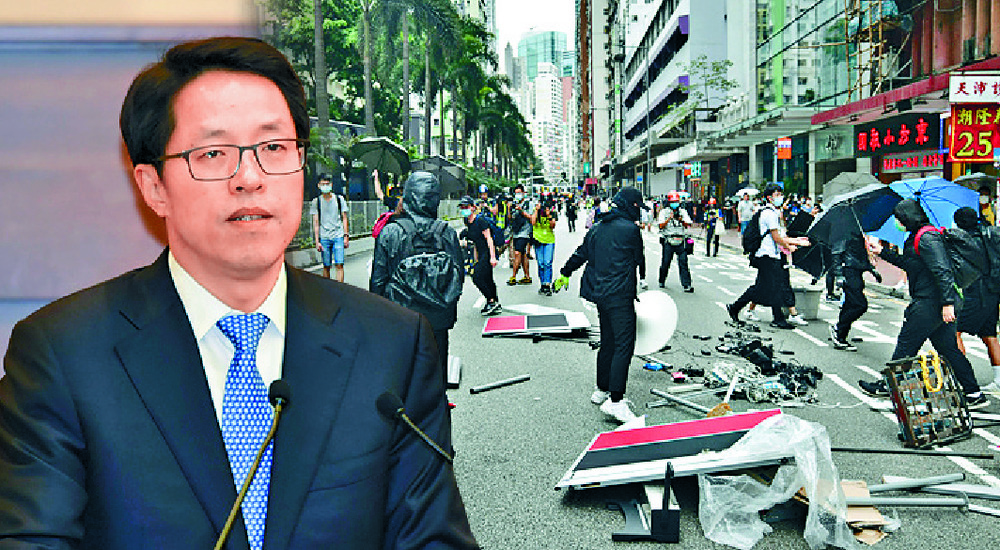
Zhang Xiaoming