Read More
Yesterday's zero recordings marked the fourth time in about a week that no new coronavirus cases were reported in Hong Kong, which should be encouraging enough for the government to reveal a plan to phase out restrictions on social and economic activities. The economic casualties are quickly emerging with hundreds, if not thousands, of people losing their jobs since the start of the pandemic. 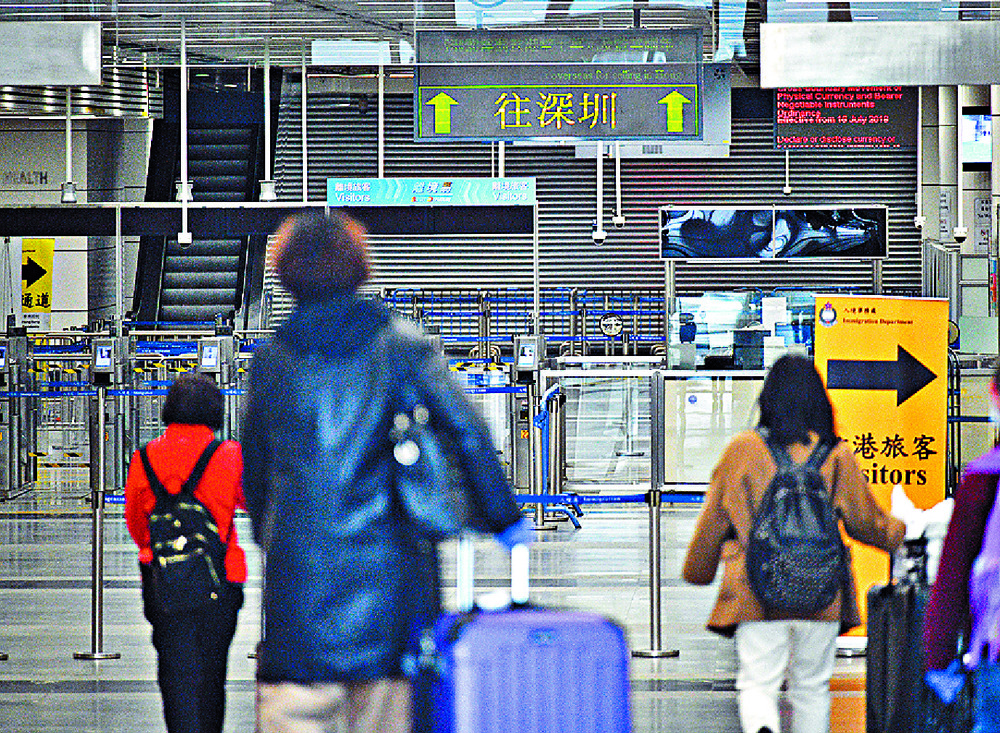
If Chief Executive Carrie Lam Cheng Yuet-ngor and her newly reshuffled cabinet do not have one yet, it is imperative that they should start drawing up an exit plan now.
ADVERTISEMENT
SCROLL TO CONTINUE WITH CONTENT
Many others fortunate to have retained their jobs so far will be in danger of becoming unemployed if restrictions aren't lifted accordingly.
This government might well be more generous than any of its predecessors in rolling out relief measures. However, it is clear that the scale of the relief - though unprecedented in local history - is nowhere near enough to help small and medium enterprises keep their heads above water.
The steady improvement in the local pandemic situation has expanded the room for the administration to maneuver in a timely manner to save the economy and, with it, the ricebowls of thousands of employees.
The administration could start easing restrictions within the SAR while undertaking to review later the strict quarantine requirements at the border.For example, restrictions on restaurants could be lifted in stages and closure orders applied to commercial places, including gyms and salons, could be eased.
Schools could start to reopen, beginning with senior classes, while the limit restricting public gatherings to no more than four people could also be removed.If the situation keeps improving after some restrictions are relaxed, they could be extended to other areas with a view to letting life return to normal as far as possible.
That said, it does not mean the war on the coronavirus is over - that is only possible after a vaccine is found. Until that time, the coronavirus will continue to be an unpleasant cycle that alternates between imposing and lifting restrictions according to the prevailing situation.Officials and the public alike will still have to be on guard to prepare for a resurgence of the virus.
Though many European countries have suffered more deaths, some are already drawing roadmaps to normalize public life as far as they can.While they have yet to finalize such roadmaps, it is their consensus that the public will be kept fully informed.
Understandably, doctors are usually more conservative than politicians. So when even the Chinese University's infectious disease professor David Hui Shu-cheong softened his tone on restrictions, politicians should be ahead of him to produce a roadmap on how they are going to scale back restrictions.Society is expecting this, as clearly reflected in the stock market yesterday.
For example, retail stock Sa Sa International Holdings rallied more than 10 percent in early afternoon trading before closing 7.8 percent up from Friday.Overall, the Hang Seng Index rose nearly 2 percent.
It's prudent to say the worst is over for the current wave and it makes good sense to end restrictions in an orderly manner.