Read More
Hongkongers trapped in Wuhan and the rest of Hubei province are hopeful they will soon leave the mainland city that has been locked down since January 23.
ADVERTISEMENT
SCROLL TO CONTINUE WITH CONTENT
The SAR government's agreement to fly them home on special flights is welcome but long overdue.
The dramatic twist came just hours after the stranded Hongkongers' hopes were raised and suddenly dashed again in the morning.
In an earlier development, Wuhan gave the green light to let "non-locals" leave the city if they showed no signs of illness and had never been in contact with novel coronavirus patients. But within hours the light was swiftly switched back to red.
Could there be more behind that confusing move than meets the eye?
In a statement, the Wuhan government blamed a local traffic management group for making an announcement that would have allowed some people to leave Wuhan. About 2,700 Hongkongers are believed to be stuck in the city and other parts of Hubei province.
The city government statement said local leadership had not agreed to the move and that the decision to allow some to leave was invalid.
It may be convenient to blame a junior for a major policy fluctuation, but this case - involving the local traffic group - is simply inconsistent with mainland political culture.
Just as some Hongkongers found themselves trapped by the Wuhan disease, it's probable that policymakers in Beijing and Hubei also found themselves caught in a dilemma.
Although they had to contain the spread of the novel coronavirus in the country, at the same time they came under immense pressure to restart economic activities to preempt economic disaster.
Unfortunately, the two policy objectives contradict each other.
What happened during those few hours in Wuhan - with hopes kindled in the morning only to be dashed a short while later - could well have been a swing between the two schools of thought at a policy level higher than that of a local traffic management group.
The episode could have served as an important pointer for the rest of the country. Since Wuhan is the epicenter of the epidemic, it would have pointed to a substantial improvement in the local situation if the permission to allow non-locals to leave their confinement first had been maintained.
Such a "positive" development would have also supported official figures showing a steady decrease in new infection cases in the mainland over the past week.
Could the desperate need to resume economic production have led to the initial announcement of a green light yesterday morning? Your guess is as good as mine.
However, policymakers were also troubled by the real prospect of a resurgence in new infections if the ban on movement were to be lifted, albeit partially, for non-locals.
The other school of thought subsequently took over to dominate decision making.
Although Wuhan is only a provincial capital city, the decision swing was a mirror of the dilemma facing policymakers at a higher - or perhaps the highest - level.
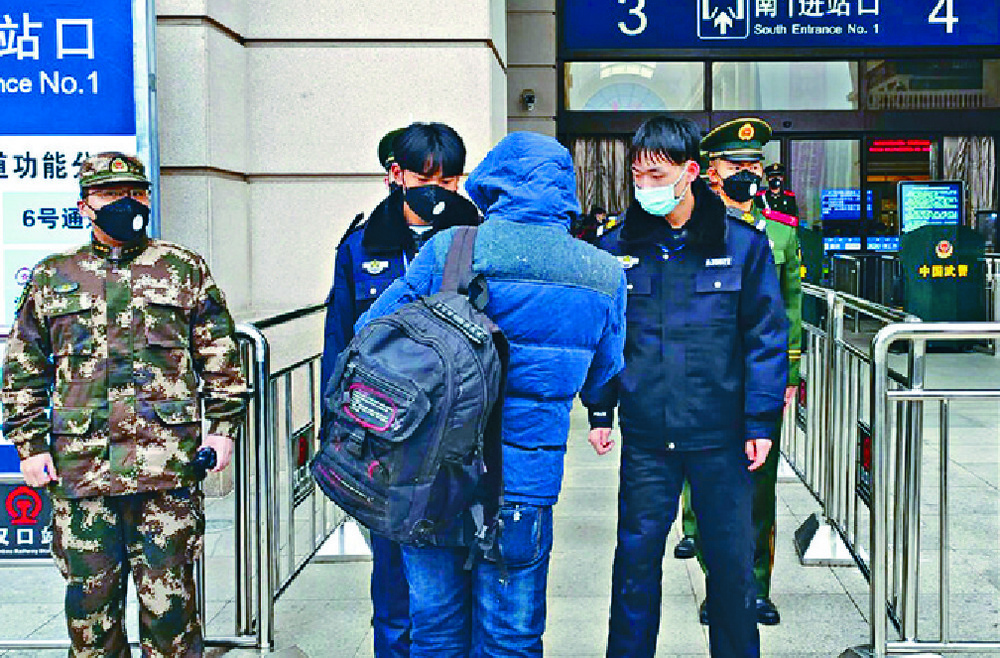
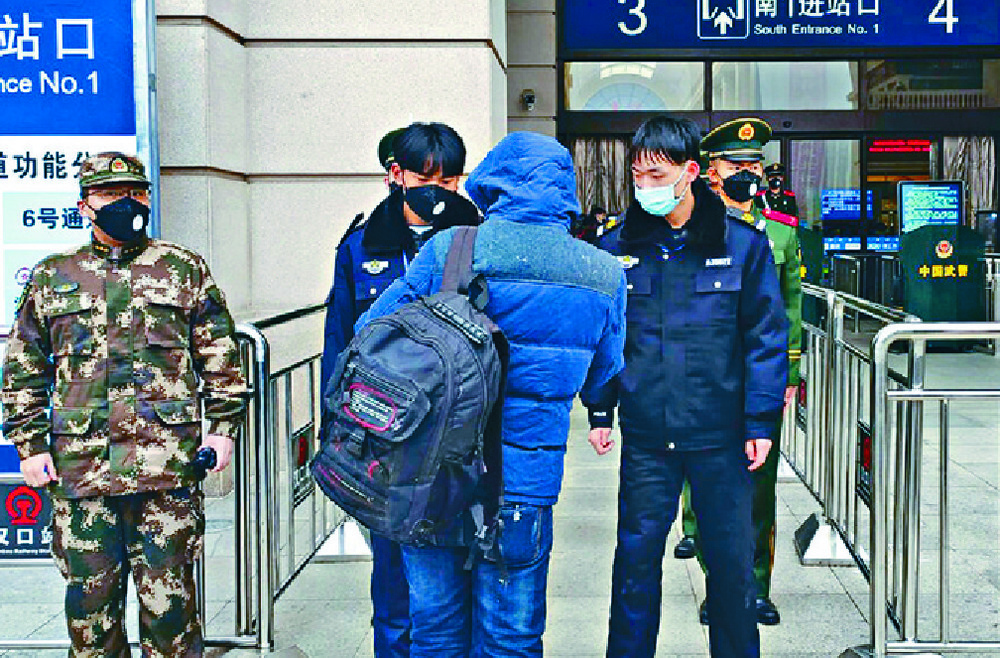
Passengers are checked at Wuhan rail terminal.