Read More


Night Recap - April 2, 2026
4 hours ago



HK braces for natural gas shortage
17 hours ago
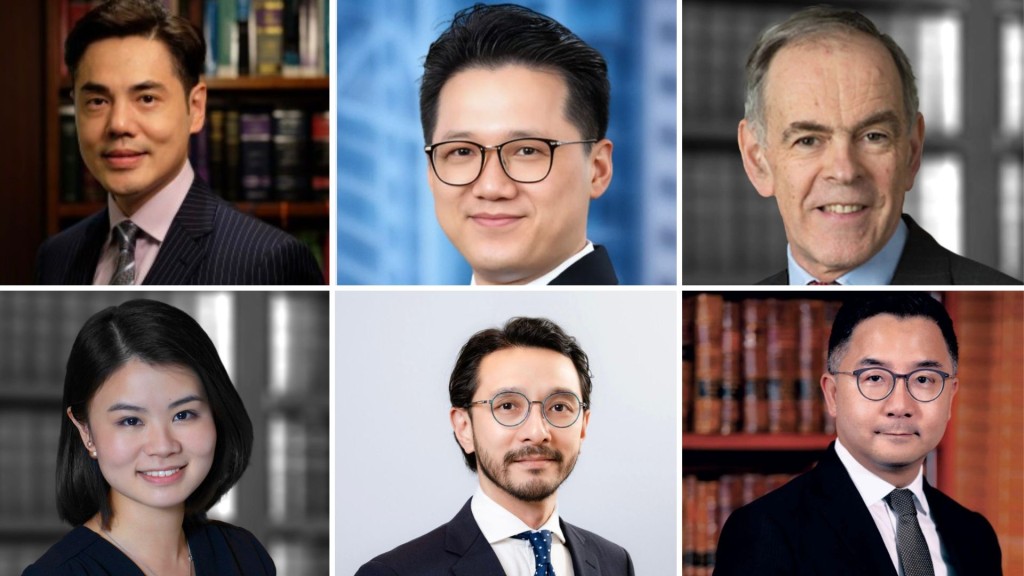
Six senior counsel appointed
31-03-2026 13:54 HKT


In recent years, Hong Kong has elevated its position as a global knowledge hub for innovation. The city offers a wide range of public funded opportunities for aspiring researchers to advance the frontiers of knowledge. The University Grants Committee (UGC) and its Research Grants Council (RGC) are committed to supporting Hong Kong’s research and development with funding and fellowship programmes.
Unearthing motherhood: bioarchaeology’s hidden stories
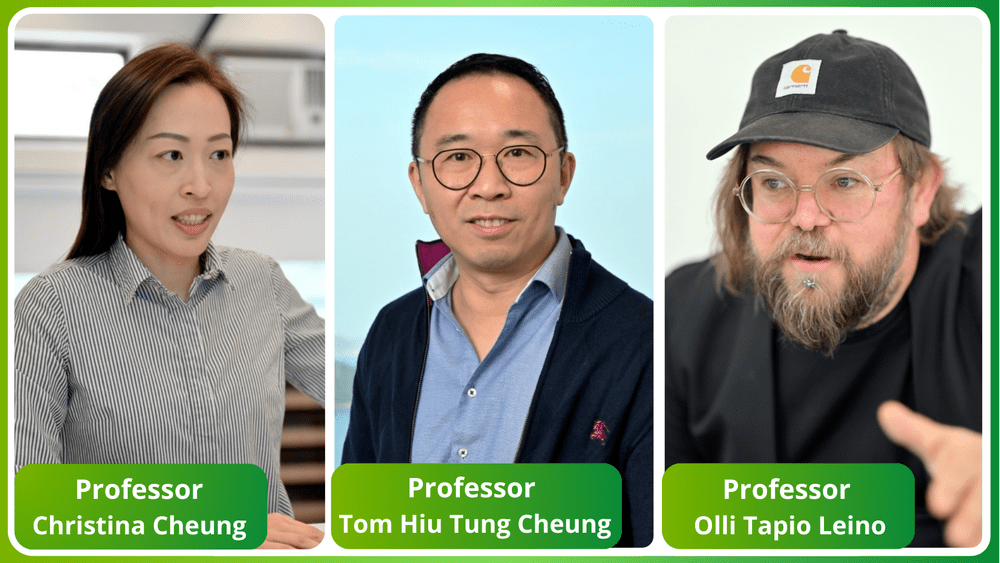
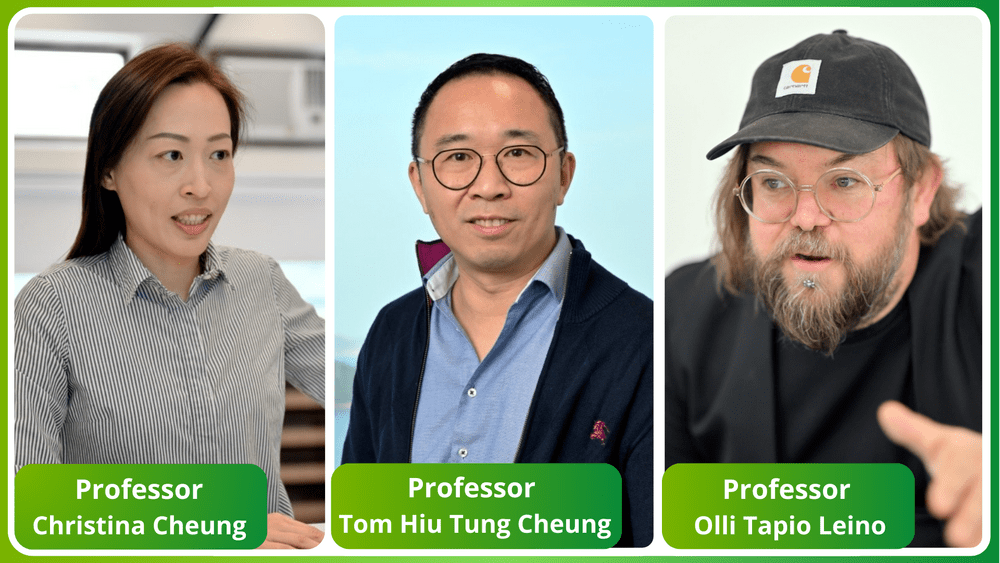
Professor Christina Cheung, currently with the Department of Anthropology at The Chinese University of Hong Kong, is a recipient of the Early Career Award (ECA) provided by the RGC. This award is an honorary title under the Early Career Scheme (ECS) which is designed to support and nurture junior academics, preparing them for successful careers in research and education.
As a bioarchaeologist and anthropologist, she investigates social issues through the lens of bioarchaeology, an interdisciplinary field that combines methodologies from biology, chemistry, and statistics to address questions often overlooked by traditional archaeology. While traditional archaeology typically emphasizes artifacts such as pottery, bioarchaeology enables a deeper examination of the biological and chemical aspects of past human life.
“I have chosen to explore mothers’ breastfeeding and weaning practices because motherhood is a universal experience, yet it’s often underexplored in archaeological contexts,” says Cheung.
According to Cheung, breastfeeding serves as a natural contraceptive. Extended breastfeeding can lead to longer intervals between births, resulting in lower population densities, while shorter breastfeeding periods may correlate with higher fertility rates. By examining these practices, researchers can gain insights into societal structures. Weaning practices are also biologically significant, marking a crucial transition in a child’s life when breastfeeding stops and solid foods are introduced.
Cheung’s current research focuses on reconstructing breastfeeding and weaning practices in medieval and early modern Italy during periods of significant societal change, such as invasions, the Black Death, and urbanization.
“I’m particularly interested in the period of the Black Death because we’ve recently experienced a pandemic ourselves. The impact of such crises is still fresh in our minds, prompting me to explore how the Black Death affected historical populations,” she explains.
Cheung believes that this research is useful for drawing lessons from the past, especially since issues like pandemics are not isolated events; they recur.
“Furthermore, this research has significant implications for contemporary society,” she adds. By examining how motherhood was influenced by social upheavals, we can gather data to inform and improve support systems for mothers today, particularly those in vulnerable situations. “Ultimately, archaeology is not just about the past; it offers insights that can shape our present and future.”
As a recipient of the ECA, Cheung notes that “the RGC funding has been instrumental in kickstarting my project.” It supports her to purchase equipment, travel overseas for sample collection, and conduct analyses, which can be quite costly.
Additionally, the ECA enables her to provide valuable training and opportunities for both undergraduate and graduate students, offering them diverse experiences. Cheung advises young researchers to be open-minded and passionate about their research field. “Don’t be scared of new things that are not in your field.” says Cheung.
Website: https://www.ugc.edu.hk/eng/rgc/funding_opport/ecs/
Revitalizing life: unleashing the potential for healthy aging
Professor Tom Hiu Tung Cheung, from the Division of Life Science at The Hong Kong University of Science and Technology, is one of the recipients of the RGC Research Fellow Scheme (RFS) award this year.
His research focuses on the biology of muscle stem cells (MuSCs). As tissues age, their functionality declines through a process associated with the aging of adult stem cells found within those tissues. Adult stem cells are essential for tissue repair and maintenance, and their dysfunctions affect the overall health of tissues and organs.
Cheung states, “Our work aims to rejuvenate these adult stem cells by investigating the mechanisms that regulate their functions and how these processes become dysregulated with age.” He hopes to understand the differences between the young and old states of adult stem cells to identify potential regulatory factors which may hold therapeutic potential.
“If we can identify these regulators, we may be able to restore the functions of these stem cells, thereby rejuvenating both the stem cells and the tissues they support,” he explains. Restoring adult stem cell functions could contribute to anti-aging therapies and facilitate “healthy aging” in an increasingly aging human population.
Cheung expresses gratitude for the RFS fellowship, noting its significant impact on his research. “Our aging research project involves using mice as our aging model. We need to allow the mice to age for three years to enable long-term studies into how they are affected by the aging process. The fellowship grant will allow us to extend our research beyond the typical funding period of less than three years, enabling us to conduct longitudinal and comprehensive studies that would otherwise be impossible,” he remarks.
In nurturing young researchers through the RFS project as emphasized by the fellowship scheme, Cheung upholds the importance of student involvement in scientific research. “Here at HKUST, we actively encourage undergraduate students to engage in research. I often tell them, ‘If you don’t try, you won’t know.’ Unlike structured lab courses with predetermined outcomes, research is unpredictable. I want them to experience the unexpected nature of experimental work.”
He fosters students’ scientific curiosity by sharing engaging research articles. Cheung believes each student is unique—some focus on details, while others are more entrepreneurial. His role is to facilitate their growth, guiding them according to their interests.
“When I was a PhD student, I took this chance to absorb as much as I could. Now, as a professor, I give back by creating an environment for my trainees to thrive. Over the past decade, many of my former students have gone on to become talented scientists in reputable institutions,” he adds with a proud smile.
Website: https://www.ugc.edu.hk/eng/rgc/funding_opport/rrfs/
Unlocking the secrets of player experience
Another RGC grant recipient is Professor Olli Tapio Leino from the City University of Hong Kong, who specializes in computer game studies and the philosophy of computer games. He is one of the awardees from the Humanities and Social Sciences Prestigious Fellowship Scheme (HSSPFS). This scheme provides support including funding and extended time-off to outstanding investigators in the humanities and social sciences disciplines to enable them to focus on research work and writing.
In his current project exploring the phenomenology of computer gameplay, Leino articulates his primary objective: “My goal is to establish a unified understanding of how players experience computer games.”
Traditional games operate under a clear social contract—one player wins while others lose, leading to predictable emotional outcomes: the winner feels joy, while the others may experience disappointment. However, single-player computer games present a different scenario, often lacking a clear winning or losing condition. “This means we can’t apply the traditional game paradigm to fully understand computer games; I hope to revisit the foundational concepts of computer game studies with a philosophical account of the player's experience” Leino explains.
He seeks to identify the principles by which players experience and interpret these games, emphasizing the importance of recognizing computer games as serious artistic or expressive mediums, whether for education or beyond. Understanding how these games evoke emotions and convey meaning is crucial. “When we talk about players' experiences of computer games, there is something that enables the enjoyment amongst players from everywhere. The ‘beautiful moments’ in computer games transcend individuals and culture.”
“One key aspect of the project is providing a philosophical foundation for academic discussions about computer games,” Leino notes.
As a recipient of the RGC HSSPFS, he acknowledges, “The most significant benefit is that it gives me dedicated time for my research.” This dedicated time allows him to refine his ideas and discuss with postgraduate students on these ideas.
Beyond academia, Leino hopes his research will resonate with broader audiences. “One key audience is game designers. Game studies is increasingly connected to game design research. While designers often focus on practical outcomes—if a game sells, it’s deemed successful—they may overlook philosophical insights. I hope to engage this group.”
Additionally, he aims to connect with players, providing insights that could serve as a self-help guide. “For instance, if someone wonders why they keep returning to a game despite other responsibilities, I hope that my research could help illuminate the captivating aspects of that experience.”
Website: https://www.ugc.edu.hk/eng/rgc/funding_opport/hsspfs/
------------------------
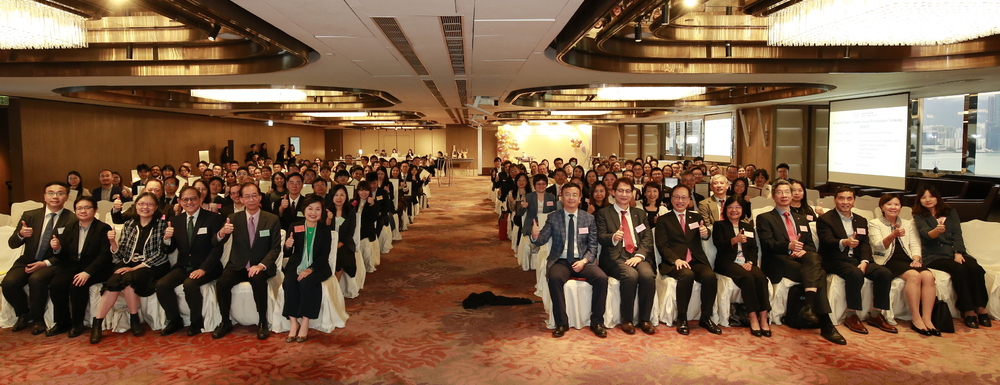
RGC held an award presentation ceremony last month (November 19) to honour 103 academics including RGC Senior Research Fellows, RGC Research Fellows, Humanities and Social Sciences Prestigious Fellows, Early Career Awardees and RGC Postdoctoral Fellows from the eight UGC-funded universities. The Secretary for Education, Dr Choi Yuk-lin, officiated the event as the Guest of Honour.
Also officiating at the ceremony, the RGC Chairman, Professor Timothy W. Tong, congratulated the awardees for their remarkable accomplishments and expressed appreciation for the Government's new initiatives to support the higher education sector.
More info: https://www.ugc.edu.hk/eng/ugc/about/press_speech_other/press/2024/pr20241119.html