Read More
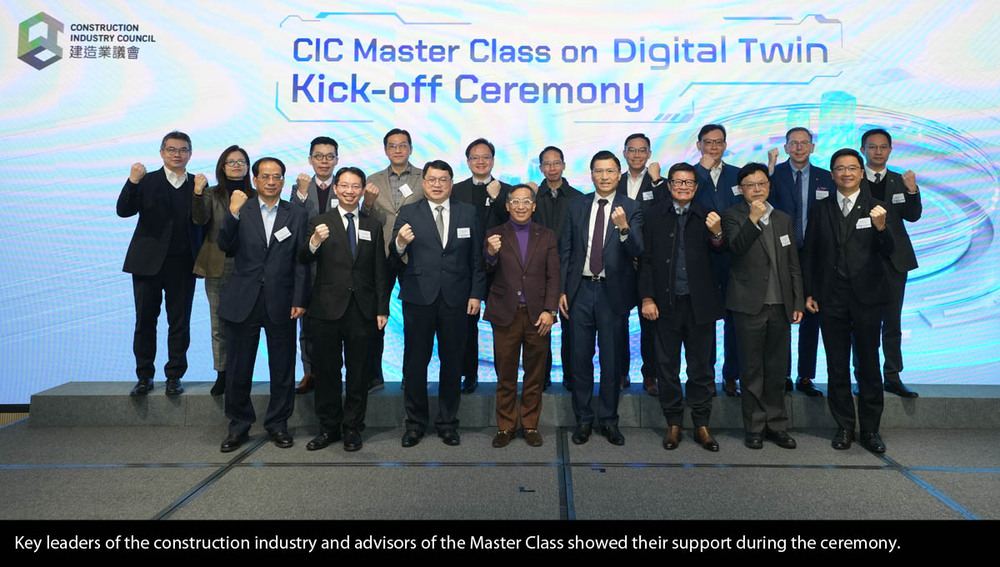
In a dedicated effort to harness the potential of Digital Twin technology within the construction sector, the Construction Industry Council (CIC) recently inaugurated their Master Class on Digital Twin. This initiative aims to educate key leaders in the construction industry about the transformative capabilities of this technology.
ADVERTISEMENT
SCROLL TO CONTINUE WITH CONTENT
As the world embraces the digital era, Digital Twin technology has garnered significant attention in recent years due to its myriad benefits. A Digital Twin is a real-time virtual replica of physical objects in the real world. This innovative technology provides a dynamic and interactive representation of the physical asset, enabling real-time monitoring, analysis, and simulation.
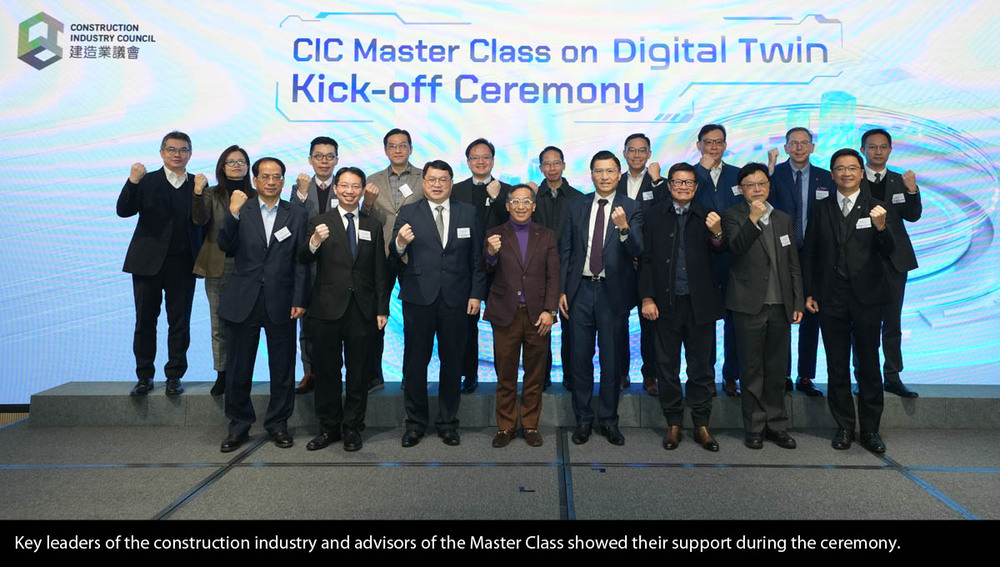
The kick-off ceremony for the Digital Twin Master Class, organized by the CIC, took place at the CIC-Zero Carbon Park in Kowloon Bay.
The event saw the presence of notable figures including Ir Thomas HO, Chairman of the CIC; Ir John KWONG, Head of Project Strategy and Governance Office of the Development Bureau; The Honorable Duncan CHIU, Legislative Council Member (Functional Constituency - Technology and Innovation); and Prof. Jack CHENG, Chairperson of the Committee on Building Information Modeling and Construction Digitalization of the CIC.
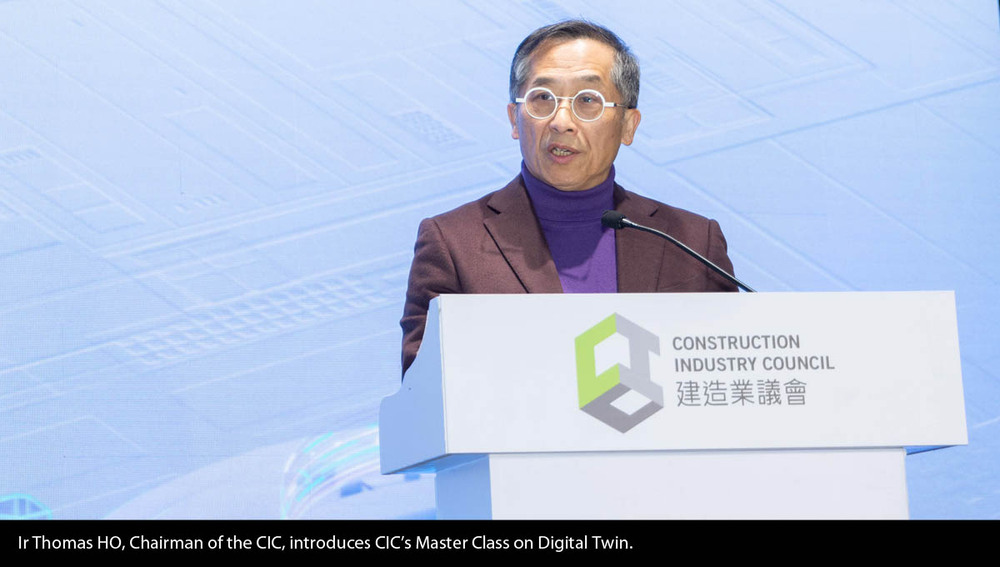
The primary objective of the Master Class is to introduce Digital Twin technology to the construction industry, facilitating the digitalization of construction projects. In his welcome address, Ir Thomas HO emphasized, “The CIC is taking the lead in organizing a series of master workshops focused on safety and cutting-edge technologies. With the launch of the Master Class on Digital Twin, professional practitioners can have a comprehensive grasp of the practical utilization of Digital Twin technology in the construction industry. This equips them with the essential skills to drive digital transformation and optimize project outcomes, enhancing operational efficiency.”
Dedicated to achieving “Zero Accidents on Construction Sites,” he further highlighted CIC’s concern regarding the urgent need for improved safety measures in the construction industry, referencing a series of accidents in the past year. To tackle this issue, the CIC has designated 2024 as the “Year of Construction Safety” with the aim of promoting safety and increasing awareness within the construction industry. Chairman HO stressed the necessity for innovative safety measures beyond traditional practices and introduced Digital Twin technology as a key solution.
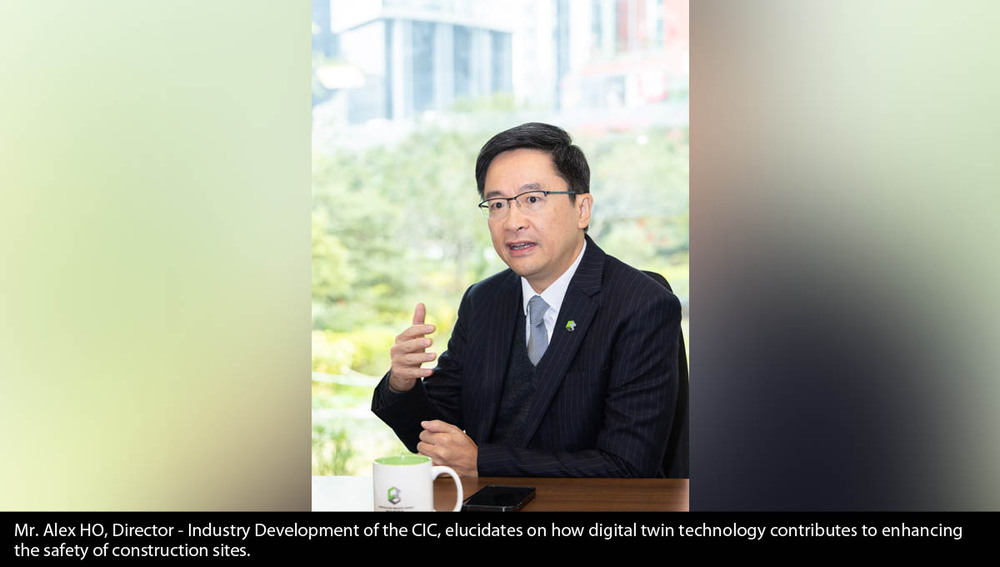
Digital Twin technology is recognized as a tool for enhancing construction site safety. It involves the integration of Building Information Modeling (BIM), which entails 3D digital representations of physical buildings or infrastructure projects, with real-time sensor data to simulate construction environments. By combining these elements, Digital Twin technology can identify fatal zones and potential hazards, allowing for Dynamic Risk Assessments and ultimately contributing to safer construction sites.
Furthermore, Digital Twin technology aids in the design phase by simulating various scenarios, including optimal placement of frontline construction personnel and machinery. Engineers can actively engage in constructing these Digital Twins, empowering them to effectively manage and monitor sites upon arrival.
Mr. Alex HO, Director - Industry Development at CIC, then introduced its recently established Smart Facilities Management Control Centre as an exemplar of successful Digital Twin technology usage. The site is designed using Digital Twin technology, which integrates BIM models and sensors to provide real-time data of various CIC premises on room occupancy, air quality, and other aspects. The system automates processes, such as adjusting temperature or shutting down systems when rooms are empty, promoting energy efficiency and environmental friendliness.
The CIC has also launched the Digital Twin Hub, showcasing practical applications of Digital Twin technology in various projects. It highlights how technology, such as smart helmets and AI CCTV cameras, contributes to safety. Alongside seminars, webinars, and site visits to educate and engage industry professionals in adopting Digital Twin technology for higher efficiency and productivity, the CIC plans to launch more master classes and forums to promote technology adoption within the industry.
Chairman HO concluded that Digital Twin technology emerges as a tangible and practical solution to significantly improve safety standards within the construction industry by integrating data, simulation, and real-time monitoring to protect frontline construction personnel and reduce accidents.
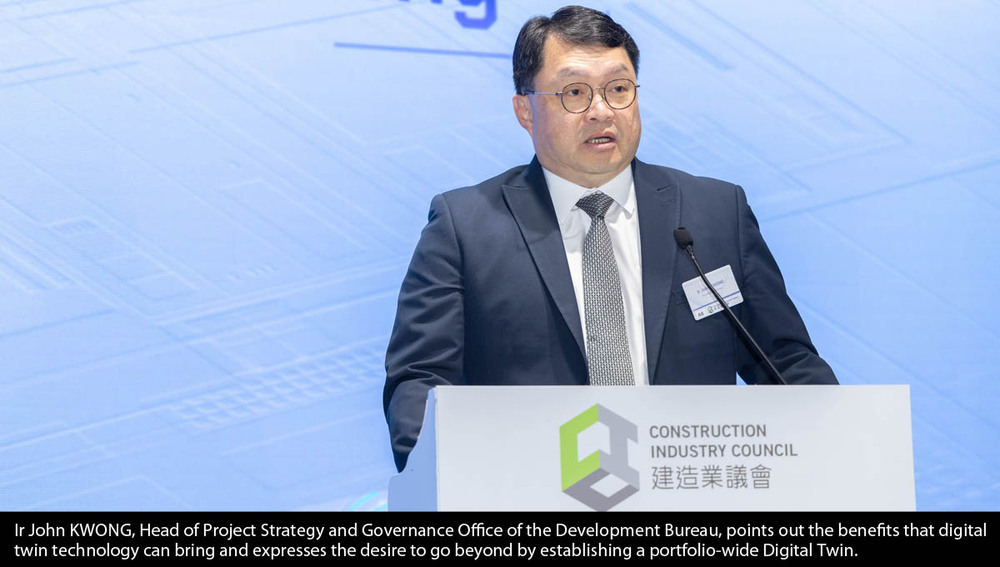
Another guest speaker, Ir John KWONG, underscored the significance of Digital Twin as a key technology in his speech. He noted that the Development Bureau is leading the digitalization efforts and providing guidance to works departments regarding the utilization of Digital Twin for improved asset management. He expressed the ambition to continuously expand the use of Digital Twin for each asset and unlock the full potential of a portfolio-wide digital twin. This vision represents the ultimate goal for the digitalization of public works.
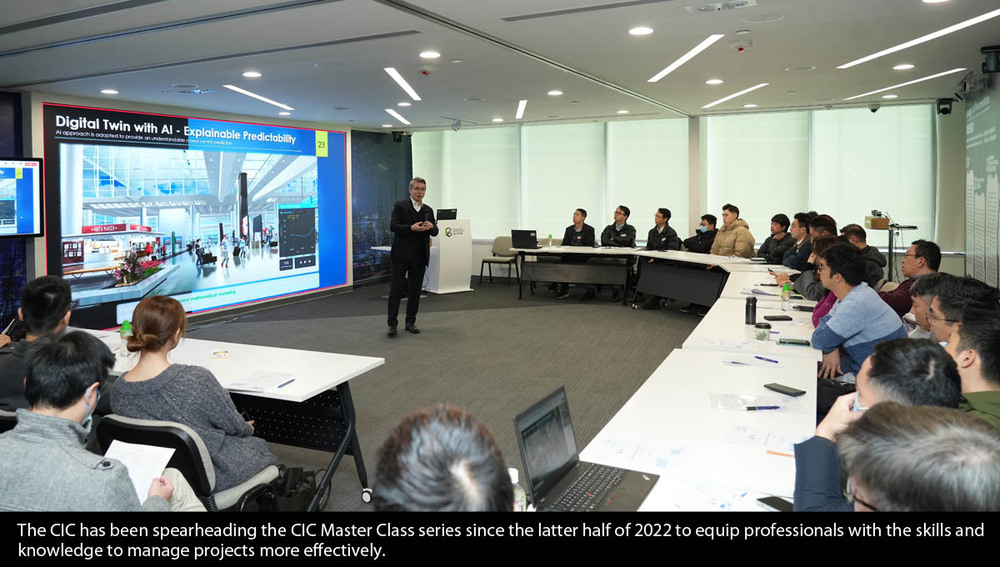
The CIC has been spearheading the CIC Master Class series since the latter half of 2022 with the aim to empower professionals with the knowledge and skills required to better manage construction projects. These subjects include Modular Integrated Construction (MiC), Common Data Environment (CDE), Design for Safety (DfS), temporary works, Artificial Intelligence (AI), and safety leadership culture. The CIC will continue to formulate new courses in the future to enhance the professional competencies of local practitioners and equip them with essential knowledge to adapt to the ever-evolving needs of the industry.