Read More




Six senior counsel appointed
31-03-2026 13:54 HKT
Approval granted for Kai Tak’s six-stop Smart & Green Mass Transit System
31-03-2026 16:27 HKT
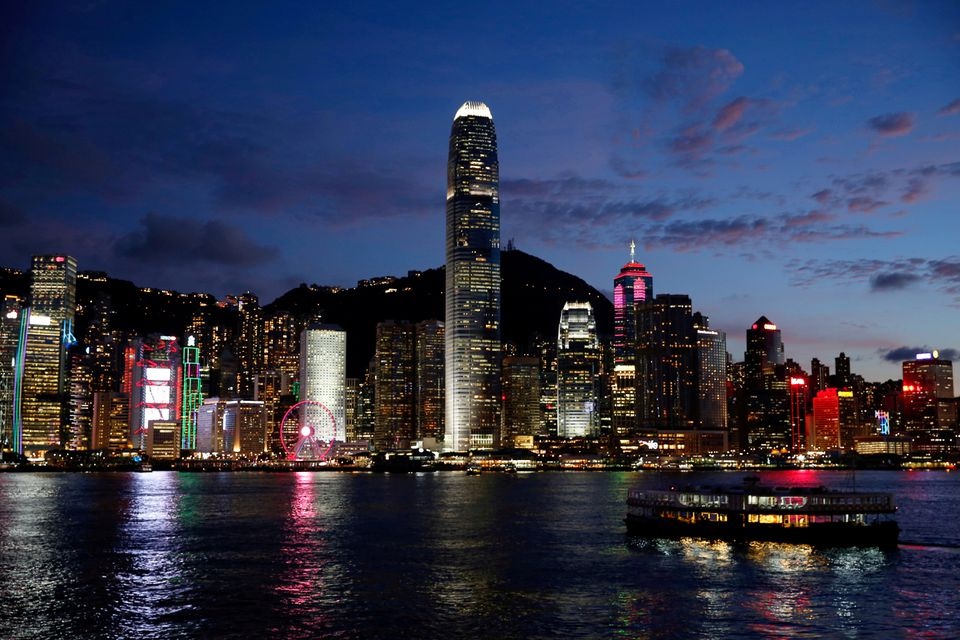
Hong Kong’s office towers, among the most expensive commercial real estate in the world, have never been this empty.
Billionaire Li Ka-shing’s trophy asset at Cheung Kong Center is about 25 percent vacant, while his latest project underway across the street with sweeping views of Victoria Harbour has signed up one tenant.
Fellow tycoon Lee Shau Kee’s curved glass The Henderson building under construction nearby is just 30 percent leased. Rents and sale prices are cratering.
While commercial real estate is struggling from New York to Sydney as more people work from home, Hong Kong faces a unique set of challenges that may lead to a prolonged slump in a market once coveted by global investors and local tycoons alike.
Western banks have been cutting space as dealmaking slows and China tightens its grip on the financial hub.
Chinese firms, which were expected to pick up the slack, aren’t gobbling up as much space as expected as their own economy struggles. A spate of new buildings will add to the glut.
“The market is challenging,” said Eddie Kwok of CBRE Group Inc. “Price declines may slow, but it’s difficult for a rebound.”
The office slump stands out in a city that’s finally found its footing after years of pandemic clampdowns and strict security measures from Beijing that sparked an exodus of families.
Retail sales are picking up, restaurants are packed and punters are jamming the Happy Valley racetrack once again.
Yet a record 13 million square feet of office space sits empty. The overall grade A vacancy rate was almost 15 percent in April, data from Colliers International Group Inc. show. That’s more than three times higher than in 2019, and tops Manhattan’s rate of 12.5 percent, and the 4.6 percent level in the rival Asian hub of Singapore.
Unlike in New York or London, Hong Kong’s landlords can’t point to the work from home movement to explain much of the decline.
Given the city’s highly efficient subway system and tiny apartments, Hong Kongers are less inclined to fire up their laptops at home. The city is back to work, with subway ridership surpassing 2019 levels in March, while in New York it’s still at 65 percent of pre-pandemic numbers.
Instead, Hong Kong landlords are starting to lose their best customers. As the business climate deteriorates in China amid rising tensions with the US, Wall Street banks are scaling back expansion plans.
Hong Kong, where many China-focused bankers operate, is paying the price, as the finance industry takes up almost 30 percent of the office space.
Morgan Stanley is considering cutting 7 percent of its Asia-Pacific investment-banking workforce after axing about 50 jobs last year, Bloomberg reported. JP Morgan has let go about 30 investment bankers in Asia including those based in Hong Kong.
Firms like Deutsche Bank AG, Standard Chartered Plc and BNP Paribas SA have either relinquished space or moved away from the core to trim costs. FedEx Corp. is moving its Asia-Pacific headquarters to Singapore.
As global banks pull back, Chinese firms aren’t filling the void fast enough even after border restrictions were removed. While mainland companies such as ByteDance Ltd. and PetroChina Co. are taking up space, they accounted for just 11 percent of new leases in the first quarter, compared with an average of 15 percent between 2017 and 2019, according to CBRE.
They also made up just 8 percent of commercial property purchases in the period, down from 19 percent before the pandemic.
Meanwhile, developers like CK Asset Holdings Ltd. and Henderson Land Development Co. keep building more skyscrapers. There will be at least seven million square feet of Grade A space coming on the market in the next three years, CBRE estimates.
The annual absorption rate before Covid was just 1.8 million square feet, so it will take years to fill the new space, Kwok said.
“There is definitely a discount to the rate of absorption as global companies’ expansion slows and mainland Chinese companies are still taking their time to decide whether to come to Hong Kong,” he said.
The office downturn is putting a damper on deals and rents. The number of office transactions nearly halved in the first quarter from the five-year average, a bigger drop than in the US, according to MSCI Real Assets.
Prices for premium offices meanwhile dropped 26 percent in March from their peak in 2018, and rents are off 29 percent from four years ago.
While that’s good news for tenants in a market that still has the highest occupancy costs in the world, it’s a blow to landlords, many of whom paid top dollar to build projects that are coming on stream now.
In a sign of the times, Pamfleet, a Hong Kong-based private equity firm now owned by Schroders Plc, sold a commercial building in Kowloon for HK$350 million in February, about as much as it paid in 2015, and a deep discount to the HK$600 million asking price. Values for en-bloc office buildings will go down by 5 percent to 10 percent in 2023, CBRE estimates.
The biggest losers in the downturn are Chinese developers like China Evergrande Group and Cheung Kei Group Co. that splurged on trophy properties just a few years ago. As the property crisis in the mainland shows few signs of abating, these developers could either refinance or offload the properties to meet funding needs.
“A significant slump in office prices and ultra-high vacancy rates in Hong Kong could prompt more Chinese developers to dispose of their properties at a loss via distressed-asset sales,” Bloomberg Intelligence analysts Patrick Wong and Ken Foong wrote in a note. They say office prices could fall further this year, after dropping more than a third since 2018.
Even with the price declines, global investors have few reasons to jump into the market given the sluggish outlook and low yields, said an executive at a foreign private equity firm who declined to be identified. The changing face of Hong Kong, with many expats leaving, makes it hard to re-ignite much interest, the person added.
(Bloomberg)