Read More
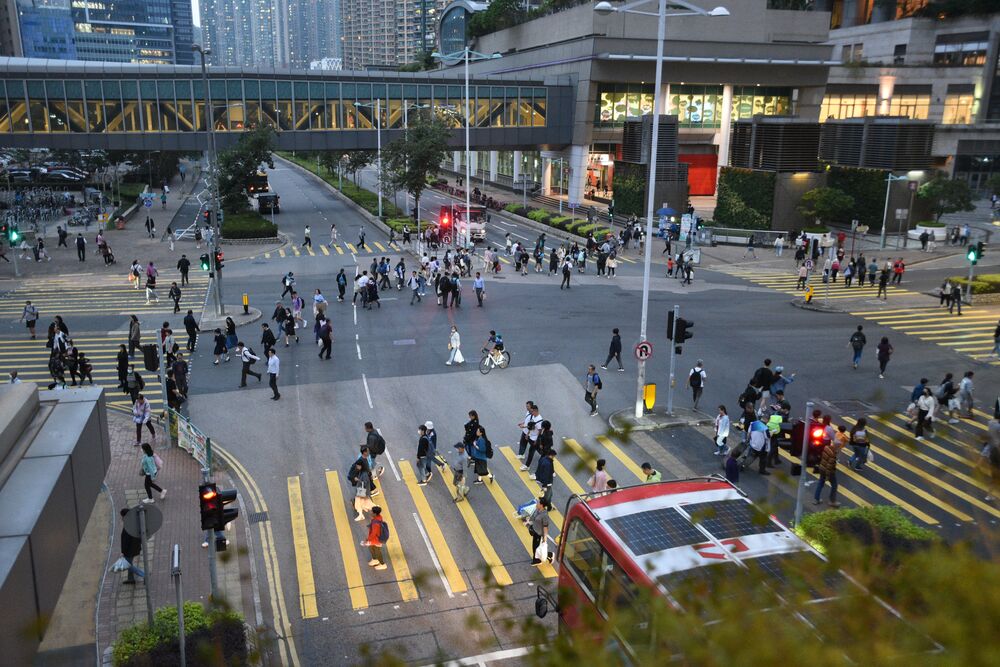
Pedestrians crossing roads diagonally in Tseung Kwan O are breaking the law in Hong Kong, though it is legal in Japan and is even a signature feature of Shibuya in Tokyo.
ADVERTISEMENT
SCROLL TO CONTINUE WITH CONTENT
Hong Kong police, meanwhile, have launched a citywide anti-jaywalking campaign.
Sing Tao Daily, sister publication of The Standard, found that at least 40 percent of pedestrians would cross a Tseung Kwan O intersection diagonally, which is against the law and despite plainclothes cops handing jaywalkers HK$2,000 fixed penalty tickets.
At the intersection of Tong Chun Street and Po Yap Road, all four traffic lights turn green at the same time and it only takes 27 seconds to cross diagonally. Those who cross roads one after the other take one minute and 40 seconds as traffic lights turn red soon after they cross one road.
Sai Kung district councillor Christine Fong Kwok-shan, who was recently reelected, said Tseung Kwan O residents have been crossing that intersection diagonally for over 10 years.
"I suggest authorities launch a trial run of diagonal street crossings here, benefiting pedestrians without seriously affecting traffic," she said.
Fong said the government could provide an extra option for residents, including building underground walkways that connect to the Tseung Kwan O MTR station.
One resident, Ho, said she usually crosses diagonally as it is faster. Another, Leung, said she did not know it is against the law and so will now avoid doing that.
Some intersections with a pedestrian crossing area allow Hongkongers to cross in different directions, including the junction of Russell Street and Matheson Street in Causeway Bay and the intersection of Pedder Street and Queen's Road Central in Central.
According to the Transport Department, people may cross on any path over the "pedestrian crossing area" marked by white crisscross lines.
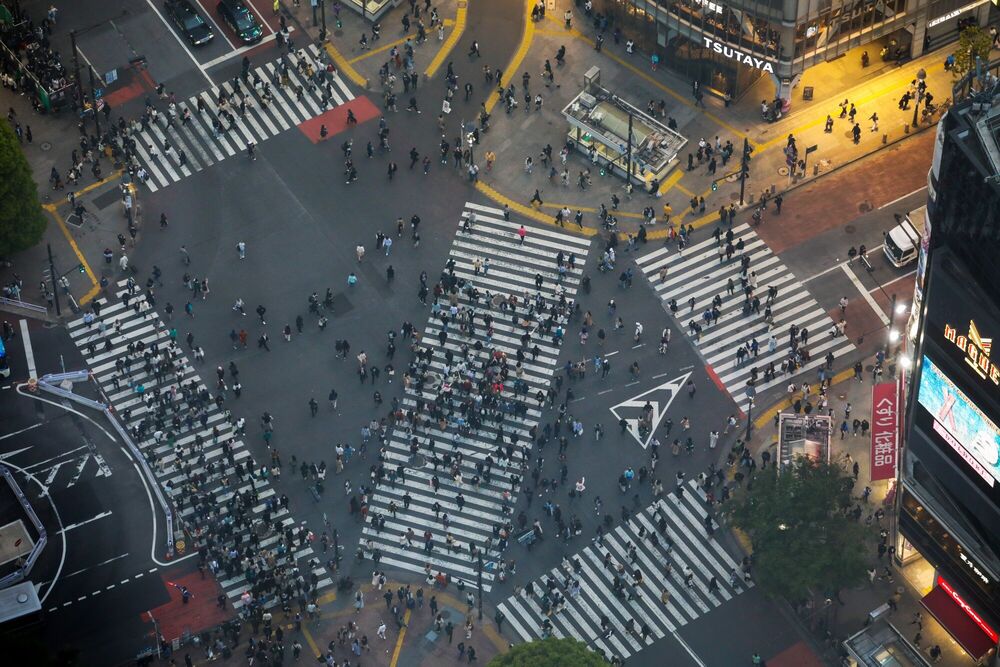
Diagonal street crossings are legal in Japan, with one intersection in Shibuya, Tokyo, becoming a popular tourist site, with up to 3,000 people crossing at the same time during peak hours.
To allow pedestrians to cross more efficiently, the Tokyo government designed an "all directions pedestrian crossing" by adding a diagonal pedestrian intersection.
According to government statistics, about 200,000 to 500,000 people cross the Shibuya crossing daily and the green light only lasts for 40 to 50 seconds.
The crossing has featured in various Japanese media and is also a popular spot for festival celebrations such as Halloween, when the crossing becomes packed with people in masks and costumes.
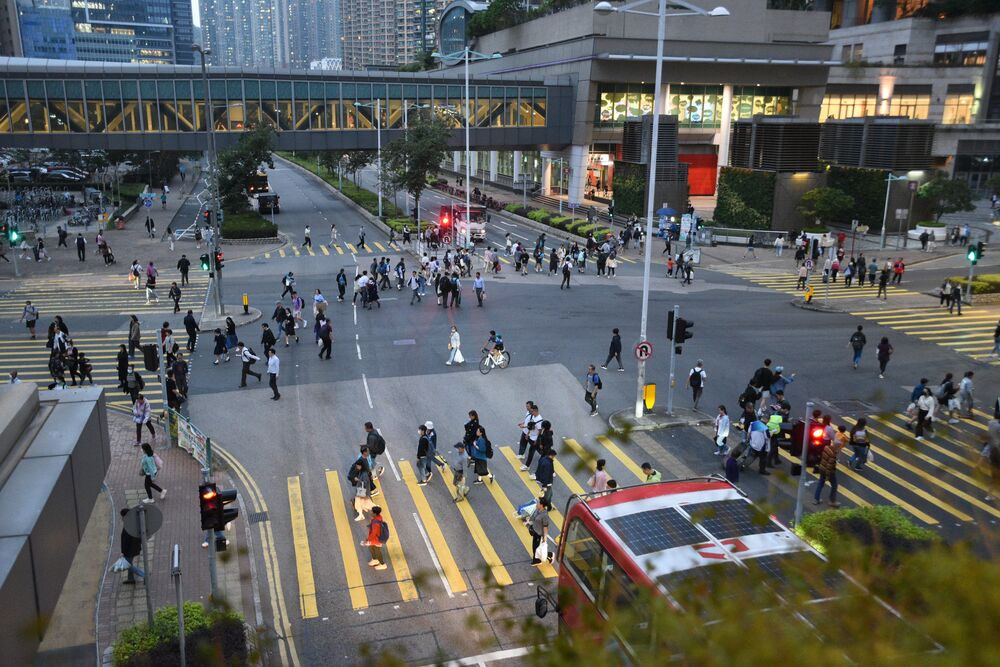
Crossings in Tseung Kwan O, left, and Shibuya. SING TAO, BLOOMBERG