Read More



Night Recap - April 2, 2026
3 hours ago



HK braces for natural gas shortage
15 hours ago
Six senior counsel appointed
31-03-2026 13:54 HKT


As a renowned international education hub attracting global research leaders, Hong Kong has proven tremendously successful in enabling impactful and world class research with generous public funding. To promote academic excellence and the continued advancement of researchers, the University Grants Committee (UGC) and its Research Grants Council (RGC) support outstanding emerging and established scholars through different research funding and fellowship schemes.
Launched in 2012/13, the Humanities and Social Sciences Prestigious Fellowship Scheme (HSSPFS) aims to provide outstanding researchers in the humanities and social sciences disciplines the dedicated time and funding necessary to achieve major research breakthroughs. Each UGC-funded university can nominate up to five academics annually to compete for the prestigious awards.
Through awards of up to HK$1 million each, the HSSPFS supports up to 10 fellows per year, relieving them of teaching and administrative obligations for periods of up to 12 months. This empowers awarded researchers to focus on their investigative and writing pursuits. The generous support covers costs like the employment of relief teachers, cost of travel, subsistence and dissemination of outputs.
To further strengthen research capacity and nurture promising talent in Hong Kong, the RGC has also introduced the coveted Senior Research Fellow Scheme (SRFS) and Research Fellow Scheme (RFS) in 2020/21. The dual objectives are to support distinguished researchers from UGC-funded universities in dedicating themselves to research and developing the next generation.
Each scheme provides 10 places annually, with SRFS for full Professors conferred as “RGC Senior Research Fellows” and RFS for Associate Professors as “RGC Research Fellows”. Both receive 60 months of financial support and some relief from teaching and administrative duties, with universities receiving around HK$7.8 million per SRFS fellowship and HK$5.2 million per RFS fellowship. This allows academics to fully commit to research and mentoring, boosting Hong Kong’s competitiveness in research excellence.
Tracking transit’s travel impacts over time
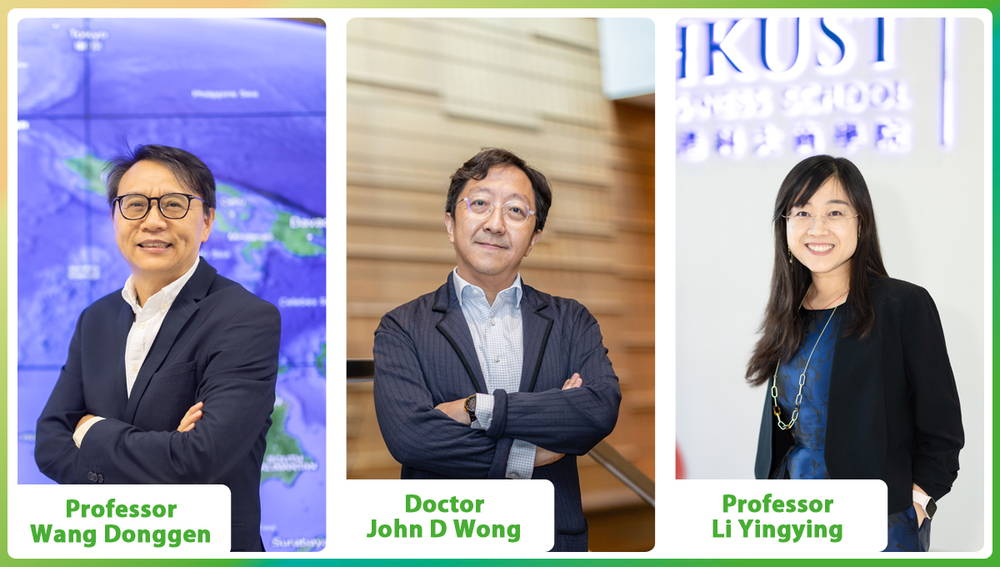
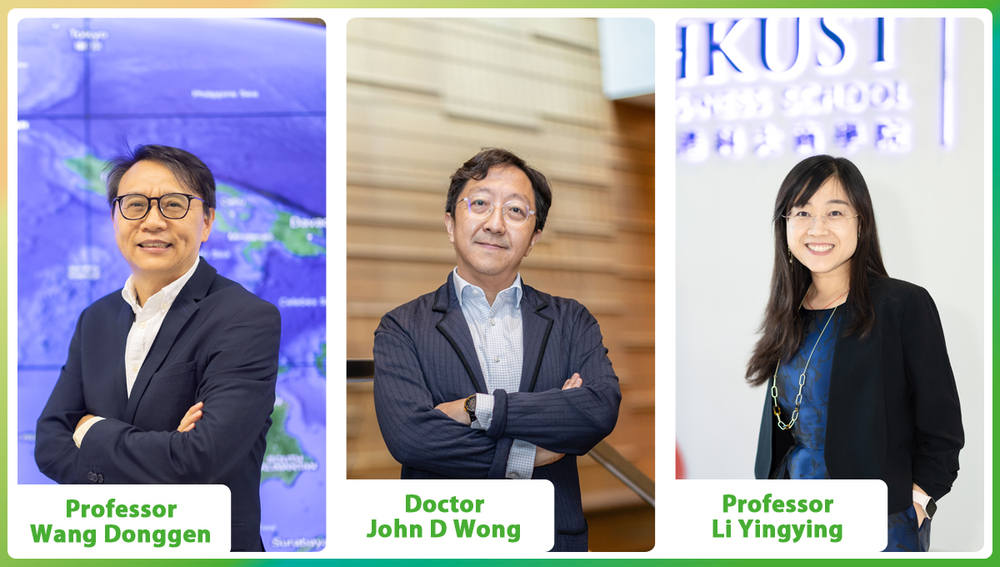
One of the recipients of the HSSPFS is Prof. Wang Donggen, Department of Geography, Hong Kong Baptist University (HKBU). His project, ‘How does rail transit development induce people’s daily travel behavior changes in Shenzhen?’, investigates how Shenzhen residents’ daily travel changed as rail transit expanded over 20 years by examining multi-year data on transit, car use, and trips, and how different rail access influenced mobility among diverse groups.
“I feel privileged to receive this honor. It recognizes my research accomplishments and the worth of this project,” Wang says. “This fellowship is significant as it supports my work through funding that allows me to hire substitute teachers. It relieves me of my teaching and administrative duties, freeing up time so I can dedicate fully to moving the study forward.”
Wang also notes that the funding enables important international travel to conferences, as well as field work conducted in mainland China. This hands-on research, he explains, helps to contextualize his findings within real-world environments.
“In addition to offering insights for transportation planning in rapidly developing cities across China and beyond, the project examines transit railways’ impacts on people’s lives from a long-term perspective – an important yet overlooked dimension in existing academic studies,” he explains.
Looking at Hong Kong’s current research environment, Wang recognizes its highly conducive environment for academic pursuits. “The scholarly community here is strongly interconnected on a global scale. The RGC also does a tremendous job of providing research funding and a fair mechanism that promotes outstanding work.”
Wang emphasizes nurturing young talent to build continued excellence in the field. “Mentoring early-career researchers is crucial work. Junior scholars often feel stressed with research, publishing, and obtaining funding. But if one pursues their research passion joyfully throughout the process, success will come,” he advises.
Investigating how housing policy shapes the middle-class
Another recipient of the HSSPFS this year is Dr. John D Wong, Hong Kong Institute for the Humanities and Social Sciences, and the Faculty of Arts, The University of Hong Kong (HKU). His project, ‘Making Hong Kong Home: Economic Take-off, Private-Sector Homeownership, and Accommodating Middle Class Aspirations since the 1970s’, examines how the promotion of private homeownership by Hong Kong’s government and developers since the 1970s established a middle-class and civic identity that financially committed and physically anchored residents to the city.
“I am honored to receive this award. It is a tremendous privilege, particularly at a time when STEM studies are more popular globally. This recognition serves as an important reminder of the continued relevance and value of studying topics in the humanities and social sciences,” Wong states.
As a HSSPFS recipient, Wong’s research makes significant academic and societal contributions. “Examining an era in which Hong Kong experienced tremendous economic growth, my findings debunk some widely held views about notions like low taxation and draw our attention to land sales to private developers. Through examining links among homeownership, finance, real estate, land sale and their broader impacts, my study provides insights into what housing aspirations mean for the growing middle class,” he says.
Looking back on his research career in Hong Kong so far, Wong is pleased to have conducted his research in a system that strongly supports scholarly work. “The RGC funding has been invaluable, meeting needs such as travel, teaching relief and research assistance. I simply could not have been as productive without this backing,” he says. He adds that infrastructure like archival facilities and opportunities to collaborate with international peers through exchanges and conferences have also proven hugely beneficial.
To young scholars exploring a research career, Wong advises: “Ensure your work addresses real-world issues, and articulate how it can benefit society and advance knowledge. These are skills vital for a successful research career.”
Analyzing financial risks through big data
Prof. Li Yingying, Chair Professor, Department of Information Systems, Business Statistics & Operations Management and Department of Finance, The Hong Kong University of Science and Technology (HKUST), is awarded an SRFS fellowship for her project ‘Financial Big Data for Risks’. It aims to leverage financial big data for more accurate risk measurement and forecasting through statistical learning, and to build a risk database with various metrics and predictions.
“I am honored that the RGC has awarded me the fellowship,” says Li. “I feel fortunate to have collaborated with an outstanding team of researchers whose efforts have helped make this project possible.”
Given the data-intensive nature of her project, Li expresses particular appreciation for how the award will allow her to delve even deeper into her research over the coming five years. “This funding provides the financial means for us to engage more promising young scholars in the computational and analytical aspects of our research. Thanks to the timely support from the RGC, we are well prepared to develop an innovative platform for measuring, forecasting, and reporting financial risks,” she remarks.
This platform promises diverse practical applications extending far beyond academia. Since fluctuations in financial markets can have widespread ramifications, especially when exacerbated by financial, social or pandemic crises, Li explains the platform will “support better-informed decision making by researchers, investors, industry professionals and policy makers.”
As one of the foremost female scholars in data science and financial technology, Li speaks positively about growing inclusion in academia, “It is encouraging to see more outstanding female researchers receiving recognition from organizations like RGC.”
She expresses confidence that Hong Kong is well-positioned to maximize the potential contributions of all talented researchers. “Hong Kong hosts a vibrant research scene among top universities that are connected globally. Scholars in my field regularly visit conferences in Hong Kong, and their exchanges yield a constant stream of new ideas,” she says.