Read More













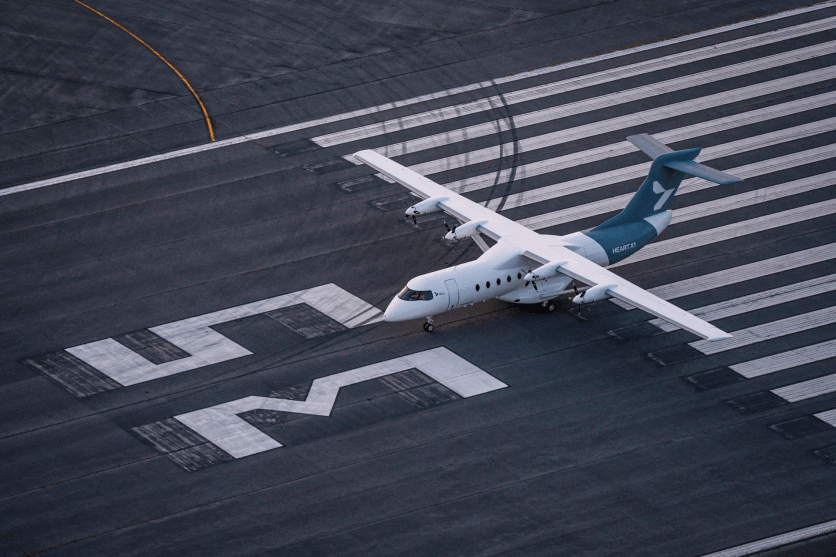
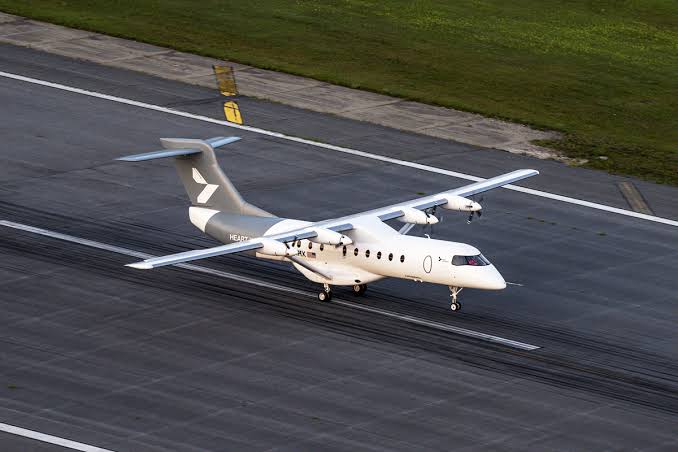
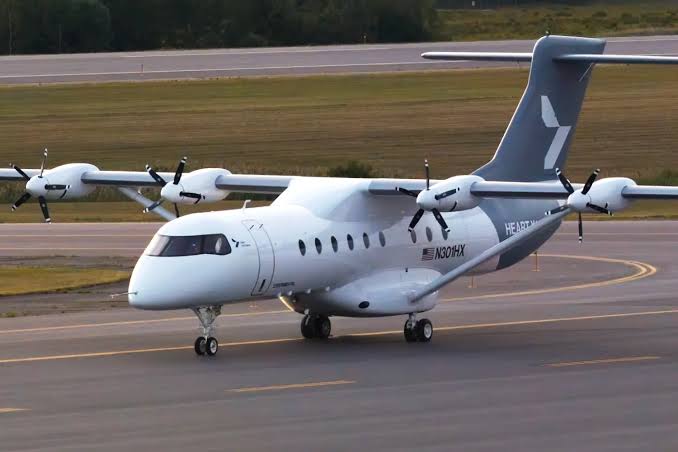
Swedish aviation startup Heart Aerospace has successfully completed the first test flight of its Heart X1, officially setting a new record for the largest battery-powered, all-electric aircraft ever flown.
The piloted flight took place last Wednesday at the company's testing base at Plattsburgh International Airport in New York state. The massive aircraft, which features a wingspan of 106 feet, a length of 76 feet, and a weight exceeding 25,000 pounds, remained airborne for 27 minutes and reached an altitude of 1,100 feet.
Generating over one megawatt of power from its fully electric propulsion system, the historic flight was remarkably energy-efficient, consuming only about five US dollars in electricity.
The recent test was conducted under the Federal Aviation Administration's experimental special airworthiness guidelines.
The aircraft successfully executed a series of maneuvers, including ground taxiing, takeoff, climbing, and landing, with the primary goal of proving the viability of all-electric flight on a commercial airline scale.
Heart Aerospace founder and chief executive officer Anders Forslund noted that this milestone clearly demonstrates that electric aviation can be scaled up for commercial operations.
He explained that electric passenger planes have the potential to completely transform the economic structure of the airline industry.
This transformation could ultimately lead to lower ticket prices for passengers, aligning with the company's core vision of making air travel more accessible and affordable for the general public.
The Heart X1 serves as a full-scale technological demonstrator for the startup's upcoming production model, the ES-30.
Testing the X1 allows the development team to verify crucial aerodynamics, performance metrics, and other foundational technologies.
The ES-30 is designed as a 30-seat regional hybrid-electric airliner featuring a traditional fixed-wing layout.
It is currently undergoing the Federal Aviation Administration's certification process and has already secured tentative orders from major carriers such as United Airlines, Air Canada, and JSX.
Slated to officially enter service in 2031, the ES-30 is projected to slash aircraft operating costs by more than 40 percent compared to conventional regional planes.
The company anticipates these savings will stem from reduced energy expenses, lower maintenance requirements due to a much simpler electric propulsion system, and enhanced operational stability provided by its highly integrated electronic and software architecture.