Read More




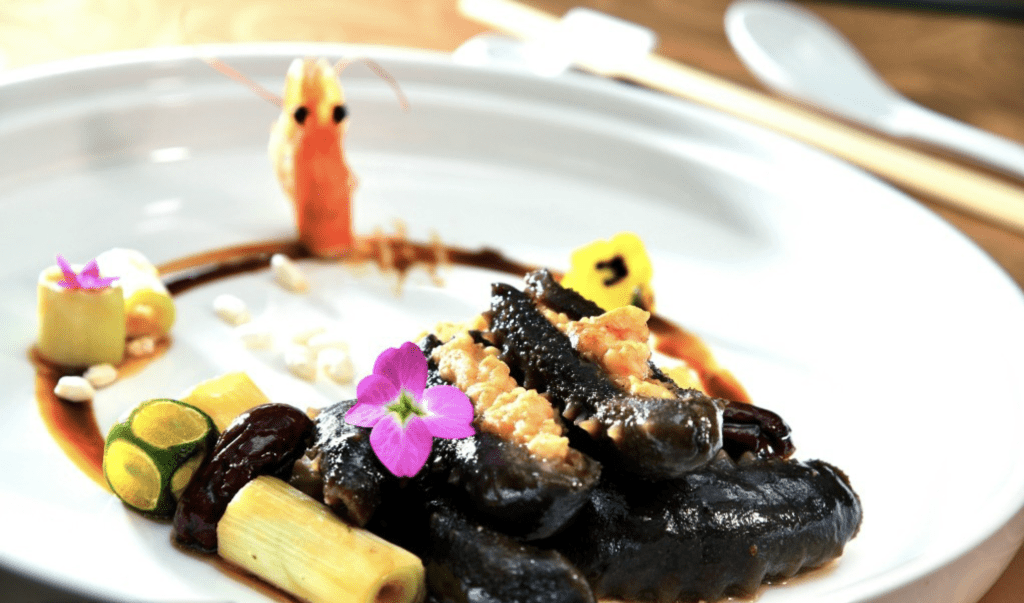
Integrating wellness concepts into Chinese cuisine adds health benefits. Chef Wong Lai-yin (Founder of Lai Yin Tong – Dried Seafood & Medicinal Cuisine), who specializes in medicinal cooking, demonstrates his "Braised Sea Cucumber with Scallions and Blossom" dish. This premium delicacy incorporates red dates during braising, enhancing both flavor and therapeutic effects.
Chef Wong, who holds a Traditional Chinese Medicine (TCM) Medicinal Cooking license obtained in mainland China, excels in traditional Chinese cuisine. In recent years, he has integrated wellness elements into his dishes. For example, this braised sea cucumber dish uses red dates to add flavor while providing Qi and blood-nourishing benefits.
Ingredients:
Method:
Chef's 6 Tips for the Dish:
I entered the culinary industry at 16, starting as an apprentice chef at a dai pai dong (open-air food stall). After finishing secondary school, my work often kept me until 3 AM. Since it was too late, I stayed temporarily at my grandmother's house. Every night, she prepared a bowl of steamed dried shrimp rice for me. The first time I tasted it, I thought, "Wow, this is delicious!" Hearing that, my grandmother made it for me every night for the next two years. I realized then that having someone invest time and care to cook for you is truly a blessing. I am grateful for my family's support during my apprenticeship.
Though I finished work late, seeing my chef skillfully toss the wok, combining ingredients into fragrant dishes, and customers' satisfied expressions motivated me daily. Many customers came after work with friends, tired, yet a plate of fried noodles and vegetables would make them laugh and talk, sometimes reflecting on life. This made me understand that food is a bridge connecting people, deepening my passion for culinary work.
At 18, I joined a hotel to formally learn Cantonese cooking. On my first day, I made a mistake and was scolded. My chef sternly told me, "Cooking is like being a person. To cook well, you must first learn to be a good person." I still remember this advice. During the "off" period (a rest break common in Chinese kitchens), most chefs would go to the back stairs or outside, but I stayed in the kitchen, eager to learn more. Seeing my dedication, the chefs began teaching me basic stir-fry techniques during free moments. Later, I moved to the banquet department, learning to prepare abalone, sea cucumber, shark's fin, and fish maw, assisting with various weddings and banquets.
Living far away, my commute took three hours, and I wouldn't return home until after midnight. Yet my grandmother still had a hot bowl of dried shrimp rice waiting for me. Only then did I understand that food isn't just about taste – it's a memory that brings happiness.
I've worked in many restaurants, but I prefer small shops because they allow better interaction with customers, directly experiencing their feedback. At 28, I opened a small shop featuring cart noodles, a humble street food. Despite its reputation, many shops use MSG to cut costs. I insisted on using high-quality ingredients; the broth alone was simmered for three hours with Jinhua ham, pork bones, dried shrimp, and chicken, creating a sweet, milky flavor. I even added sea cucumber and abalone, offering customers a luxurious experience at an affordable price.
Later, I had the privilege of learning from renowned Hong Kong culinary masters, opening an abalone noodle shop that combined humble cart noodles with premium Japanese dried abalone. Many customers came specifically for this, expanding my horizons. I am grateful for the mentors who guided me, allowing me to learn and grow.
In 2016, I founded a volunteer group, partnering with churches and organizations to provide meals for the elderly. It officially became a charity this year. During the pandemic, I decided to pivot my career. Believing food not only nourishes but brings happiness and health, I founded "Lai Yin Tong," obtained my TCM medicinal cooking license, and began using food therapy to help those with metabolic syndrome and urban diseases.
Later, under the guidance of Michelin-starred chef Chan Kwok-keung, I won international culinary awards in mainland China for medicinal cooking, raising awareness of food therapy. Today, I serve as a healthy soup consultant for TCM clinics and confinement centers. I remain committed to my dream of being a wellness chef.
"Care doesn't need to be spoken – it's in the food."
Steamed dried shrimp rice. When Chef Wong first started his apprenticeship, he often returned home late. His grandmother always prepared a hot bowl of this dish for him. Though simple, each bite reminded him of her care and support.
Sea cucumber. Chef Wong notes that sea cucumbers vary greatly in origin, quality, and size. Successful preparation relies on experience and skill to determine optimal soaking time and temperature. Proper seasoning and heat control are also crucial.
Author: EH Photos: Sing Tao Daily