Read More


Seven arrested over Kwai Chung illegal gathering
14-09-2026 12:33 HKT


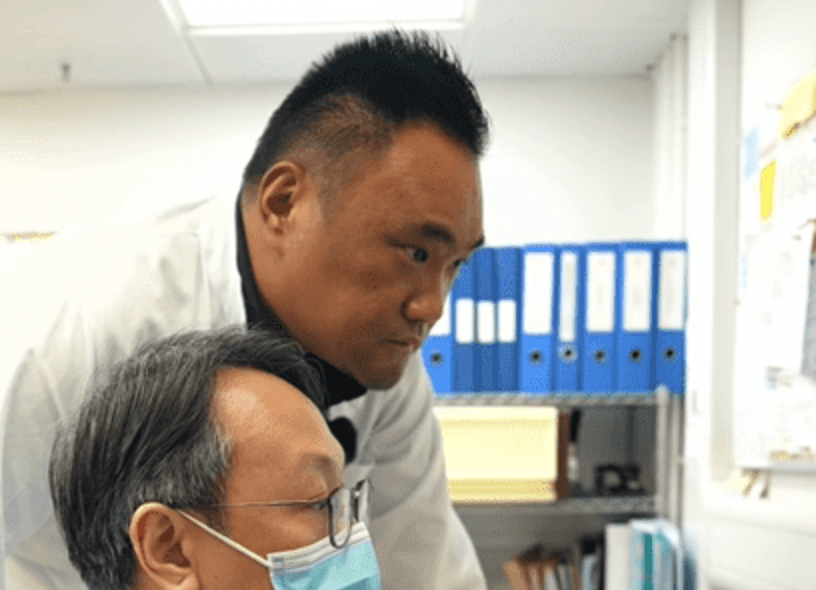
Many people associate mortuaries only with coldness and death. However, the Chief Mortuary Officer at Queen Mary Hospital has shared how he painstakingly pieced together shattered bone fragments to restore a deceased person's remains and even stayed overnight beyond duty hours so a family could see their loved one one last time. He stated: "We care for the deceased, but supporting the living through their emotions is what matters most."
Queen Mary Hospital Newsletter posted a video on Facebook featuring Pang Chun-kit, the Chief Mortuary Officer at Queen Mary Hospital. He shared that the primary responsibility of mortuary staff is to assist pathologists with post-mortem examinations. A common misconception is that an autopsy is simply "cutting up a body," but he clarified this is not the case. "It is a major surgery," involving opening the skull to remove the brain and opening the chest and abdominal cavities to remove organs. After the pathologist examines and takes samples, the organs are returned to the mortuary staff to be carefully placed back into the body. It is essential to know the exact location of each organ and precisely where to make incisions to avoid damaging them. He noted that the most challenging part of the process is the neck area due to its confined space, making the removal of the tongue particularly difficult.
Speaking of the most memorable case, Pang recalled an incident where a former colleague tragically passed away with a severely fractured skull, its shape completely altered. To ensure his colleague could leave with dignity, he tried everything to reconstruct the skull: "We spent a great deal of time piecing together every skull fragment, using glue to restore the skull's shape." Besides this case, their team also does their utmost to restore other deceased individuals, for example, repairing surface wounds or sewing up the body after an autopsy. They strive to restore the appearance of the deceased as much as possible.
Facing special requests from families, Pang often finds it hard to refuse. He shared a time when a family member abroad called, saying their flight was delayed and they couldn't arrive by the 5 PM closing time; they expected to get to the mortuary around 10 PM. Even though the mortuary is usually unstaffed at night, Pang discussed it with a few colleagues and they decided to break protocol and stay overnight: "We said, let's go home, have dinner, and come back at 10. To us, it seemed like a small thing, but for them not to see their loved one one last time would have been a huge deal."
The most touching case involved a couple who had lost their young son. Pang recalled that one evening, just as the mortuary was about to close, this couple rushed in to visit their deceased child, bringing many toys, flowers, and blankets. Seeing this, Pang quietly placed the items beside the child's body. He noticed that the parents always seemed very anxious during their visits. He proactively said to them: "Every time you finish visiting your child, just let me know if you're coming tomorrow. If you say you are, I'll wait for you. You don't need to rush." From then on, the couple kept bringing new toys and flowers, and Pang carefully arranged everything each time.
Gradually, the parents realized the mortuary staff wasn't just pushing out a body but were sincerely caring for their child. On one occasion, while waiting outside the door, Pang overheard the mother quietly speaking to her child: "You don't have to suffer anymore now. You've finished being sick. And your brother is here every day to look after you. Don't worry; we'll take you home soon." At that moment, he deeply felt the trust and connection they had built.
Having grown up in the Southern District, Pang often passes by the cemeteries when entering or exiting the Aberdeen Tunnel. He is profoundly moved by the words inscribed on the tombstones: "Soon, this body will become the same." He reflects that everyone will eventually reach this point, and everyone hopes to be treated with dignity in their final journey. Therefore, "We always take good care of the deceased, but supporting the living through their emotions is actually the most important part."
Source: Queen Mary Hospital Newsletter