In recent years, more and more Hong Kongers are seeking medical care in mainland China. Faced with enormous medical expenses, mainland healthcare, with its significant price advantage, has become a viable "second option" for many grassroots and middle-class families. Beyond differences in drug approval and operational costs, the popularization of advanced medical technology is also a key factor. For example, proton therapy, which precisely kills cancer cells while significantly reducing damage to surrounding healthy tissues, is primarily available at Hong Kong Sanatorium & Hospital, with a full course costing approximately HK$140,000 to HK$460,000. Looking across the Greater Bay Area could offer a lifeline for families struggling at the edge of life and death.
66-Year-Old Engineer's Retired Life Shattered by Lung Cancer Diagnosis
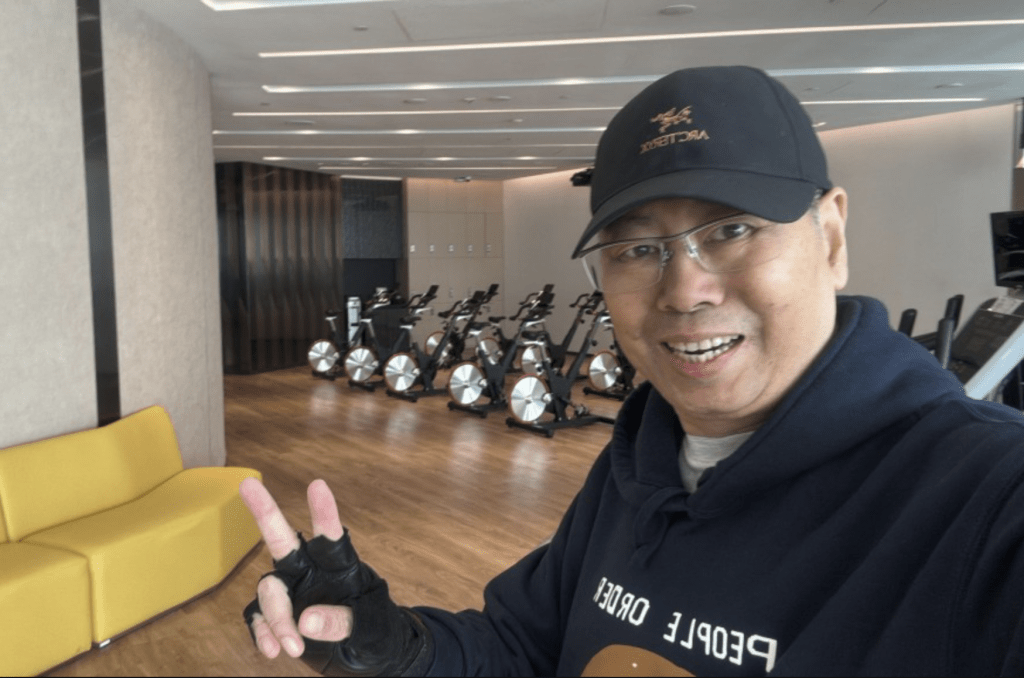
66-year-old retired MTR engineer Lo Kam-chuen enjoyed a life filled with art and sports: going to the gym, playing golf, and practicing Chinese painting. Sadly, fate had other plans. In October 2024, he was diagnosed with lung cancer, abruptly shattering his peaceful life.
At the time of diagnosis, Lo's cancer cells had already metastasized, compressing his pituitary gland. He immediately underwent 5 sessions of radiotherapy at St. Teresa's Hospital in Hong Kong. In February 2025, he received radiotherapy at the same hospital for his left pelvis. In June, new issues arose in his lumbar spine, requiring further radiation therapy in Hong Kong.
His cancer journey was fraught with complications. At the time, he was on a third-generation targeted therapy drug, but soon discovered he had developed approximately 15% drug resistance. From the start of his treatment, his primary doctor advised him to purchase targeted drugs in Shenzhen, where he discovered a stark price difference: "At Queen Elizabeth Hospital in Hong Kong, it cost HK$35,000 a month, but at the University of Hong Kong-Shenzhen Hospital (HKU-SZH), it only cost about HK$5,000 a month."
Hong Kong vs. Shenzhen Medical Costs: A 5-Fold Difference – The Relentless Reality of a Long-Term Battle
From June to August 2025, Lo switched to an anti-cancer drug called "Furmonertinib." However, by October, a new tumor was found in his head. This time, he decided to formally switch to the mainland medical system, going to HKU-SZH for 10 sessions of radiotherapy. This cross-border attempt made him acutely aware of the vast price gap: "Ten sessions of radiotherapy at HKU-SZH cost about RMB 60,000. If I had stayed in Hong Kong, it would have been at least HK$300,000. That's a 5 or 6 times difference!"
After the radiotherapy, the Shenzhen medical team performed a biopsy and DNA test on his lungs. The results showed that his original non-small cell lung cancer had evolved into another type – small cell carcinoma – in the same area of his left lung. The precise DNA test at HKU-SZH cost RMB 20,000. The first time he had a similar test done in Hong Kong, it cost HK$100,000. "Looking at the price, it was a direct 5-fold increase in Hong Kong." Lo candidly shared his struggle: "Why was I so determined to seek treatment in the mainland? The truth is, my insurance was exhausted. It wasn't a matter of spending HK$50,000 or HK$60,000 to cure it. This is a long-term battle. You won't die from it right away; you have to live with the cancer."
Seeking Advanced Proton Therapy in Guangzhou – Treatment Completed in 3 Days
In January 2026, Lo began experiencing dizziness. Initially mild, the symptoms worsened significantly within two weeks, affecting his daily activities. With about two weeks until the Lunar New Year, he consulted HKU-SZH and was told the cancer cells were compressing his brainstem. Because he had already received 10 sessions of conventional radiotherapy, that area couldn't tolerate more. "That Friday, I contacted an oncologist at Guangzhou Taihe Cancer Hospital through a friend. They booked me for an appointment on Monday." Lo acted decisively, taking the high-speed train to Guangzhou on Monday morning. The doctor confirmed they could treat him and recommended 10 sessions of the most advanced proton therapy.
To ensure precision, the hospital custom-made a head fixation "mask" and a special mouthpiece. "You had to bite down on the mouthpiece, with your head, neck, and teeth all completely immobilized." After preparations on Monday, he began treatment on Wednesday. Describing the difference between proton therapy and conventional radiotherapy, he said: "Radiotherapy is like a 'direct train' – the radiation penetrates straight through your body. But proton therapy is high-end; the radiation stops at the designated point, at the tumor, without damaging healthy tissue beyond. It's extremely low-impact on the body. The machine is so advanced; it felt like being at NASA. Each session took about 6-7 minutes, the length of two songs, and there was no pain at all." He humorously added, "As for pain, the only pain was in my wallet! The 10-session course cost RMB 190,000, covering all doctor's fees, planning fees, and hospitalization." He further noted: "Their price is at least 5 times cheaper than in Hong Kong. If you calculate everything, it's a 5-fold difference. When you go out for tea in Hong Kong versus the mainland, it's a 1-2 times difference, but medical care is 5 times different."
Cancer Markers Plummet from 47 to 3: Grateful His Family Never Left Him
After completing the proton therapy, the tumor no longer pressed on his nerves, and his debilitating dizziness disappeared from the second day of treatment and hasn't returned. However, the Guangzhou doctor sternly warned him that since this was the third time cancer cells had spread to his brain and it was the rapidly spreading small cell carcinoma, he had to start full-body chemotherapy immediately upon returning to Hong Kong.
Back in Hong Kong, a friend introduced him to the Shenzhen China Merchants Lipo Prince Bay Hospital for chemotherapy. He has completed 4 sessions (out of an expected 4-6). While the chemotherapy drugs have cumulative toxicity, causing extreme fatigue, poor appetite, and low white blood cell counts after the third session (delaying consolidation treatment by two weeks), he believes it was all worth it. "After the third chemotherapy session, my cancer markers dropped very low – almost to a normal level!" His cancer markers initially stood at 47, dropped to 17, and are now nearly normal at 3. Simultaneously, his lung tumor had shrunk by 50% to just 1.5 cm.
This long and harrowing cross-border cancer battle not only healed Lo physically but also filled him with gratitude for his unwavering family. Looking back at those darkest moments, teetering on the edge of life and death, facing huge medical bills and immense physical and mental suffering, he sighed: "When I was receiving treatment in the mainland, during the toughest times, my family never left me. My wife was absolutely supportive."
Lo explicitly stated that his cross-border experience offers Hong Kongers another option. In Hong Kong, proton therapy is only available at Hong Kong Sanatorium & Hospital, costing over a million Hong Kong dollars, a prohibitive sum for many. In contrast, advanced treatments like those at Guangzhou Taihe Cancer Hospital are routine, and the doctors there are experienced. He revealed: "You can absolutely trust this mainland medical system." The medical equipment used in large Shenzhen and Guangzhou hospitals is comparable in advancement and specifications to Hong Kong's. Seeking treatment in the north indeed opens a new ray of hope for saving lives.
Author: Daniel