
Read More
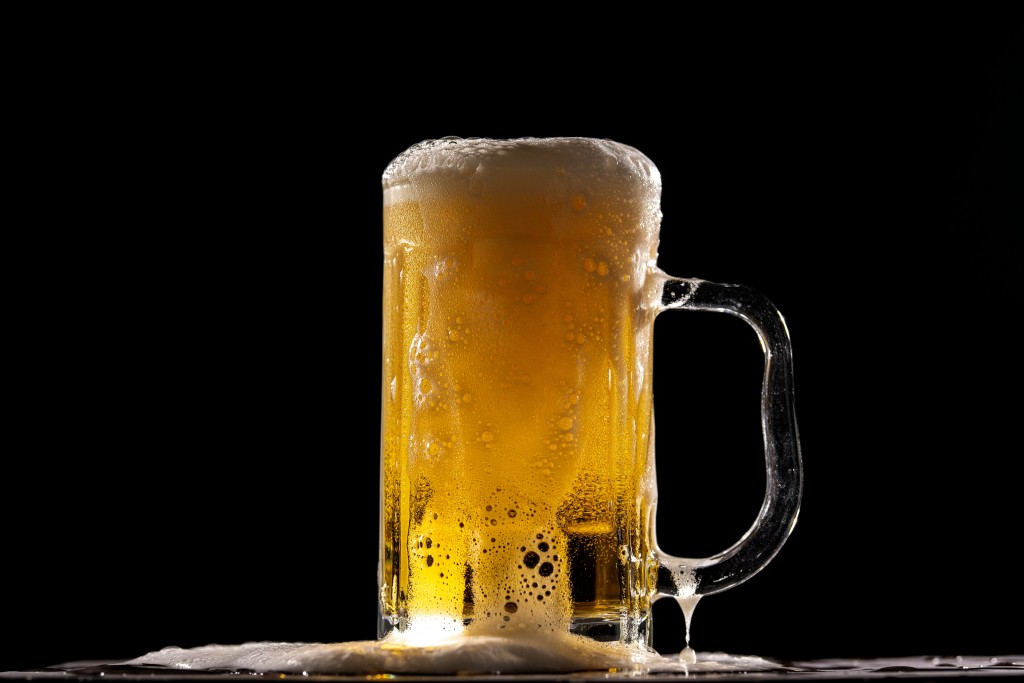
The once-every-four-years World Cup has finally kicked off, reigniting football fever across Hong Kong. Whether gathering with friends at bars in Tsim Sha Tsui or watching live TV at home, many people enjoy drinking beer while cheering for their team. Amidst the celebration, many men suddenly realize their bellies have grown another size larger, often joked about as a "beer belly." But a beer belly is no laughing matter – it's a health signal from the body.
ADVERTISEMENT
SCROLL TO CONTINUE WITH CONTENT
Zhang Jia-ming, Director of the Department of Genetics and Eugenics at Taipei Veterans General Hospital, stated on social media that new research published in a scientific journal from Cedars-Sinai Medical Center in the US reveals a new perspective: a beer belly is not simply about eating or drinking too much or exercising too little. Instead, it is caused by a metabolic pathway within the body, named AKAP12-PKA, being "disconnected" due to alcohol intake. This disconnect forces the liver to store large amounts of fat, leading to a sharp increase in abdominal fat over time.
The Liver's Metabolic System Is Disrupted by Alcohol
The liver is responsible for processing fat in the body daily. When calorie intake is sufficient, the liver automatically metabolizes fat to prevent its accumulation. However, this system needs an important helper – AKAP12 (A-kinase anchoring protein 12). Its job is to position the metabolic commander "PKA" (protein kinase A), allowing it to accurately activate fat oxidation and turn off the fat synthesis switch.
Simply put, AKAP12 and PKA are the liver's metabolic partnership duo, responsible for maintaining the balance of fat "in and out." However, when you drink alcohol, this system is completely disrupted by alcohol. Research indicates that alcohol inhibits the expression of AKAP12, causing PKA to lose its guide. This causes fat synthesis enzymes (such as ACC1) to lose control. Ultimately, large amounts of fat accumulate in the liver and around the abdominal cavity, forming the alarming beer belly.
Alcohol Disrupts Metabolism, Regardless of Beer's Calories
Many Hongkongers have the misconception that a beer belly is purely due to beer's high calorie content. However, whether it's high-end whiskey, red wine, or cocktails, as long as they contain alcohol, all can cause AKAP12 and PKA dysregulation. The study found that this interference is not exclusive to long-term heavy drinkers. Within 24 hours after short-term drinking, the interaction between AKAP12 and PKA can drop by over 70%, causing fat to accumulate faster than imagined.
More severely, alcohol stimulates the body to produce small molecules called "microRNAs" (such as MIR103 and MIR186). These molecules directly hinder AKAP12 signaling, causing its supply to be insufficient for demand. The entire fat metabolism system goes like a sudden power outage, completely paralyzed. Therefore, the essence of a beer belly is that the ability to process fat has been "ruined" by alcohol.
Male Abdomens Are More Prone to Visceral Fat Accumulation
When fat metabolism is impaired, the body prioritizes storing excess fat in the liver, which then spreads to the abdominal cavity and around the internal organs – this is commonly known as "visceral fat." This type of fat is not only extremely difficult to reduce through simple dieting but also significantly increases the risk of chronic diseases such as heart disease, stroke, and diabetes. A protruding belly not only affects appearance but is also a sign that health is lashing a red warning light.
Particularly for men, due to hormonal differences and fat distribution characteristics, they are more likely than women to concentrate fat storage in the abdomen, forming what is often called a "pot belly."
The "Beer Belly" Can Be Reversed
Medical research also indicates that a beer belly can be reversed. Experiments have confirmed that when the expression of AKAP12 is enhanced in an organism, not only does PKA activity increase significantly, but also the degree of fat accumulation in the liver, inflammation markers, and even blood triglyceride levels all noticeably decrease. This means that as long as the metabolic system is restarted, fat can be processed normally, and a pot belly is not an incurable condition.
3 Lifestyle Habits to Restart Liver Function
- Reduce Alcohol Intake as the First Step: Whether it's beer essential for watching matches or spirits at group gatherings, any alcohol disrupts AKAP12. Each drink you skip is a preservation of your liver's metabolic capacity. If it's difficult to completely quit alcohol, start by reducing frequency, for example, limiting drinking to "weekends only" or reducing from daily drinking to once every two weeks.
- Eat More Liver-Protective and Anti-inflammatory Foods: In daily diet, choose ingredients with anti-inflammatory and antioxidant properties, such as broccoli, nuts, deep-sea fish, and olive oil. These foods can indirectly protect the function of AKAP12 and PKA, ensuring smooth fat metabolism.
- Moderate Exercise to Activate Metabolism: Exercise can effectively increase cAMP levels in the body, thereby activating PKA. Even with a busy work schedule, taking 30 minutes daily for brisk walking or choosing stairs instead of elevators is a gentle yet effective way to repair and restart the liver's fat-burning mechanism.
Fatty Liver: 6 Common Symptoms
Hong Kong has over 1 million people with fatty liver disease. Fatty liver is categorized into alcoholic fatty liver disease and non-alcoholic fatty liver disease. According to the Department of Health, fatty liver (or steatotic liver disease) refers to the accumulation of excess fat within liver cells. The development of fatty liver is also closely related to obesity, insulin resistance, diabetes, high blood lipids, and high blood pressure.
Non-alcoholic fatty liver disease refers to a range of liver conditions involving the accumulation of excess fat in liver cells (exceeding 5% of the liver's volume). The cause of fat accumulation is unrelated to excessive alcohol consumption or other secondary factors (such as medication or congenital metabolic defects). Common symptoms of fatty liver include:
- Loss of appetite
- Nausea
- Vomiting
- Discomfort in the upper right abdomen
- Fatigue
- In severe cases, it may lead to an enlarged liver
If not addressed promptly, fatty liver can progress to cirrhosis or liver cancer. An accurate diagnosis of fatty liver requires imaging tests such as ultrasound, computed tomography (CT) scan, magnetic resonance imaging (MRI), or a liver biopsy.
Sources: Zhang Jia-ming, Director of the Department of Genetics and Eugenics, Taipei Veterans General Hospital; Centre for Health Protection (Hong Kong)