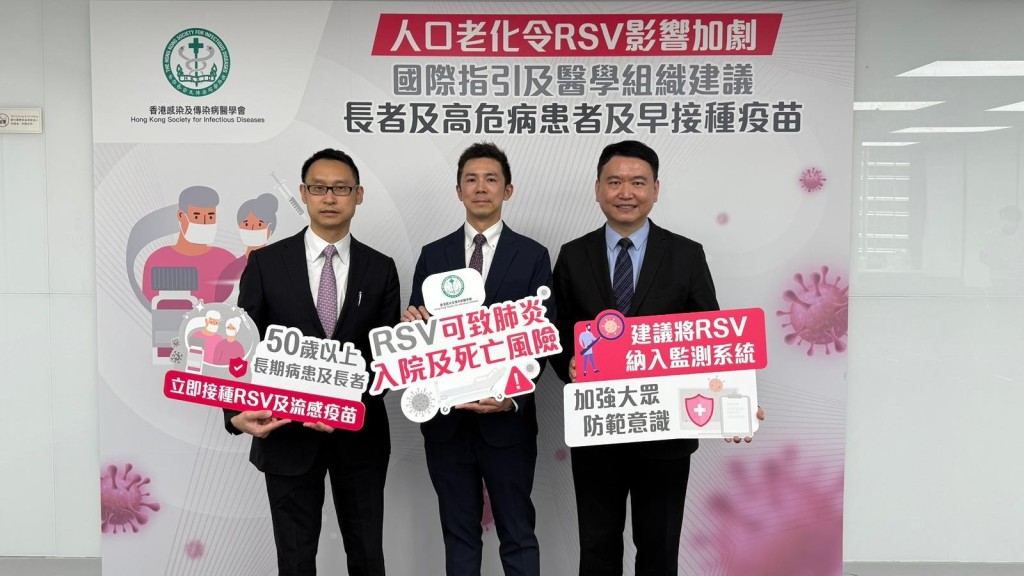
The recent upward trend in influenza cases in Hong Kong has led many citizens to increase their vigilance and get flu vaccinations. However, due to a lack of awareness about Respiratory Syncytial Virus (RSV), many people overlook its strong transmissibility and the severity of complications after infection, and thus have not considered receiving the RSV vaccine. A recent study found that, compared to adults hospitalised for influenza, adult patients hospitalised with an RSV infection had a more severe overall condition and a significantly higher in-hospital mortality rate. This highlights that the seriousness of RSV should not be overlooked. The public should learn more about RSV, and high-risk individuals, such as chronic disease patients aged 50 or above and the elderly, should get vaccinated early.
RSV infection cases continue to rise
According to the latest data from the Department of Health, the number of RSV cases has shown an upward trend since early June this year, surging from 55 cases in Week 23 to 228 cases in Week 39 (late September) — a staggering increase of 314.5% in just 16 weeks. Furthermore, the cumulative number of confirmed cases this year (Weeks 23 to 39) has risen by approximately 44.7% compared to the same period last year, a situation that warrants concern. Dr. Zee Sze Tsing, Jonpaul, Honorary Treasurer of the Hong Kong Society for Infectious Diseases and a specialist in Infectious Disease, stated that RSV is highly contagious, with each infected person, on average, capable of spreading the virus to three others. Notably, there are currently no targeted treatments or specific antiviral drugs to accelerate recovery from an RSV infection. Once infected, patients can only rely on supportive care (such as oxygen therapy or bronchodilator medication) to alleviate their condition.
Dr. Zee further pointed out that RSV symptoms, such as runny nose and cough, are easily confused with those of the flu. However, for the elderly and individuals with chronic diseases, an RSV infection can lead to severe complications like pneumonia, respiratory failure, or heart disease, and in severe cases, it can cause death. Moreover, the RSV-related hospitalisation and mortality rates are particularly high among the elderly; in Hong Kong's public hospitals, over 90% of RSV-related deaths occurred in patients aged 65 or above.
Study: In-hospital mortality and severe illness rates from RSV Infection are higher than those from influenza
To better understand the differences in clinical outcomes between adults and high-risk individuals hospitalised due to influenza versus RSV infection, a research team from the University of Hong Kong recently conducted a territory-wide retrospective study using data from all public hospitals. Leveraging the Hospital Authority's Clinical Data Analysis and Reporting System, the study covered hospitalisation records between January 1, 2016, and June 30, 2023, involving a total of 44,771 adult patients admitted for RSV or seasonal influenza. The researchers compared the clinical outcomes of the two groups based on indicators such as acute kidney injury, severe respiratory failure, secondary bacterial pneumonia, and in-hospital mortality.
Professor Yap Yat Hin, Desmond, a specialist in Nephrology, noted that the RSV patient group had a significantly higher burden of comorbidities, particularly diabetes, cardiovascular disease, chronic respiratory disease, and kidney disease. Compared to those hospitalised for the flu, adult patients hospitalised with an RSV infection had a more severe overall condition and a significantly higher in-hospital mortality rate, which was approximately double that of influenza patients. Therefore, the team suggests that future policies should consider including high-risk groups in the recommendations for RSV vaccination.
Dr. Martin Wong Chi Sang, Honorary Advisor of Global Health at the Association of Pacific Rim Universities, stated that according to Census and Statistics Department projections, more than half of Hong Kong's population is estimated to be aged 50 or above by 2039. Therefore, he anticipates that the RSV disease burden will continue to rise, and that RSV is an underestimated public health threat. He suggests that Hong Kong should incorporate RSV into its respiratory disease surveillance to more effectively track the epidemic. He also calls on high-risk groups aged 50 or above, especially those with diabetes, cardiovascular disease, chronic respiratory disease, and kidney disease, to consider getting both the influenza and RSV vaccines.