Read More
In times of geopolitical tension, the city’s unique historical and cultural ties with the Philippines offer a powerful alternative pathway to mutual understanding.
ADVERTISEMENT
SCROLL TO CONTINUE WITH CONTENT
As the South China Sea dispute continues to test the boundaries of official diplomacy between China and the Philippines, an unexpected but potent force for reconciliation stands ready: Hong Kong.
This year, the Philippines assumes the chairmanship of Asean, placing Manila at the center of regional diplomatic manoeuvring. With the United States’ renewed strategic interest and the Philippines’ domestic electoral cycles further complicating bilateral ties, the geopolitical landscape appears increasingly fraught. Yet beneath the surface of statecraft lies a deeper, more resilient current of connection – one that Hong Kong is uniquely positioned to amplify.
Four decades of people-to-people bonds
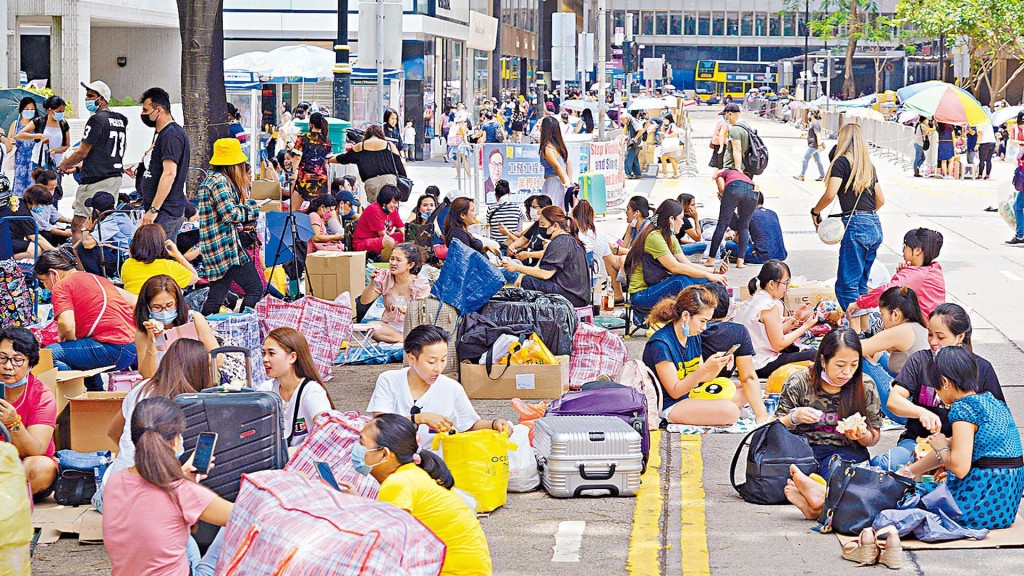
For over 40 years, Filipino domestic workers have been woven into the fabric of Hong Kong society. What began as a labor arrangement has evolved into something far more profound. These well-educated helpers have not only emancipated generations of Hong Kong women to pursue careers but have also raised children, shared traditions, and embedded Filipino culture within local households.
Today, over 200,000 Filipinos call Hong Kong home – temporarily or permanently. They are nannies, hospitality workers, musicians, and performers. Singers like Teresa Carpio, Alex To Tak-wai, and Yumi Chung Yau-mei – each with Filipino heritage – have become beloved icons of Hong Kong’s cultural landscape. The 2019 blockbuster Hello, Love, Goodbye captured this transnational experience, having been filmed in Hong Kong and become the highest-grossing Filipino film of all time. This is citizen diplomacy in its most authentic form: lived, reciprocal, and sustained across decades.
A shared history worth walking through
Few realize that Hong Kong once sheltered Jose Rizal, the national hero of the Philippines. While Singapore honors his brief visits with a bust and a marker, Rizal lived in Hong Kong for nearly nine months across two stays – longer than almost anywhere outside the Philippines.
He arrived in February 1888, stayed briefly partly to study Chinese culture, and returned in November 1891 to practice ophthalmology at No 5 D’Aguilar Street. His clinic sat steps away from Duddell Street Steps, where his favored Gas Lamps were. He resided at No 2 Rednaxela Terrace, while his Irish partner, Josephine Bracken – later buried at Hong Kong Cemetery – remains a figure of enduring romantic and revolutionary lore.
These sites are not merely historical footnotes. They are the raw material for a Jose Rizal Heritage Trail – a tangible, walkable narrative connecting Central’s colonial architecture to the anti-colonial aspirations that shaped modern Asia. The Philippine Consul General, Romulo Victor Manzano Israel Jr, has plans to stage a musical on Rizal and Bracken. A heritage trail would complement such cultural initiatives, drawing not only Filipino and Hong Kong visitors but global tourists seeking layered, decolonized histories.
Academic and cultural infrastructure
Further anchoring this soft power potential is the upcoming Philippine Studies program in Hong Kong – the first of its kind in the region. With over 7,000 islands and a rich anthropological heritage, the Philippines offers scholarly depth that has long been under-recognized in Asian higher education. This academic initiative, paired with cultural exchange, forms a dual-track approach to citizen diplomacy: one that engages both the intellect and the heart.
A role only Hong Kong can play
Hong Kong’s openness has historically attracted revolutionaries – from Sun Yat-sen, Rizal to Ho Chi Minh – who sought refuge and ideas in its colonial port city environment. That same openness now positions Hong Kong as a bridge, not a battleground, in Sino-Philippine relations.
While official talks over maritime boundaries will continue their cautious choreography, the everyday diplomacy of shared neighborhoods, intermarried families, and historical memory proceeds quietly but persistently.
The Philippine chairmanship of Asean presents a timely opportunity. Hong Kong need not wait for diplomatic breakthroughs. It already possesses something more durable: four decades of trust, a trail of shared heritage, and the quiet conviction that people-to-people ties matter.
Citizen diplomacy is not a substitute for statecraft. But it is its most credible foundation.