Read More











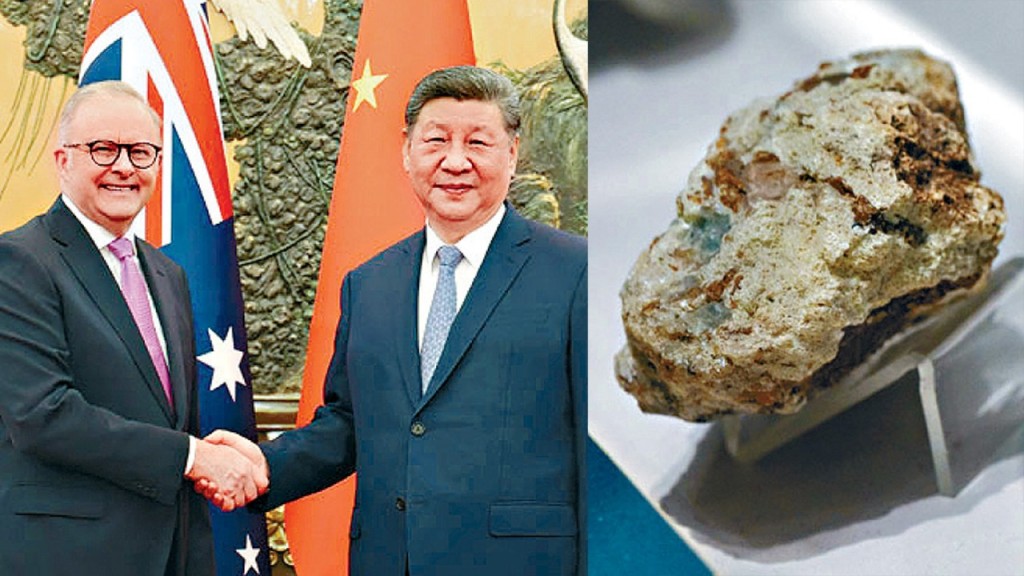
Rare earth is undoubtedly the battleground between the United States and China. These minerals, essential for everything from smartphones to F-35 fighter jets, are a focal point of Sino-US trade relations.
In a bid to break China’s dominance, the US has been actively seeking partnerships worldwide, with its latest move aimed at Australia.
This development, however, is not happening in a vacuum. It unfolds against a backdrop of intricate economic ties, where China is a major investor in the very nation the US is courting, revealing the complex and often contradictory nature of modern geopolitics.
The US outreach to Australia is a calculated move. China currently accounts for nearly 70 percent of global rare earth production, a position of immense strategic leverage.
Australia, while holding the world’s fourth-largest reserves, presents a viable alternative. However, this new partnership walks a diplomatic tightrope. China is a monumental investor in Australia, with deep stakes in its commodity assets and a significant presence through its citizens studying and working there.
This creates a tripartite relationship of profound interdependence, where security concerns and economic interests are locked in a delicate dance.
The situation is a clear symptom of a deepening bipolar world order, but the lines are far from simple.
The recent seizure of Chinese-owned chipmaker Nexperia by the Dutch government offers a cautionary tale. China’s Ministry of Commerce accused the Netherlands of “violating market principles” and vowed to “take necessary measures.”
While Beijing has yet to formally respond to the US-Australia deal, the Dutch incident signals a pattern of escalating economic defensiveness from China and a likely template for its response to perceived provocations. Given the intricate web connecting China and Australia, a significant outcome cannot be ruled out.
As these geopolitical tensions intensify, capital seeks stability. The uncertainties push global investors to find a safe harbor.
In this climate, Hong Kong emerges as a compelling answer. Its unique position under the “one country, two systems” framework, combined with its geographic and cultural proximity to the Chinese mainland, creates a bridge to the world’s second-largest economy.
Furthermore, its robust, open markets and the US dollar peg to the Hong Kong dollar provide a layer of financial security and predictability that is increasingly rare.
The US-Australia rare earth partnership is more than a trade deal; it is a microcosm of a fragmenting global system. As great powers realign supply chains for strategic autonomy, the ripple effects will be felt across markets and alliances.
In this new era of contested interdependence, nations like Australia must navigate a path between giants, while hubs like Hong Kong may well become the barometers of global confidence, offering a refuge for the capital displaced by the very rivalries they are caught between.