Read More
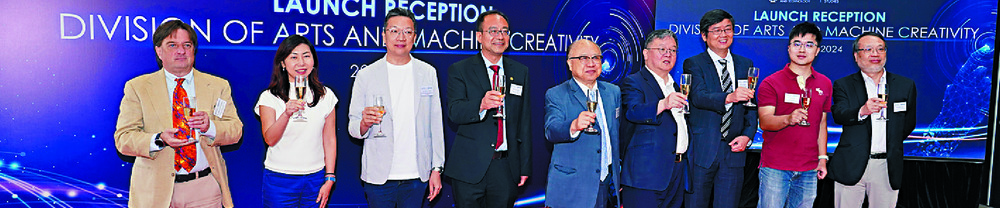
Alysha BibiIn inaugurating the division of arts and machine creativity yesterday, council chairman Andrew Liao Cheung-Sing hailed it as "the beginning of a new era in cultural and creative industries."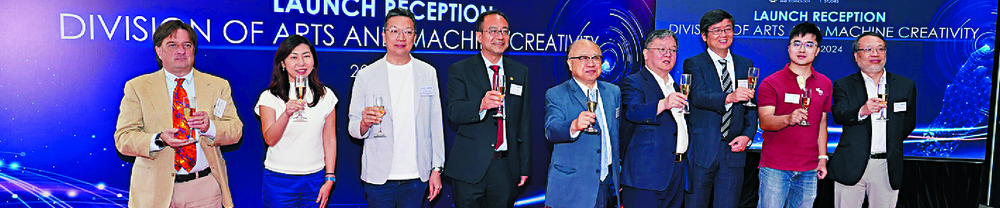
In a first, the Hong Kong University of Science and Technology has launched a new cross-disciplinary center to explore the fusion of arts and technology, including the application of machine learning.
ADVERTISEMENT
SCROLL TO CONTINUE WITH CONTENT
The division will pioneer research in four key areas: machine creativity; machine-assisted art practice; art management; and critical studies on arts and machine creativity. The aim is to leverage artificial intelligence and machine learning to enhance the process of creating art.
It will also offer postgraduate programs in this field as early as this autumn.
They include two taught programs - master of arts and master of fine arts in arts and machine creativity.
These aim to "bridge the gap between artistic creativity and technological innovation and prepare the next generation of leaders in managerial roles and creative practice."The master of philosophy and doctor of philosophy in arts and machine creativity - will focus on advanced research and scholarly explorations.
Provost Guo Yike said that the program's strong emphasis on "internationalization" sets it apart from other institutions.The university has forged partnerships with leading institutions such as Bard College and Stanford University in the United States, the Royal College of Art in England, and industry giants like Huawei and Sony Entertainment.
The expected intake is 50 to 100 for the taught master's programs and 20 to 30 for the research postgraduate programs, the dean of the academy of interdisciplinary studies Qu Huamin told The Standard.Applicants will need to show either a strong background in arts or a solid skill set in technology, with the master of fine arts program requiring a "stronger arts foundation."
The one-year MA program is suitable for students from a wider range of fields, like humanities and literature. The initiative aligns with China's 14th five-year plan to develop Hong Kong as a center where "East meets West."