Read More
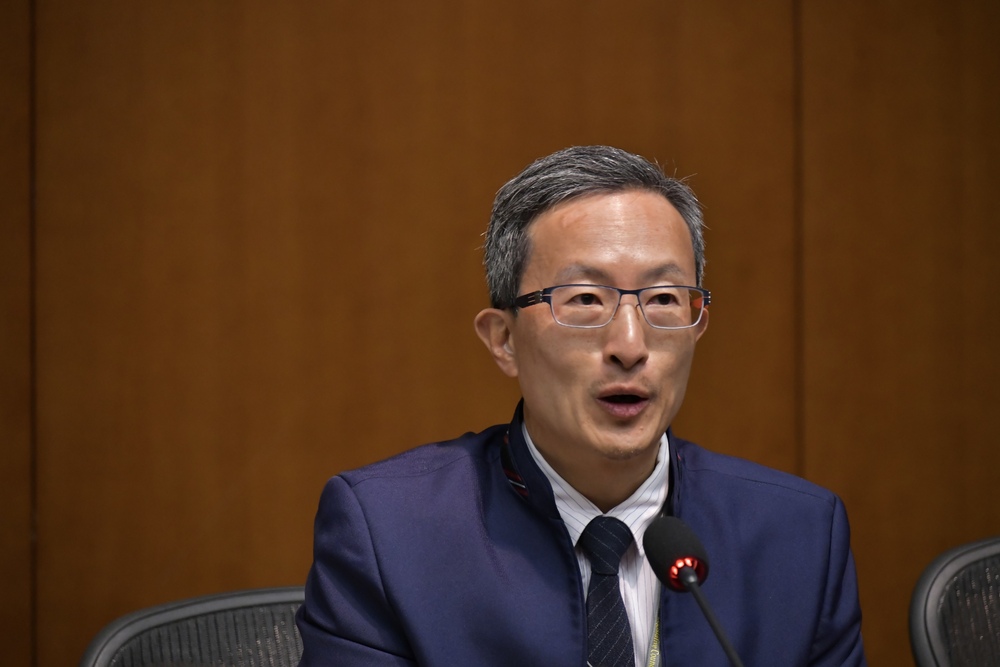
The establishment of a research center in Hong Kong by pharmaceutical giant AstraZeneca will bring a major medical breakthrough in the SAR, said David Lam Tzit-yuen, who represents the sector in the Legislative Council, yesterday.
ADVERTISEMENT
SCROLL TO CONTINUE WITH CONTENT
The government should encourage long-term investments in the sector and build schools to train researchers, he said, pointing out there were few research and development facilities here in the past.
Authorities should work harder together to encourage enterprises to make long-term investments in the health-care sector and train more scientific research talents.
"If an international pharmaceutical company moves to Hong Kong, it will be a good competitor for the local scientific industry and motivate us to catch up, as if it's a race," Lam said.
The Hong Kong-Shenzhen Innovation and Technology Park has a unique advantage in its mainland connection, he said.
"[The park] is supported by the country. Apart from communicating with the world, we can also analyze data from the mainland there," Lam said.
He also hoped that long-term investments would be made by the government in setting up a third medical school in Hong Kong to train scientific research talents other than doctors.
Lam said Hong Kong had sufficient financial resources, but some traditional thinking might hinder government investments in such a field.
He said policymakers often take a short-term view, like five or 10 years, in questioning a project's returns, while seldom considering the benefits of long-term investments.
"I believe both long-term and short-term R&D should come hand in hand. Capital is the first consideration and talent should include more than just doctors," Lam said.
The new R&D center held a plaque unveiling ceremony last month, with the Office for Attracting Strategic Enterprises saying it will focus on treatment for tumors, cell therapy and gene editing.
It is also expected to move to Lok Ma Chau Loop, the proposed development site for the Hong Kong-Shenzhen Innovation and Technology Park, by next year at the earliest.
The company's global executive vice president Wang Lei said Hong Kong attaches great importance to biotech development and expects the center's research team to hit 100 in five years.
Financial Secretary Paul Chan Mo-po said the center can "reinforce the frontier research of distinguished medical research institutions, experts and scholars" of Hong Kong and the Greater Bay Area to boost regional pharma research and development.
Hong Kong is fully capable of becoming a world-class life and health technology cluster, and pharma companies are welcome to expand businesses in the SAR, Chan said.