Read More
Engineers from the Chinese University of Hong Kong have developed an artificial intelligence navigation system that can allow millions of microrobots to gather in a human body for medical purposes.
ADVERTISEMENT
SCROLL TO CONTINUE WITH CONTENT
The new system can allow millions of microrobots to behave like a bee swarm, autonomously reconfiguring their motion and distribution according to environmental changes, which allows them to go around obstacles inside a human body.
The findings have been reported in the Nature Machine Intelligence journal, the university research team said.
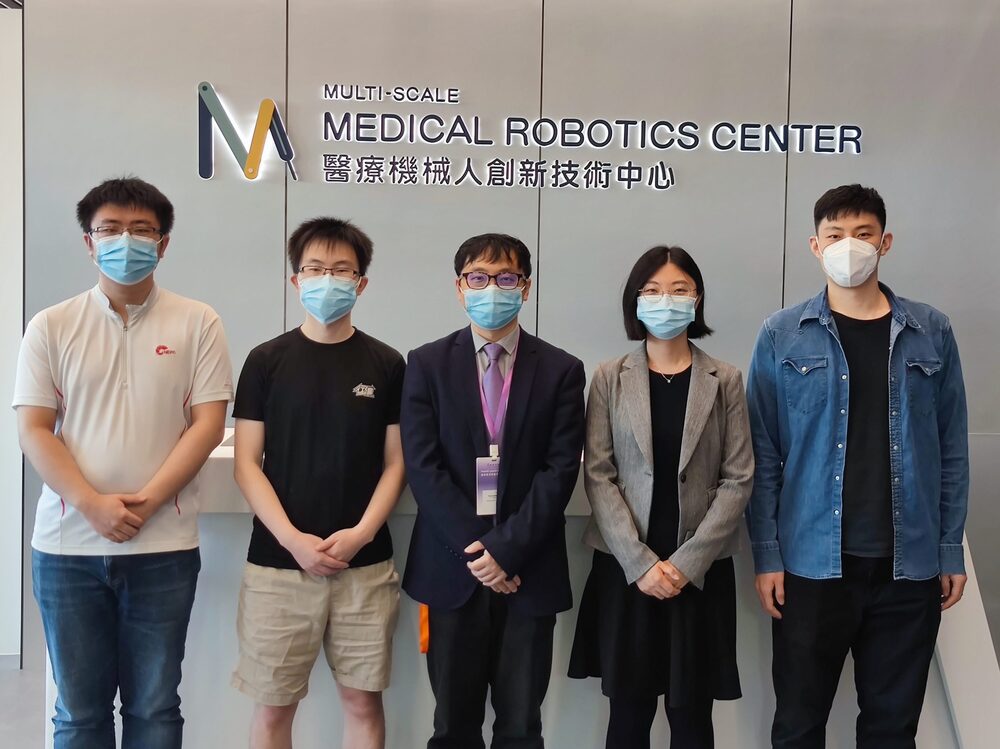
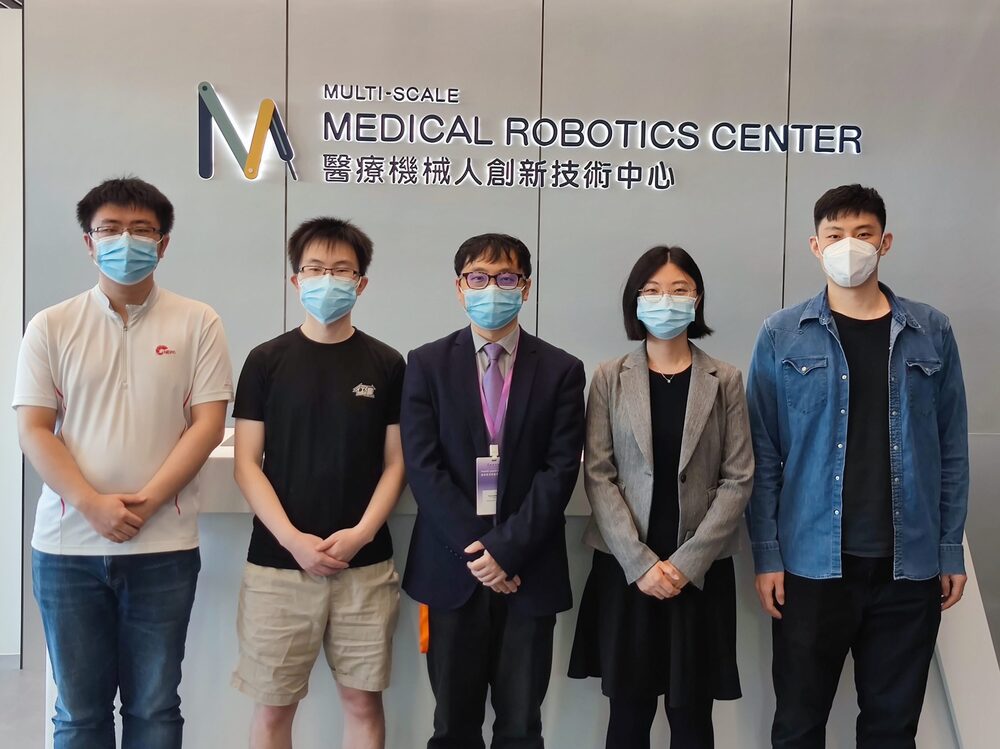
Zhang Li, the team leader and professor at CUHK's department of mechanical and automation sngineering, said the microrobots have been used for drug delivery inside the human body for years.
However, he said, it would previously take thousands or even millions of microrobots to gather together to deliver the drug due to the limited capacity and functional capabilities of each individual. Delivery would also fail easily because of the complicated and changing environments inside the body.
"We found that a school of fish or a flock of birds will switch the shapes and structure [of their group] to adapt to different situations and environments," Zhang said.
"With inspiration from of these kinds of animals, we developed an AI system that realizes the automation of the microrobot swarm with deep learning algorithms."
The AI system obtains vision from imaging tools, such as ultrasound and X-ray fluoroscopy, to help the microrobots identify obstacles inside the human body and plan in real-time the best possible route for the delivery of drugs, he said.
The system can also control magnets or electromagnets to navigate the microrobot swarm and change their formation to increase their success rate in reaching the destination, the research team said.
The team also examined the effectiveness and reliability of the microrobotic AI navigation system in a virtual placenta, simulating the complex blood vessel structure that microrobots may face.
The results showed that the AI system works successfully in complicated environments.
"We haven't yet found a way to make the microrobots themselves intelligent," Zhang said, "but we can use the AI controlling system to externally manipulate their collective motion, making sure they do not get lost and stuck in the body."
Researchers have further proposed a framework for the autonomy of microrobot swarms as a basis for future studies.
The framework consists of five levels - zero to four - with each indicating an increasing autonomy level of the microrobots.
For example, a level one microrobot swarm can work in static environments under a magnet control and an imaging system, while a microrobot swarm with level four autonomy can navigate by itself without human intervention, they said.
"I hope the AI navigation system will one day enable surgeons to deploy microrobots for therapeutic applications, such as targeted drug delivery in the human body without specialized training," Zhang said.