Read More
Facing Financial Secretary Paul Chan Mo-po is a book - and a situation - that would challenge anyone in a similar position.
ADVERTISEMENT
SCROLL TO CONTINUE WITH CONTENT
Instead of being on track to generating an income of HK$85 billion from land sales and premiums to narrow the fiscal deficit to HK$54.4 billion at the end of this financial year, Chan is confronted with an 82 percent drop in land premium income so far.
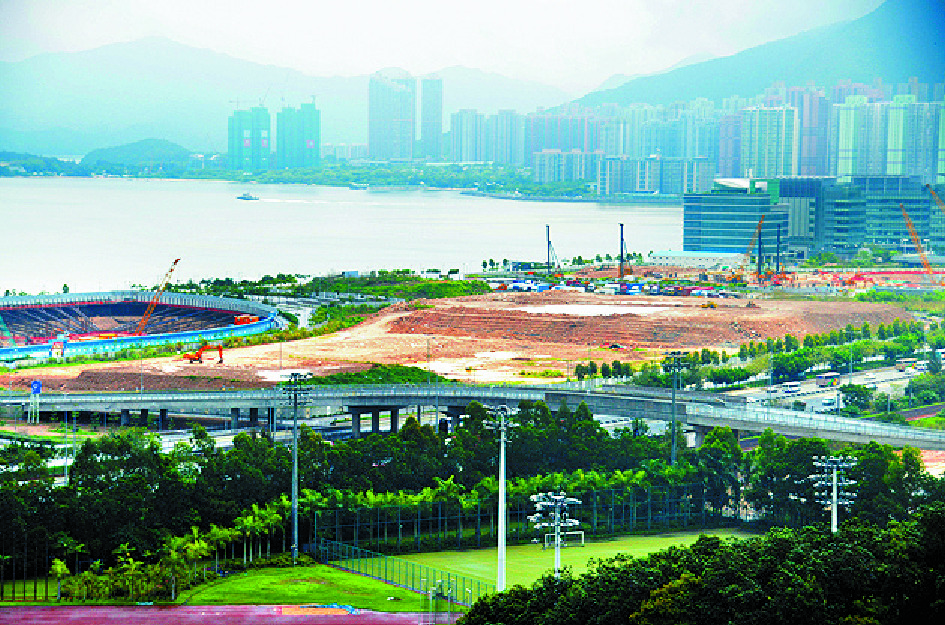
Since April, only a government lot has been sold. The Kennedy Town site was sold to Wheelock Properties for HK$1.72 billion - a 21-year low for a plot on Hong Kong Island.
Together with land premium income from two applications, Chan has secured just HK$3.38 billion from land.
This compares poorly with the land premium income of HK$19 billion for the same period last year.
The bad news is that this could be just the beginning as Chan is now also under pressure to lower the stamp duty for stock trading.
This comes after the mainland halved its stamp duty in a desperate move to shore up mainland stock markets that have been rocked by the debt default crisis, led by the country's largest real estate developers.
The share price of Evergrande Group sank almost 80 percent after it ended an 18-month suspension to resume trading yesterday.
Chan - also embattled by a running deficit worsened by the pandemic - sought to narrow the fiscal gap by increasing the stock stamp duty from 0.1 percent to 0.13 percent two years ago.
At that time, he and other government officials brushed aside warnings, saying the hike in stock stamp duty would not dampen investors' interest in the city's stock market as long as they could continue to make money out of it.
That was a fair comment - profitability is the only benchmark.
The chief executive has given Chan the task of leading a special force to boost the stock market.
While it is too early to say whether Chan will propose reversing the 2021 decision and lower the stock stamp duty, the formation of a task force shows the government is waking up to the reality of a less-than-vibrant stock market.
The decreased trading volume could be due to multiple factors. If the increased stamp duty happened to be one, it would be quite minor relative to others - including investors' interest being affected by the growing debt default crisis in the mainland as well as geopolitical conflicts between China and the US.
Some analysts are upbeat about the second half.
The question is: would they be too optimistic as they predict an economic rebound in the second half that would be so strong that the financial secretary could keep the deficit at HK$54.4 billion as forecast?
Nothing is impossible. It is only a matter of probability.
Will Hong Kong's exports rebound in the second half to make good the shortfall so far? I dearly wish so.
Will the financial secretary succumb to pressure to review the tax structure so as to bring in new taxes to boost government incomes?
I dearly wish not as this would deal the city another major blow.