Read More
It is a fallacy to say that cutting civil service wages would lead to a major impact on the private sector payrolls.It would be rare for private firms to give equal weight to civil service pay as they conducted staff pay reviews.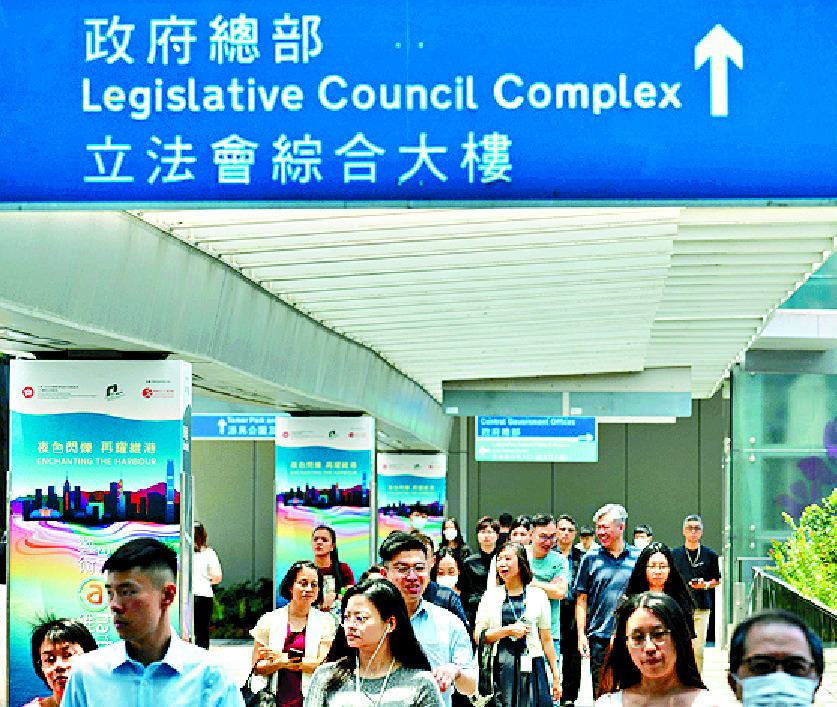
If both were, indeed, ever connected, it was due to the annual pay trend survey commissioned by the Civil Service Bureau. However, even this connection has been one-way only: the administration refers to private payrolls as it reviews the wages of the civil service.
ADVERTISEMENT
SCROLL TO CONTINUE WITH CONTENT
Therefore, even those working in the private sector are finding it difficult to accept it when some lawmakers, including finance sector representative Chan Chun-ying, asserted that private sector employees would feel bad if civil servants were subject to pay cuts.
These lawmakers were objecting to reducing civil service pay to help fill the fiscal deficit black hole.
But their argument is a total fallacy - as erroneous as claims that elderly commuters had abused the HK$2 travel subsidy so much that it would be justifiable to cancel the scheme, despite the fact that most elderly are honest and abuse has been limited to a very small number of travelers.
Lawmakers have always been too ready to make big statements without underscoring the facts.Findings of the pay trend survey that is based on a selected group of companies are only one of a number of factors considered by government decision makers during pay reviews. Other factors include the state of economy, cost of living, government fiscal position, staff pay claims and civil service morale.
Whether civil servants should be subject to a pay reduction in the face of successive years of huge government deficits is undeniably a very hot and controversial topic.As Financial Secretary Paul Chan Mo-po continued to stress the need to keep on borrowing billions to maintain government operations and launch new infrastructure projects, it is only natural that the civil service payroll is brought up for increased discussion.
As mentioned, civil service pay adjustment is dependent on multiple factors.So what are the current states of the economy and government fiscal health, apart the pay indicators based on data of the past? If both had been dire around 2003, they are probably even more serious now as the city faces a structural, rather than cyclical, situation.
As lawmaker Chan defended the civil service wages, he failed to point out that many working in the private sector - including professionals such as architects, bankers and lawyers - are already being confronted with either pay cuts or redundancy as their employers struggle to keep their heads above the water line.The administration may have taken steps to streamline the procedure of sacking civil servants, either due to incompetency or a lack of loyalty, but the civil service still offers a level of job security that private employment cannot provide.
As thoughts are given to whether civil service pay should be cut to lower recurrent expenditure, thought may also be given to whether the administration still needs so many civil servants as a number of jobs requiring simple skills may no longer be needed.