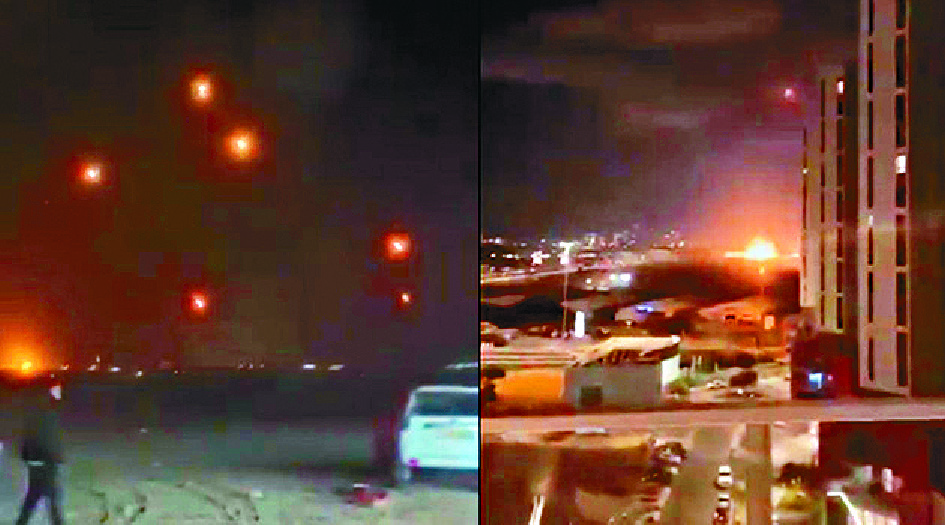
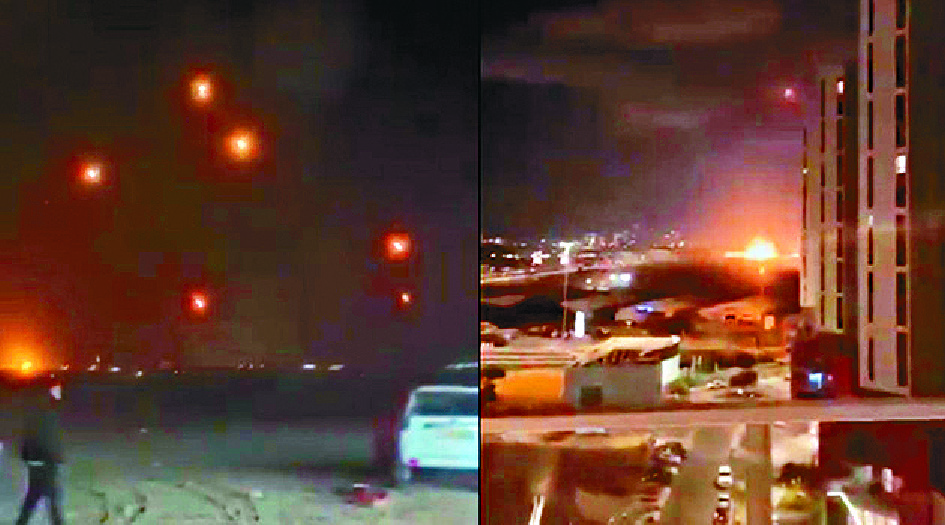
Soon after Iran attempted to rain hundreds of drones and missiles on the Jewish state in April in retaliation for Israel's strike at the Iranian consulate in Damascus in which a top IRGC commander and a number of others were killed, Israeli warplanes flew long distance to attack Iran directly.
Israeli Prime Minister Benjamin Netanyahu then selected an advanced air defense system in the Iranian city of Isfahan as the target after saying Iran made a mistake.
The air defense system selected was close to the headquarters of Iran's nuclear program.
This week, Tehran again launched hundreds of long-range and ballistic missiles in an attempt to destroy some of Israel's military facilities, as well as the headquarters of its intelligence service unit Mossad, after Israel decapitated the entire leadership of Tehran's most significant proxy militia in the Middle East, Hezbollah.
Netanyahu accused Tehran of making a "big mistake."
It is almost a certainty that Israel will respond militarily to Iran's missile attacks. However, will it choose to strike a target nearer the nuclear facilities or directly at the facilities?
That is what the world - including Israel's strongest backer, the US - is most concerned about.
The Jewish nation demonstrated an ability to venture long distance into Iran's air space to deal a blow to its nuclear facilities the moment it struck a sophisticated air defense system near the nuclear facilities, fully aware of their whereabouts.
However, a direct strike at these facilities would lead to enormous uncertainty and governments around the world, including Israel's allies, would not wish to gamble with that.
Following a direct attack at Iran's nuclear facilities, in the best-case scenario conflicts would continue to be confined to the region. However, in the worst-case scenario that the world fears most, the regional conflicts may extend beyond the Middle East to involve more countries. As nuclear fears continue to be a deterrent, a direct strike on Iran's nuclear facilities - even a devastating one - would only delay Iran's nuclear program but would not get rid of the knowledge and experience that Iranian scientists have accumulated so far.
Further down the road would be a greater resolve to fill the arsenal with nuclear weapons.
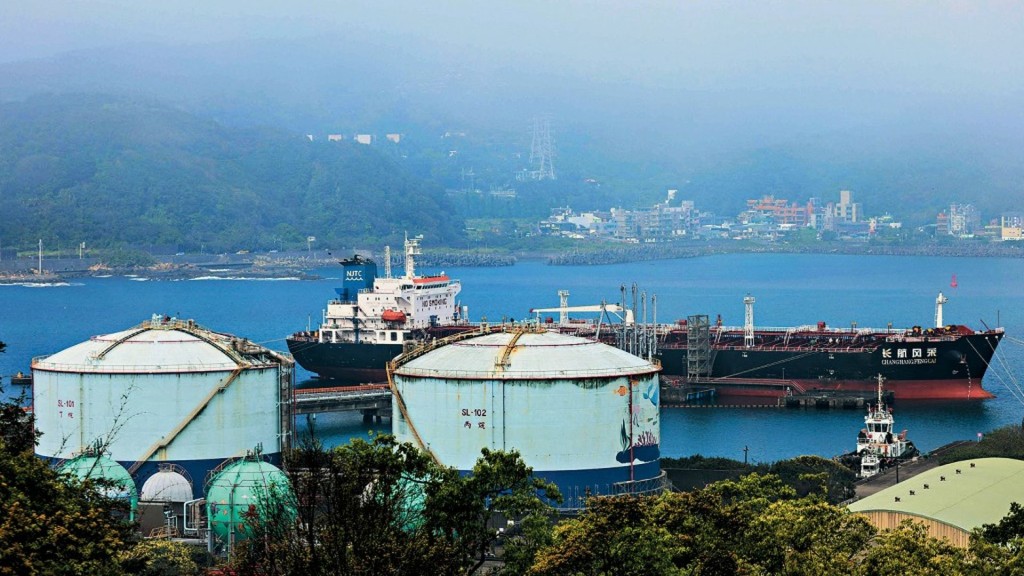
If an attack at Iran's nuclear facilities was not a safe choice, Netanyahu may be persuaded to select less sensitive targets, including oil refineries, that would devastate Iran's economy that is already struggling due to US sanctions.
The drawback of striking oil facilities would be an energy shock wave throughout the world.
While the US has been trying to contain the conflicts in the Middle East, it is increasingly evident that hawks in the Israeli government are trying to seize the moment before the US presidential election as well as the opportunity opened by Hamas' October attack to reshape politics in the Middle East to greatly reduce Iran's influence in the region.
In declaring UN secretary-general Antonio Guterres a "persona non grata," Israel is showing the world it is determined to reshape the Middle East, starting with the elimination of Iran's proxies in the region.