Read More
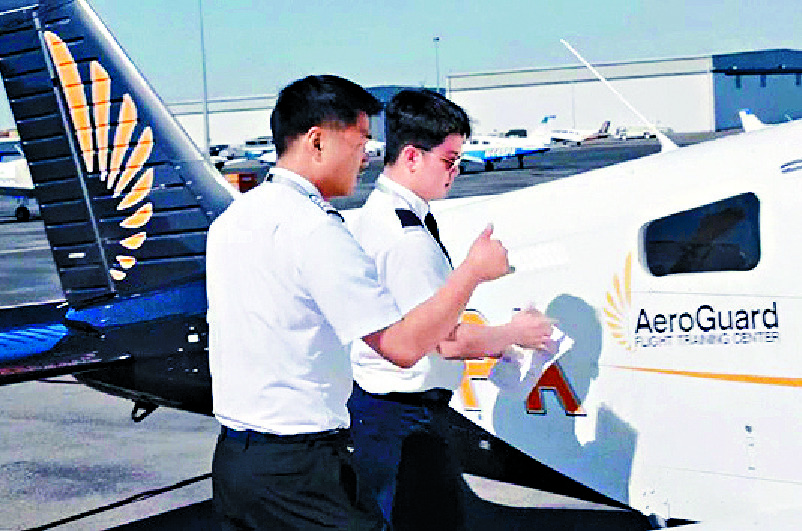
It was a big statement when Cathay Pacific's flying head Tim Burns said there would be no delays to the airline's cadet pilot training program after a major flight school suspended all solo flights for Cathay cadets.Neither Cathay nor AeroGuard, the flight academy, would have thought this batch of Cathay students would be grounded from solo flights when they headed for the Arizona-based school for a year to hone their flying skills.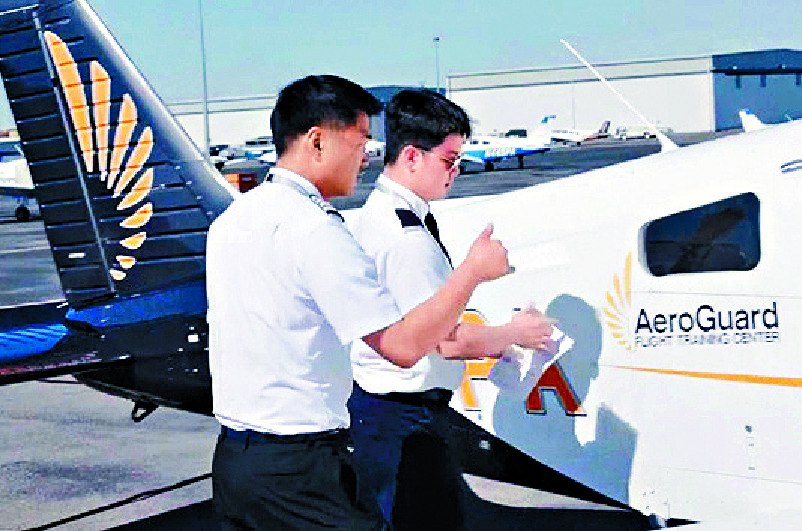
It is hoped that Burns is correct, though there is no such thing as a guarantee, except in legal documents.
ADVERTISEMENT
SCROLL TO CONTINUE WITH CONTENT
Nonetheless, the unimaginable happened.
Based on the information available so far, the factor leading to the decision to impose the moratorium on solo flights was the failure of a number of cadets to consult their duty instructor before carrying on after various incidents.
While the incidents themselves - a wing-tip collision with a fixed object, a bounced landing causing damage to the propeller and a plane skidding off the runway - were significant, the attitude revealed afterwards became a bigger concern as a readiness to communicate any issues is basic to flight safety.
The need for a correct attitude cannot be emphasized enough and this must be stressed when the cadets study theory at Polytechnic University or receive flight training at AeroGuard.Nonetheless, the incidents may point to a broader concern affecting the industry after the pandemic even though they involved only three trainees.
Cathay is among many airlines making great efforts to recruit more pilots to rebuild flight capacities. While there are several major flight-training schools, their capacities - in terms of instructor and aircraft numbers - are expected to cope with ordinary demands from the industry.But, unless they can expand quickly, they will unlikely be able to cope with a sudden surge in student intakes.
For example, Hong Kong's two medical schools were able to double student intakes after enhancing their facilities - but they would have been unable to enrol more students without further expansion.It can be imagined that, as the demand for commercial flight training increases across the world after the pandemic, flight academies including AeroGuard are seeing their capacities stretched, with the time that instructors can give their students strained. In an ideal world, recruitment could be suitably paced but this is seldom the case.
Burns made another big statement -that Cathay's recent recruits were as good as before - but this is a numerically impossible scenario.Look at this. If a company planned to hire 10 new employees and there were 50 applicants, only the top 10 would be employed. If it decided to hire 20 instead, the second best row of 10 would also be recruited when they would have been eliminated in the past.
This is despite the fact that all 50 applicants would have met the recruitment requirements because they must have met the basic requirements in order to be included for further consideration.Cathay could look to diversify its training base to include other flight academies to overcome the bottleneck but, then, other academies may also be full in wake of the global demand for commercial pilots.