Read More
The retaliation by Beijing to stop recognizing the British National (Overseas) passport as a valid travel document was softer than anticipated. The question now is whether there will be more retaliatory restrictions to follow. This policy is the largest settlement program since the UK's right of abode scheme that was in place before 1997. It allows BNO passport or status holders to apply for a visa to live in the UK with minimum requirements, including having six months of living expenses and being tuberculosis-free.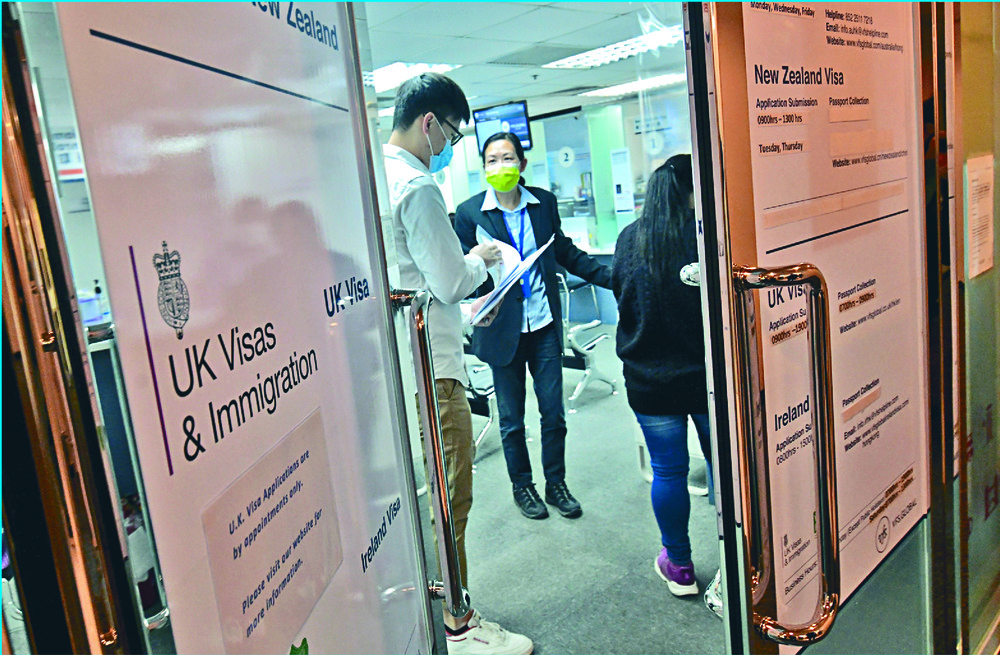
The foreign ministry said Beijing reserves the right to do so. But there is also the opinion that any further retaliatory measures should be sharply focused to ensure Hongkongers who are not interested in the so-called BNO 5+1 policy - which allows BNO holders to apply for British citizenship after living in the UK for five years - are not affected.
ADVERTISEMENT
SCROLL TO CONTINUE WITH CONTENT
It is obvious that the UK government is trying to kill two birds with one stone.
On the one hand, Boris Johnson's government wants to be able to claim the moral high ground of supporting Hong Kong people. On the other hand, it expects thousands of Hongkongers to move there along with their skills and property investments.
Both are essential for a country recovering from the Brexit fallout and the Covid pandemic. Due to the double whammy, the British economy for 2020 is estimated to have contracted by more than 10 percent in probably the biggest drop in its history.
Beijing has never hidden its displeasure. On the day the scheme opened for applications, Beijing stopped recognizing BNO passports, while the SAR government required Hongkongers to clear immigration by using either a Hong Kong identity card or an SAR passport.Executive Council member Regina Ip Lau Suk-yee asserted the reaction was useless, saying Beijing should have been more drastic and used the opportunity to strictly apply the nationality law in the SAR so that all foreign passport holders would lose their Chinese nationality and other rights.
Ip's proposal, if accepted, would affect hundreds of thousands of Hongkongers who have other citizenship, including British, US, Canadian and Australian.Ip may not be wrong in principle because the Chinese nationality law rejects dual nationalities. But perhaps she believed the city was not confused enough and made the call to cause even greater alarm in society.
Many professionals occupying executive positions in the private sector returned to Hong Kong after obtaining a foreign passport. Expanding the hit list, as Ip has proposed, would shake the fundamentals.The Sino-British conflict centers on the BNO passports - and the shooting match should be confined to that issue.
In modern warfare, the winning side often uses smart bombs to minimize collateral damage. On that score, Ip clearly is not particularly smart.So will Beijing escalate attacks on BNO passports by, for example, stripping the holders of their permanent residence in Hong Kong after moving to the UK?
This would increase the cost of grabbing the opportunity. In the end, immigration is a very personal choice which takes into account many aspects, including family ties, financial support, education and job opportunities.