Boris Johnson's admission to intensive care serves as a powerful reminder that the coronavirus pandemic must never be taken lightly.
It was absolutely astonishing that, less than 24 hours after he was taken to London's St Thomas Hospital, the British prime minister was in the intensive care unit with a ventilator at the ready in case his health deteriorated to critical.
Johnson is the world's first government head to have been hospitalized for the pandemic, showing that anyone ignoring the gravity of the disease may seriously regret it later.
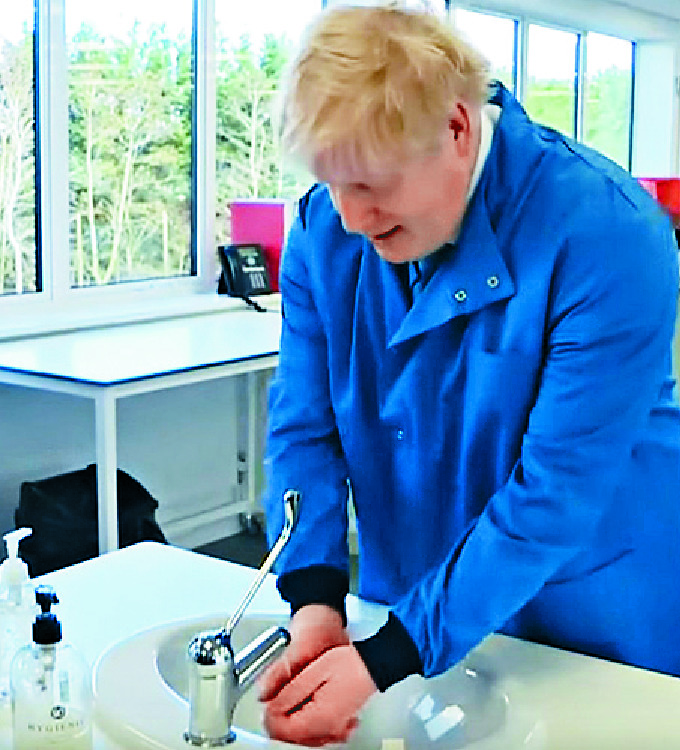
Some may recall that when Johnson - or, as he is sometimes affectionately called, Bojo - was still robust and actively took questions from the media, he conceded that he continued to shake hands with people he met during a hospital visit to help boost the morale of National Health Service workers.
It's a standard courtesy that should have been avoided.
It's hoped that Johnson will recover soon and be able to lead the country again. For now, the national crisis is also a personal fight for him.
There was already a sense of weirdness when Downing Street announced shortly after Queen Elizabeth's national address on Sunday evening that Johnson had been moved to the hospital.
Then, it was speculated his condition must be bad as news of his hospitalization was bound to eclipse the desired impact of the queen's speech.
It was revealed yesterday that Johnson was given oxygen, but he was put not on a ventilator.
It must be said that it was an extremely dangerous idea to pursue a strategy of herd immunity when so little is know about the new that was first identified in China.
Britain has since become more proactive, putting up temporary field hospitals in many cities including London, Manchester, Birmingham and Bristol.
Health Secretary Matt Hancock - who has finished his self-isolation after testing positive - also pledged to raise the number of tests to 100,000 a day at month end.
Johnson's peers in Europe and elsewhere in the world must quickly update their understanding if they still see the virus as just another flu.
Brazilian President Jair Bolsonaro's insistence on ignoring it was as alarming as the Britain's herd immunity assumption.
Like many Western countries, Britain missed opportunities to fortify itself when the devastating disease was still confined to Wuhan.
It could have started setting up local production lines for personal protective equipment and ventilators when it became so clear that demand would outstrip supply.
Americans have finally conceded that it is beneficial to wear masks, but not the Brits - when will the latter wake up to realize the benefits?
If caretaker prime minister Dominic Raab is concerned that supplies for medical staff would worsen if the public was asked to wear masks, he should refer to Hong Kong and Taiwan. Their experience showed it's simple to set up local production lines and is never too late to put up factories locally to meet domestic needs.
Johnson's admission to intensive care may have shaken confidence. But it has reminded us that the disease is dangerous. While it's now down to him to fight the disease personally, it's also an ongoing battle for everyone.