Read More
JP Morgan warned that the introduction of a capital gain tax could trigger a panic sale in the local property market, in response to some suggestions to ease the Hong Kong government's over HK$100 million deficit.
ADVERTISEMENT
SCROLL TO CONTINUE WITH CONTENT
But the investment bank said the possibility is low and the impact will be time-limited.
Individuals' capital gains from selling assets can be charged as high as 50 percent, potentially leading to panic selling and short-term pressure on property prices, according to its report.
But it may not shape the property price in the long run, referring to the US, whose median home sales price kept rising by a total of 576 percent from 1980 to the third quarter of 2023.
It assumed little likelihood for Hong Kong to charge the capital gain tax, considering it has a simple and low-rate tax system and is known as a tax haven.
Moreover, there is no capital gain tax in Singapore, which has been competing with the SAR to be Asia's top financial and wealth hub.
If Hong Kong were to implement the capital gain tax, it would be under certain conditions, such as targeting the resales only within two to three years, to ease the potential impact of short-term panic selling.
Hong Kong eased its "spicy measures" - introduced to cool the property market since 2010 - in October and saw stamp duty revenue from property transactions rise almost 50 percent month-on-month in December.
However, stamp duty revenue hit a nine-year low in 2023, slumping more than 5 percent year-on-year. Stamp duty revenue stayed lower than HK$6 billion for two consecutive years, with HK$5.94 billion and HK$5.99 billion in 2022 and 2023, respectively.
Responding to the suggestion earlier this month that capital gain tax was being deliberated, Financial Secretary Paul Chan Mo-po said that it will only be launched after careful consideration.
He suggested measuring the tax's influence on Hong Kong's competition globally in case it loses additional revenue.
Hong Kong could expect "one or two more years" to turn a profit after Chan stated the next fiscal year starting in March 2024 would be a turning point.
Other new taxes were suggested to boost revenue, including the departure tax and stamp duty on crypto.
The Hong Kong House Price Index fell 2 percent to 321.4, a six-year low in November, compared to a month earlier.
Some secondary projects have returned to the price level of 10 years ago as the homeowners suffered losses when selling.
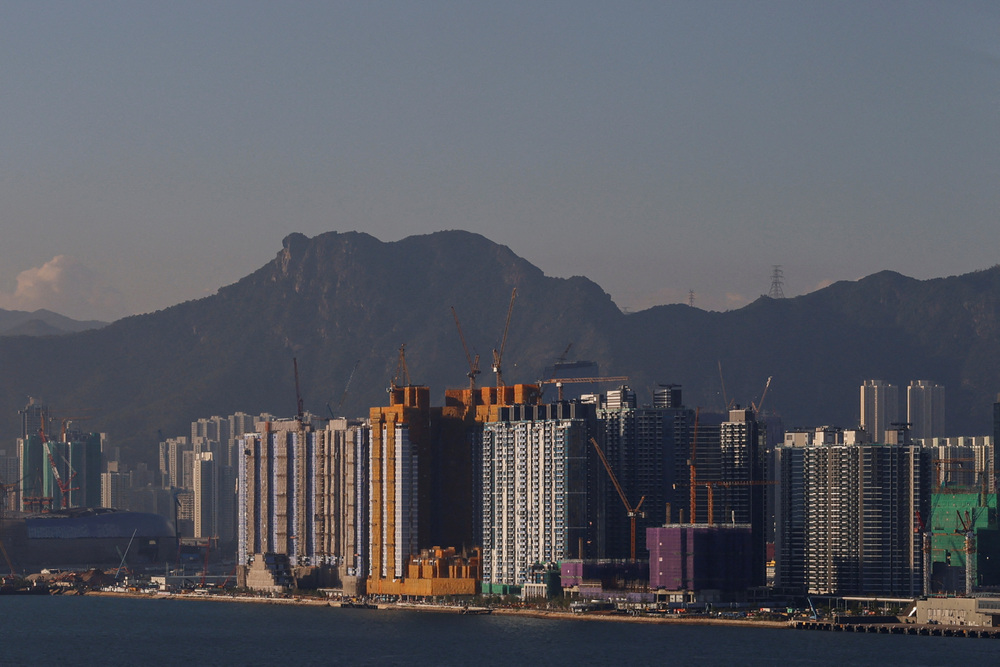
Hong Kong eased its 'spicy measures' in October and saw stamp duty revenue from property transactions jump. REUTERS