Read More
Science, health, legal and other local professional talent needed for the Greater Bay Area's development will be allowed unlimited travel to Hong Kong and Macau under a new multi-entry visa scheme, China's National Immigration Administration announced yesterday.
ADVERTISEMENT
SCROLL TO CONTINUE WITH CONTENT
From February 20, six categories of experts working in the bay are eligible to apply, including those in science and research, academia, health, legal and other higher management candidates, as well as "extraordinary talent" who can bring significant contributions to the area's development.
Mainlanders considered "extraordinary talent" can get a visa for up to five years, while candidates in science and research, academia and health, can apply for a three-year visa.
Legal and other professionals can apply for a one-year visa.
"Extraordinary talent" include academicians at the Chinese Academy of Sciences and the Chinese Academy of Engineering in Beijing as well as international awardees and experts with "significant influence."
Those eligible for a three-year visa are senior-ranked scientists with experience in national laboratories, teaching staff in top universities, and hygiene and health-care experts.
Visa holders will be allowed multiple visits to Hong Kong and Macau, staying no more than 30 days each time.
The National Immigration Administration said the new visa scheme is an "innovative move in enhancing communication and cooperation between the mainland, Hong Kong and Macau."
It added: "By introducing the visa scheme, we can enhance mobilization of talent and technologies within the GBA in a speedy and efficient manner, cater to the demand of knowledge exchange among talent, and inject new vigor to the socio-economic development in the mainland, Hong Kong and Macau."
An IT representative said the visa scheme can foster innovation and technology development, while attracting top talents to Hong Kong.
"It can save a lot of time if people can visit [Hong Kong] multiple times with one visa," said Cyberport Startup Alumni Association vice president Raymond Yeung Chi-ho.
"We have a great demand for high-end talent, especially in the IT sector. [With the visa], we can have more knowledge exchange with different industries in the mainland."
Election Committee constituency lawmaker Johnny Ng Kit-chong said the visa scheme will facilitate mainland talent to participate in international seminars in Hong Kong.
"I organized an Asia-Pacific regional seminar earlier in January, where some mainland experts encountered problems with their visas and so they were unable to participate in the seminar," Ng said.
Meanwhile, Suen Lap-man, director of human resources firm Watson Consultancy, said the Hong Kong government should step up job opportunities to ease the brain drain in the city.
"Those top talent may not consider Hong Kong as an ideal place to start their careers as the city's science development is lagging behind the GBA," Suen said.
"But middle-ranked IT talent may find Hong Kong attractive as they can use Hong Kong as a stepping stone to job opportunities overseas."
eunice.lam@singtaonewscorp.com
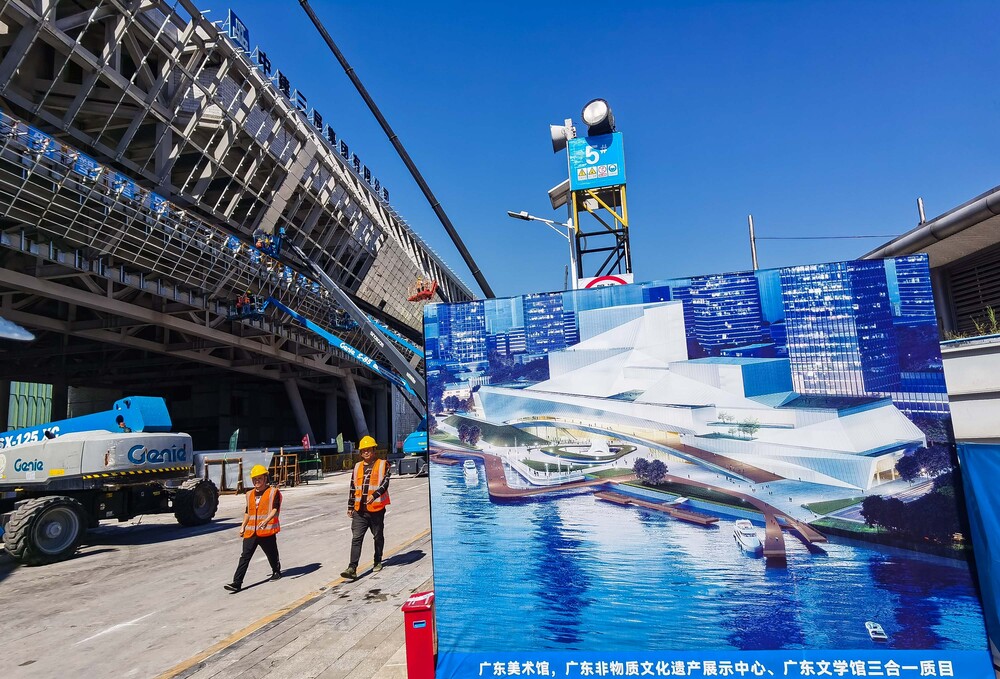
A museum and exhibition center under construction in Guangdong. Xinhua