Read More
A national security trial of a Hongkonger can be handled in the mainland if no local lawyer will defend the accused.
ADVERTISEMENT
SCROLL TO CONTINUE WITH CONTENT
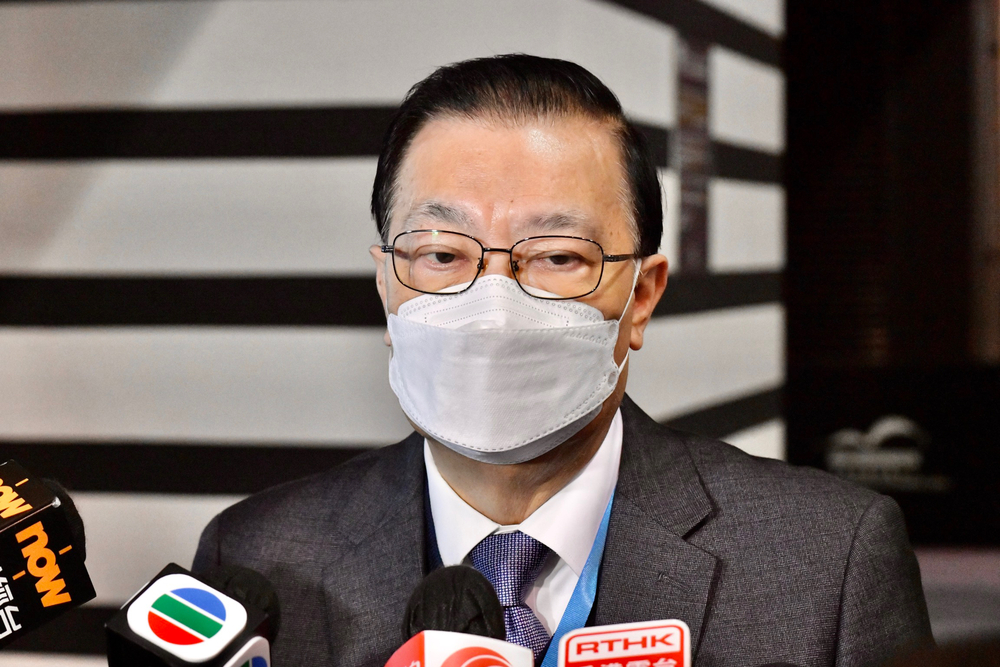
That was the shock message yesterday from Tam Yiu-chung, a National People's Congress Standing Committee delegate.
He claimed in a TVB interview that such action would fit the spirit and logic of the national security law imposed on Hong Kong by Beijing in 2020.
But hours later Tam said he had merely responded to a hypothetical question.
Tam's words came as Hong Kong awaits an administration-requested interpretation of the law from the NPCSC after the Court of Final Appeal upheld a ruling allowing a British barrister to defend media mogul Jimmy Lai Chee-ying in a trial involving alleged collusion.
Some people in Hong Kong want foreign lawyers kept out of security cases, but Tam also said advice could be given in private.
"But if we can ban [foreign lawyers] from representing and defending the defendants it would be in line with the legislative intent and logic of the national security law," he said.
And then if someone was unable to hire a local lawyer, transferring a trial to the mainland could be a solution.
When asked if such an arrangement would be unfair to a defendant, he said: "It won't be a problem because the transfer mechanism is in the law."
According to Articles 55 and 56 in the national security law, the central government can move a trial to the mainland if a case is complex due to the involvement of foreign countries or external elements, or a serious situation occurs that the SAR is unable to enforce the law, or a major and imminent threat to national security has occurred.
Tam said while he would not speculate whether Lai's case could be transferred to the mainland, the central government was worried proceedings involving "foreign elements" could interfere with the judicial process.
If Lai was transferred to a mainland court, he added, he could face life imprisonment for secession, though the death sentence can be imposed in the mainland.
But speaking after a Constitution Day seminar hours later, Tam said his words on television were a hypothesis, and a case would only be transferred "under special circumstances."
Asked if Lai's case could involve special circumstances, Tam said it depended on the NPCSC.
Then he suggested the SAR consider solutions apart from an NPCSC interpretation.
But Chief Executive John Lee Ka-chiu said at the forum that the request for an interpretation is backed by SAR law and the mainland constitution, which state that the NPCSC can interpret the Basic Law.
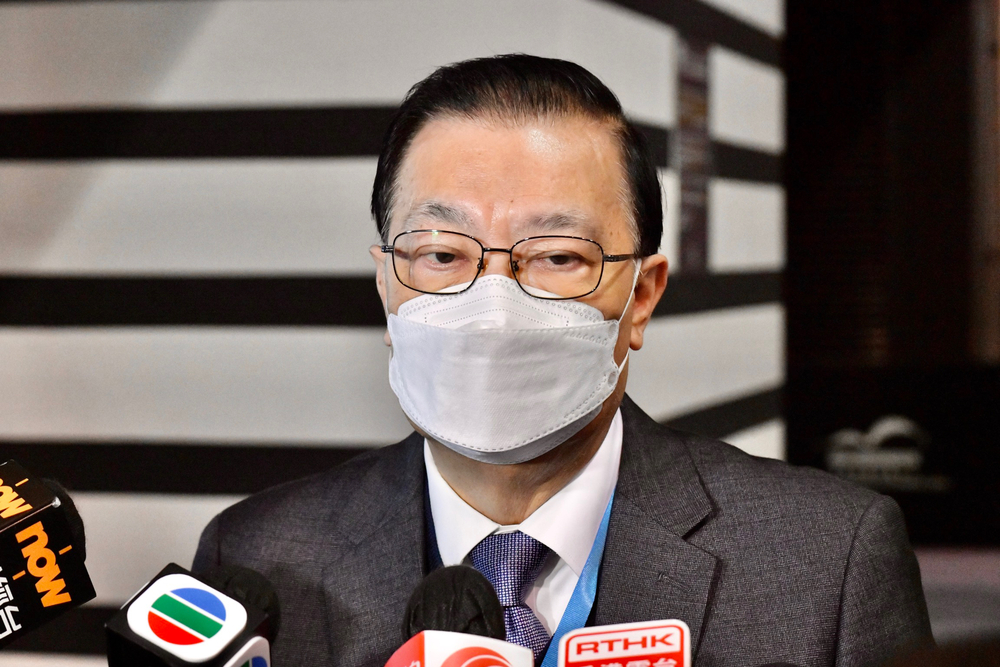
Tam Yiu-chung says his words on television were a hypothesis.