Read More
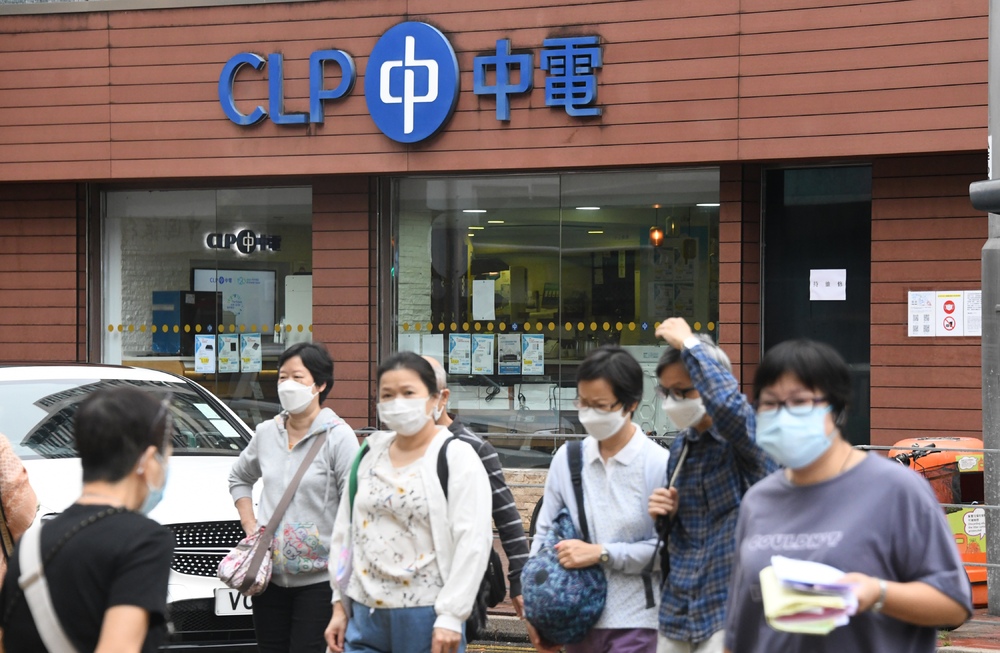
CLP is hiking its electricity tariff to 19.7 percent and Hongkong Electric to a whopping 45.6 percent next year, with the power giants pointing to rising global fuel prices amid an energy crisis caused by the Russia-Ukraine war.
ADVERTISEMENT
SCROLL TO CONTINUE WITH CONTENT
Comparing the tariff this month and the new rate with effect next January, the increment is 6.4 percent for CLP and 5.5 percent for HKE.
Both power companies said they have deployed the Tariff Stabilization Fund to offset part of the increased cost.
For a three-member household using 275 units of electricity every month, the electricity bill will be HK$424.60 for CLP and HK$541.70 for HKE from January. That will be HK$25 and HK$28 pricier respectively than a bill for the same energy usage in November.
Secretary for Environment and Ecology Tse Chin-wan said the two firms have agreed to postpone the recovery of fuel costs and provide special rebates to reduce the final net tariffs.
The charges by the two companies is made up mainly of basic tariffs and fuel clause charges.
CLP - the power supplier for Kowloon, New Territories, and Lantau and outlying islands - will freeze its basic tariff rate for the third year in a row while HKE, serving Hong Kong Island, will raise its threshold by five percent to 11.45 cents per kilowatt hour.
For fuel clause charges, CLP will adjust upward by 7.2 cents from the November 2022 level of 54.80 cents per unit of electricity to 62 cents per unit in January 2023. HKE will raise the charge by 3.7 cents per unit of electricity to 82.50 cents from November's levels of 78.80 cents.
CLP managing director Chiang Tung-keung said global fuel prices have been rising for over a year amid the energy crisis caused by Russia's war on Ukraine.
He cited tariff increases between 43 percent and 102 percent in Singapore, Tokyo and London.
Chan Loi-shun, HKE's executive director, expects a further increase in the company's fuel clause charges next year due to the fluctuating global fuel price.
He said fuel clause charges have increased cumulatively by 51.50 cents during the year, resulting in "an unprecedented increase of the average net tariff by 38.1 percent".
But legislators slammed the power pair for not easing people's burdens amid a recession.
Chan Hok-Fung from the Democratic Alliance for the Betterment and Progress of Hong Kong said the companies should bear their corporate responsibility in easing electricity bill burdens.
"Both companies said the increment was due to the Russian-Ukraine War," Chan said. "I thought the war was expanding to Hong Kong, or their missiles were hitting our power factories."
Lo Wai-kwok of the Business and Professionals Alliance said some sub-divided flat tenants do not have individual electricity meters, and the tariff they pay is even higher than the increment.
A woman named Tse and her daughter are feeling the burden directly. The pair are living in a sub-divided flat on Hong Kong Island, and Tse has to pay her landlord HK$1.80 for every unit of electricity used.
"Maybe we have to spend less on groceries and for my child's food," Tse said, "I feel upset knowing about the tariff hike. It makes our lives even worse."
People said they would consider using less electricity.
One man, Wong, said: "The tariff rises are more than my salary increase."
A woman named Lai remarked: "You can't ask children to save energy. It's only us adults trying to use less electricity."
The manager of a Mong Kok Chinese restaurant said the eatery turns on some 30 air-conditioners every day, and the electricity bill is costing HK$200,000 to HK$300,000 every three months.
He expects the costs for the restaurant to increase by HK$50,000.
Earlier yesterday, William Yu Yuen-ping, chief executive of the non-governmental World Green Organization, said the hikes were inevitable under fluctuations in international energy prices and billions of dollars in fuel costs advanced by the two companies.
But he expects fuel costs will drop after an offshore liquefied natural gas terminal co-owned by the two power giants is built next year.