Read More
The organizer of a Rugby Sevens tournament in South Korea has apologized to the mainland and the SAR governments after a protest anthem written during the city's 2019 social unrest was played instead of the Chinese national anthem.
ADVERTISEMENT
SCROLL TO CONTINUE WITH CONTENT
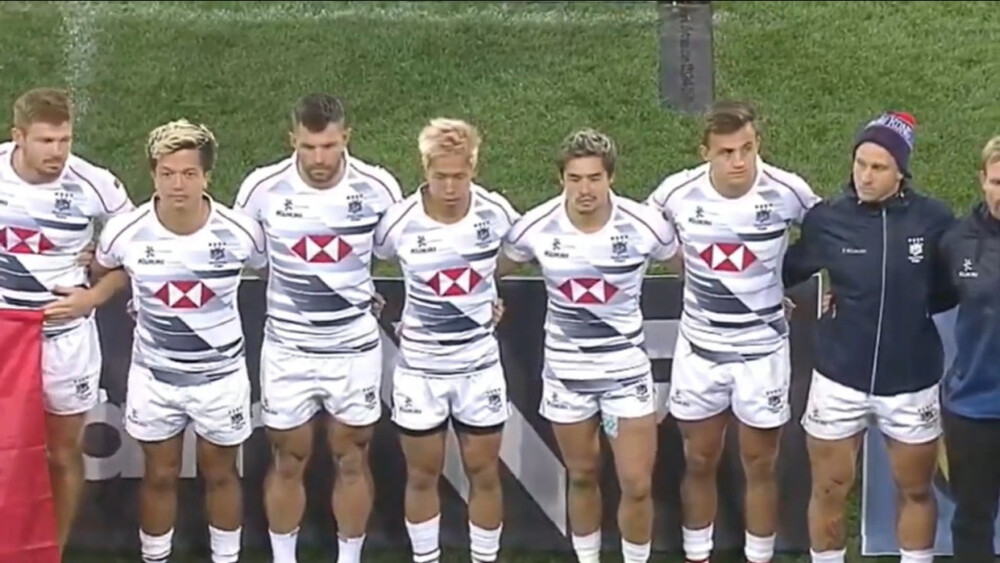
Before Hong Kong's team took on South Korea in the men's final of the Asia Rugby Sevens Series in Incheon on Sunday, Glory to Hong Kong was played instead of the national anthem March of the Volunteers.
The Hong Kong Rugby Union expressed its "extreme dissatisfaction" at the incident and said Asia Rugby, the governing body of the sport in Asia, has apologized.
The organizer said it was caused by human error by a junior staff member.
"While we accept this was a case of human error, it was nevertheless not acceptable," the union said.
Associated Press reported that officials from the Seoul-based Korea Rugby Union said yesterday that the junior staff member handling the national anthems accidentally chose the protesters' song saved in a computer folder named "Hong Kong."
"Asia Rugby and Korea Rugby Union would like to sincerely apologize to the Hong Kong Rugby Union, the government of the Hong Kong Special Administrative Region and the government of the People's Republic of China for this incident," Asia Rugby said.
The Hong Kong government reacted with fury to the incident, saying it strongly deplores and opposes the playing of the song, which came to prominence during the height of the 2019 anti-fugitive bill movement.
A spokesman said the government has demanded that the HKRU deal with the matter seriously, launch a full and in-depth investigation and submit a detailed report, and convey strong objection to Asia Rugby. At a press briefing last night, hours after the various organizers had issued apologies for the blunder, Chief Executive John Lee Ka-chiu said the incident was "unacceptable."
He said Chief Secretary for Administration Eric Chan Kwok-ki had met with the South Korean Consul General in Hong Kong and demanded a thorough investigation into the incident.
Police will also investigate whether the incident violated the national anthem ordinance or other laws.
The song - identified by the spokesman only as "a song closely associated with violent protests and the independence movement in 2019" - was not named in the government statement, but the instrumental track of Glory to Hong Kong is clearly audible in footage of the incident at Sunday's match.
The song was written and released online by protesters in August 2019 amid protests against a proposed amendment to the city's extradition bill.
Its lyrics, in Cantonese, describe values associated with the protest movement such as democracy, freedom and liberty, and a populace that remains resolute even in the face of tears and bloodshed.
One English translation of the song directly references the first line of the Chinese national anthem: "Arise! Ye who would not be slaves again."
The Chinese national anthem, March of the Volunteers, was written in 1934 amid the Japanese invasion of Manchuria, which sparked a nationalistic boom in China.
Hong Kong's 19-12 victory over Korean on Sunday paled in comparison to the reactions that followed the match, as pro-establishment politicians strongly criticized the protest song. Secretary for Culture, Sports and Tourism Kevin Yeung Yun-hung said he was extremely dissatisfied with the incident, describing the song as closely associated with the riots that promoted Hong Kong independence.
He also said authorities will launch a probe and conduct discussions on the matter with the Hong Kong Sports Federation and Olympic Committee and other sports associations.
The vice-chairman of the Democratic Alliance for the Betterment and Progress of Hong Kong, lawmaker Brave Chan Yung, slammed the government's failure to implement a mechanism for athletes to respond to deliberate or unintentional insults during competitions.
"There is no excuse for playing a song involved with violent protest," Chan said.
Lawmaker Junius Ho Kwan-yiu, of the Election Committee constituency, said "members of the teams showed no response during the incident" and that the only solution was to dissolve the team.
Lawmaker Joephy Chan Wing-yan, of the Federation of Trade Unions, called on the government to deal with the matter in accordance with the national security law.
She called on the foreign ministry in Hong Kong and the police national security department to investigate whether there were "pro-independence forces colluding with overseas anti-China forces" to wipe out national security threats.
Senior counsel and Executive Council member Ronny Tong Ka-wah said the playing of the song was "definitely not unintentional."
He added that those involved could face legal repercussions linked to the sedition charge under the crimes ordinance, the national security law or the national anthem ordinance.
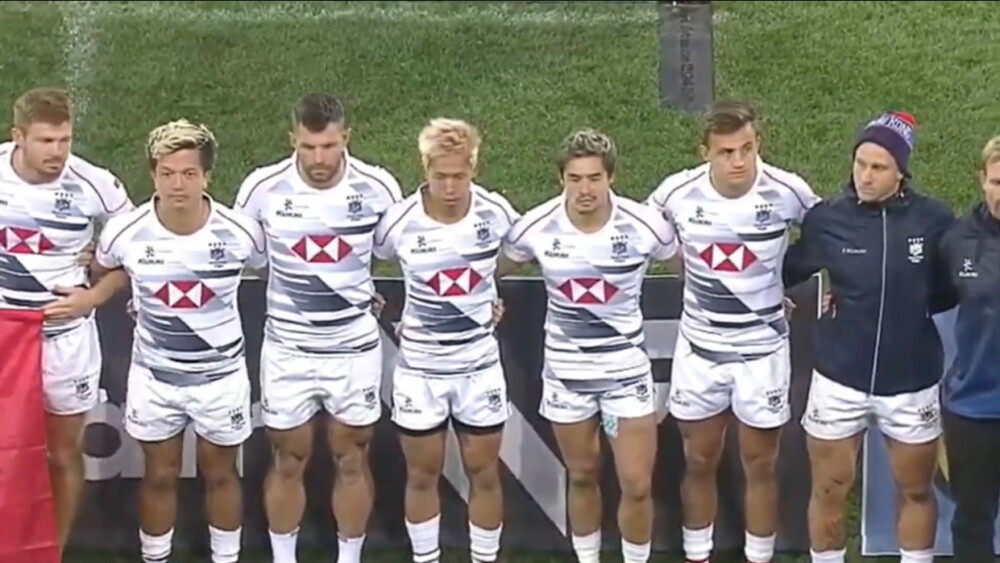
The Hong Kong team stands as Glory to Hong Kong is played instead of March of the Volunteers. Asia Rugby