Read More



Night Recap - April 3, 2026
8 hours ago

Iran demands transit fees in yuan, stablecoins for Strait of Hormuz passage
03-04-2026 02:45 HKT
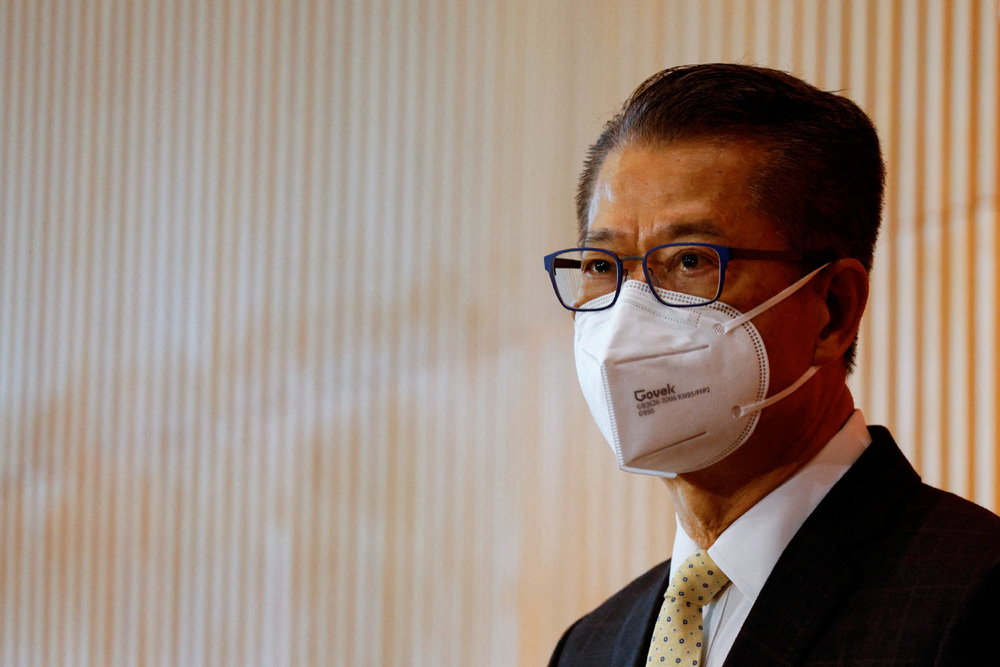
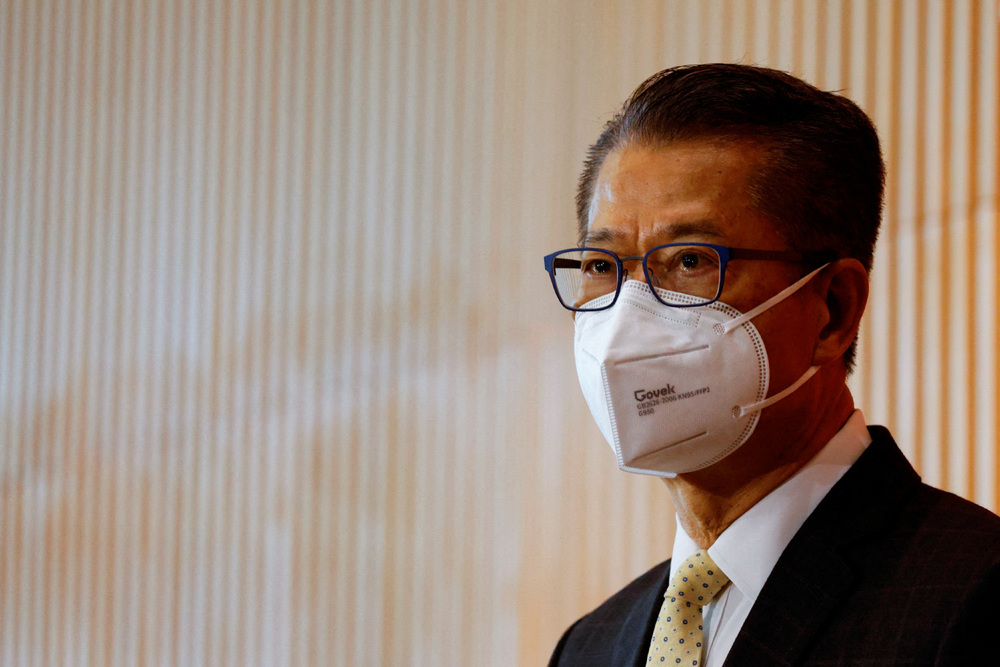
Hong Kong may see a deficit of more than HK$100 billion this financial year, the second worst in history, Financial Secretary Paul Chan Mo-po says.
It would be almost double the HK$56.3 billion deficit announced in the budget in February, with the government's fiscal reserve falling to HK$800 billion.
Chan said on his blog yesterday that the huge deficit was due to less income and higher expenses amid the pandemic, with a negative growth of commodity exports and a weak stock market and property market.
"Both the external economic momentum and conditions of local markets have encountered a strike by the epidemic and the tightened monetary policies of central banks," he said.
"The government's fiscal reserves may fall further to the edge of HK$800 billion.
"If we exclude the HK$35 billion from the green bonds to be issued this year, the deficit will be even worse," he added.
Chan said the deficit for this financial year would be the second highest,behind the HK$232.5 billion recorded in 2020 when the pandemic started.
In terms of income, the average daily turnover of Hong Kong stocks from April to August this year was HK$117 billion and was 26 percent less than the same period last year.
The volume of residential turnover in the first four months of this year also decreased by 37 percent.
"Due to the weakness of the stock and property markets, stamp duty revenue may be about one-third less than expected," he said.
In addition, land premium revenue for the first five months of the year was HK$17.2 billion, a far cry from the estimated revenue of HK$120 billion for the year.
Chan said the government will review and launch new measures to alleviate financial pressures on enterprises, such as to extend the grace period for the rental of property and estates, as the rental enforcement moratorium ended in July.
He said the counter-cyclical measures totaling more than HK$170 billion in the budget at the beginning of the year has led to an estimated deficit of more than HK$56 billion, but not including the subsequent launch of the HK$43 billion 2022 Employment Support Scheme and the sixth round of the Anti-epidemic Fund.
Chan said the economic outlook is still challenging and the economic environment is grim in the coming quarters, but he also pointed out that the situation has stabilized compared to the first half of the year, with the unemployment rate falling from a high of 5.4 percent in February to April to 4.3 percent in May to July.
"The total number of unemployed people has gradually fallen from 200,000 to below 170,000, and the improvement is expected to continue," Chan said.
He said the key to economic improvement is better control of the epidemic and that the border reopening is still the core of restoring economic momentum.
Andy Kwan Cheuk-chiu, director at ACE Centre for Business and Economic Research, agreed the deficit may meet HK$100 billion, with a continuous decline of the Hong Kong economy.
To avoid Hong Kong "nibbling on reserves," Kwan said the top priority is to reopen borders with both the mainland and overseas, as well as "reduce stamp duty, stabilize the property market, and solve the labor shortage caused by the emigration wave and outflow of talent."
However, Terence Chong Tai-leung, economic professor at Chinese University, said it is too early to estimate the financial situation with six months to go until the end of this financial year. He said: "I think the deficit will only be HK$10 billion to HK$20 billion, since the income from taxes and stock is quite stable and this year's handout will be less than 2020."
stacy.shi@singtaonewscorp.com
Editorial: Vital answer to economic crisis