Read More


Morning Recap - April 17, 2026
53 mins ago




Chinese auto giant BYD's female CFO earns more than its founder last year
15-04-2026 19:12 HKT
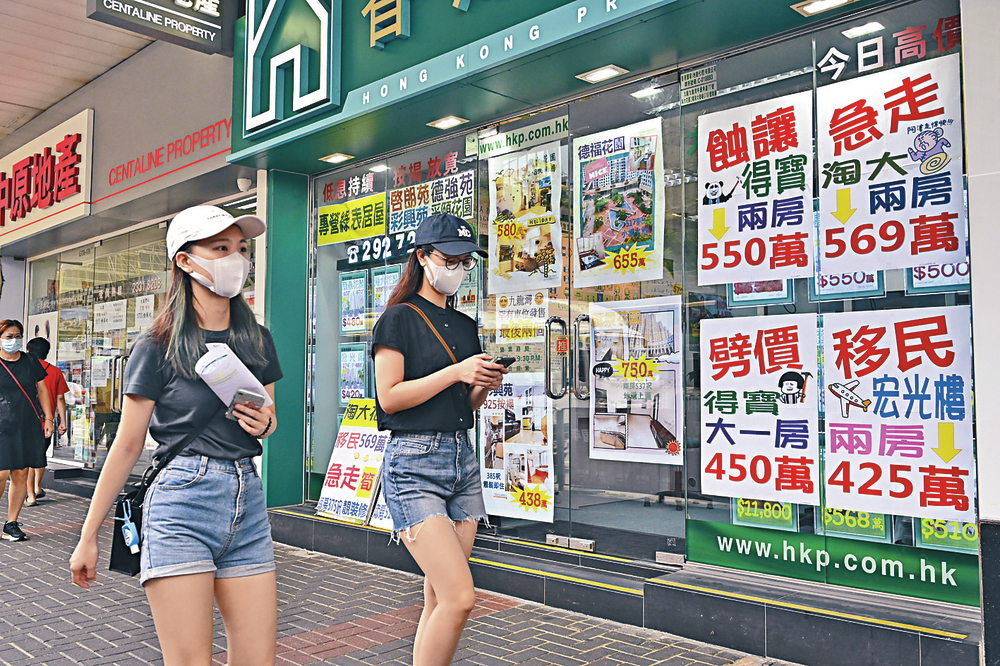
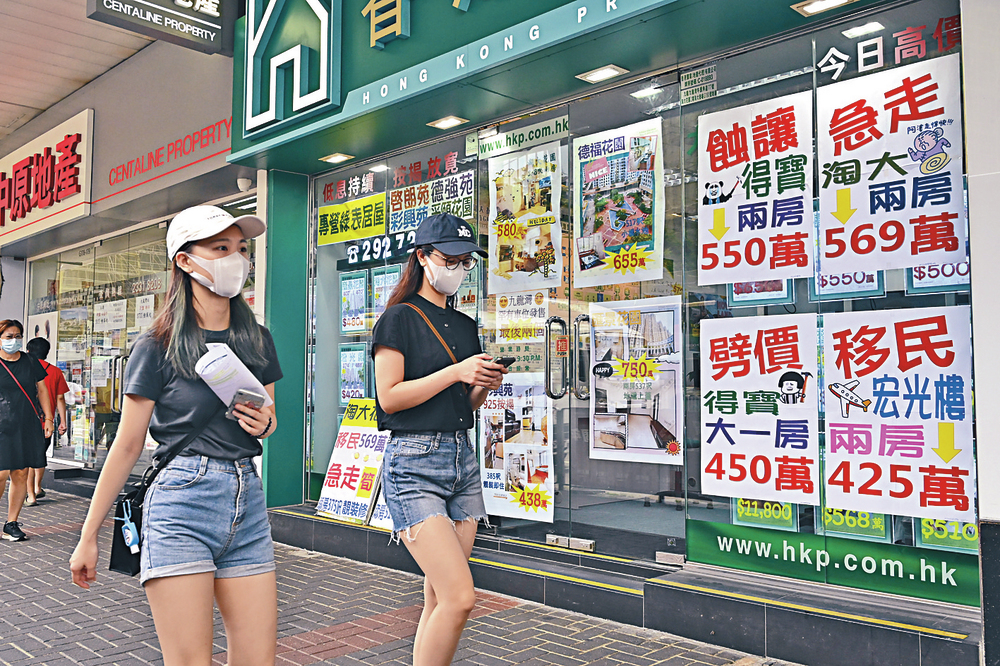
Hong Kong's private home prices fell at a faster pace in June to the lowest level since December 2020.
And the Hibor-linked mortgage rate reached its cap yesterday as interest rate hikes loom.
The home price index fell 1.1 percent month-on-month in June to 380.5 compared to a 0.2 percent decline recorded in May, data from the Rating and Valuation Department shows.
That figure was 3.4 percent lower than 12 months ago, with the accumulated drop in the first half of this year also 3.4 percent.
Home prices in the SAR have in fact decreased by 4.4 percent since the historic high recorded last September.
The prices of small and medium-sized flats fell 1.1 percent in June, extending the 0.2 percent dip recorded in May.
Of these, prices of flats under 40 square meters fell 1.8 percent month-on-month, while those for homes between 40 and 69.9 sq m slid 0.5 percent. Flats sized from 70 to 99.9 sq m also saw their prices drop by 1.8 percent.
Flats above 100 sq m also slipped by nearly 1.6 percent. They have fallen by 4.7 percent in the first six months of the year compared with the corresponding period in 2021.
The latest data mainly reflects the market situation from mid-May to early June, when homeowners looking to sell their properties were forced to offer larger price cuts to attract buyers.
That was due to a 0.75 percentage point interest rate rise and the rebound in Covid cases in the SAR, said Derek Chan, head of research at Ricacorp Properties.
The downward pressure on home values does not show signs of easing as yet, Chan added, as many new homes carrying competitive prices have gone on sale.
So pressure has gone on the secondary homes market, and Chan expects this month will see prices dropping by another one percent.
Chan also says there would be a "lifeline" for the property sector if the pandemic is brought under control and border restrictions are lifted in the second half of this year.
Such a turn of events should see overall property prices rebound or even recover the losses incurred in the first six months of this year, Chan added. Otherwise the full-year price may see a decline because local banks are projected to follow the United States and raise the prime rate.
Despite the latest drop in prices, Louis Chan Wing-kit, the Asia Pacific vice chairman for Centaline Property Agency's residential division, believes properties will continue to be a major tool for Hong Kong people to combat inflation.
On that, he pointed out that the real estate sector actually outperformed other investment area in the first half of the year.
The Hang Seng Index shed 6.6 percent in the first six months of this year and by yesterday had lost more than 10 percent since January 1.
Meanwhile, the one-month Hong Kong interbank offered rate climbed to 1.3 percent yesterday, sending the Hibor-based mortgage rate to its capped 2.5 percent. Although the cap will stop homeowners' costs from soaring further it is obvious that the financial weights on their shoulders are greater.
For a homeowner with a 30-year mortgage of HK$5 million monthly repayments have surged by HK$2,786, or 16.4 percent at the capped mortgage rate compared to just 1.38 percent 12 months ago, according to consultant mReferral Mortgage Brokerage Services.
Some local banks may increase the cap to mitigate the impact of the rising funding costs before bumping up the prime rate, said Ivy Wong, managing director of Centaline Mortgage.
She expects the best lending rate to be raised as soon as this quarter if the one-month Hibor jumps to between 1.5 percent and 2 percent and the aggregate balance shrinks to below HK$100 billion from the current HK$165 billion.
So she advises home buyers to speed up mortgage applications before the banks escalate the cap or the rate, which would means a higher requirement for an applicant's income level.
The flurry of property-based financial readings came as Secretary for Financial Services and the Treasury Christopher Hui Ching-yu said the liquidity in the banking sector is the key factor determining whether local banks will follow US interest rate hikes.
Home prices are affected by the overall economy rather than simply following the changes in interest rates, Hui said in a radio program yesterday, while he reiterated that Hong Kong's financial system is stable even amid the rate hikes.
aiden.he@singtaonewscorp.com