Read More
Worries about the economic toll of China's strict zero Covid policy intensified yesterday as news that lockdowns were spreading to Beijing sent stocks, the yuan and commodities tumbling.
ADVERTISEMENT
SCROLL TO CONTINUE WITH CONTENT
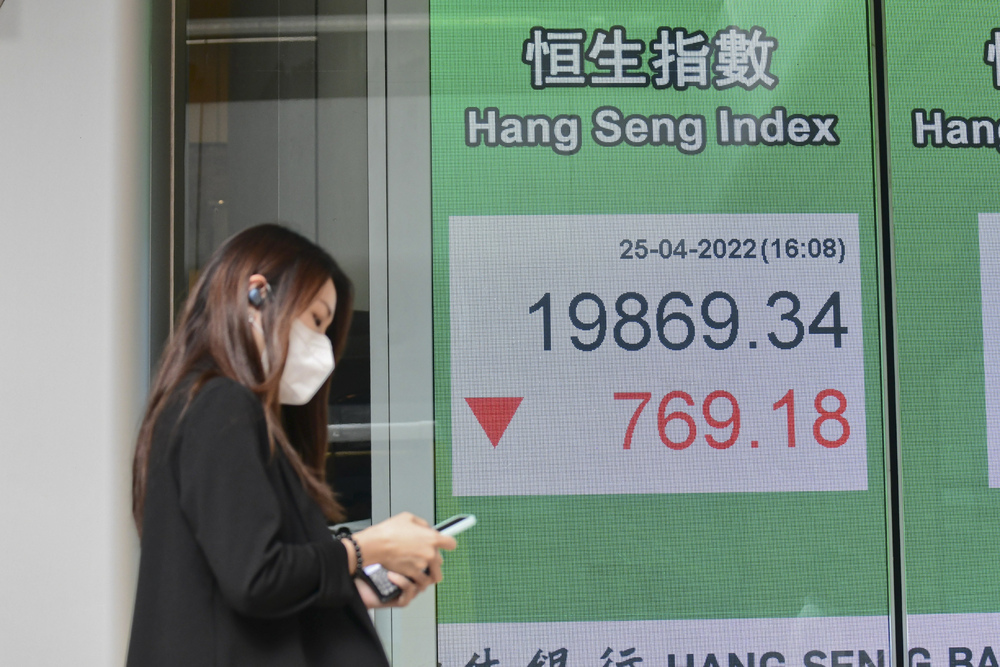
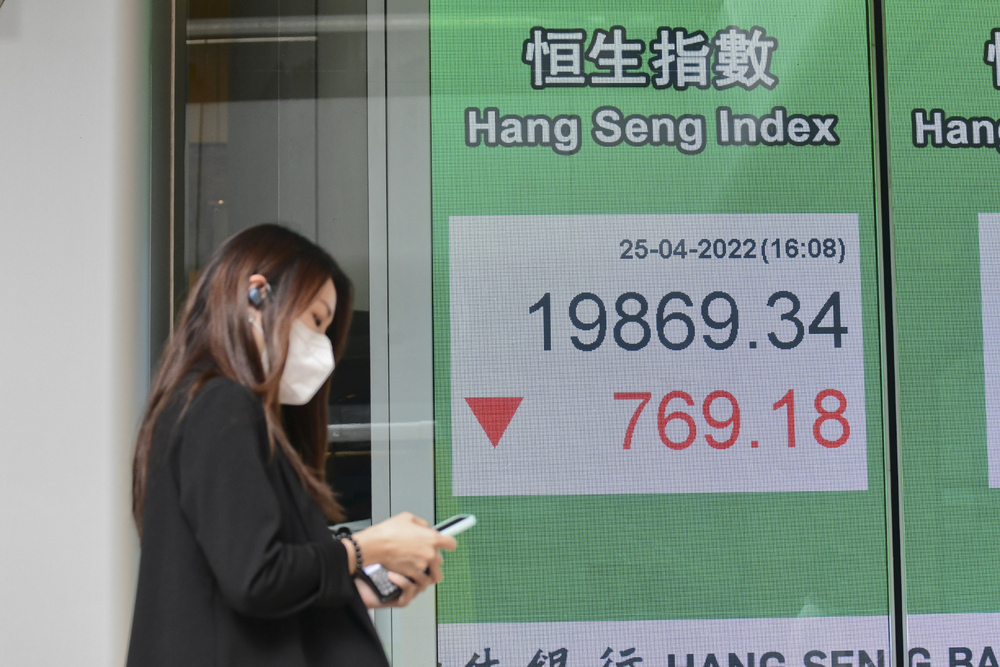
The Hang Seng Index plunged 3.7 percent, or 770 points, falling below the 20,000-points level, while the Hang Seng Tech Index lost 4.9 percent.
The Shanghai Composite Index sank by 5.1 percent, breaching a closely watched support line of 3,000, the biggest decline since February 2020. The Shenzhen Composite Index on China's second stock exchange shed 6.5 percent.
China's yuan fell to a one-year low, extending losses after posting its worst week since 2015.
The onshore yuan closed at 6.5544 to the dollar yesterday, the lowest since April last year.
China's central bank said yesterday it will cut the amount of foreign exchange banks must hold as reserves by one percentage point to 8 percent from May 15, a move seen aimed at slowing the depreciation of the yuan.
Meanwhile, the US dollar climbed to a two-year high versus its rivals and was on track for its biggest daily gain in more than six weeks as a wave of risk aversion swept through global markets, boosting the greenback's safe-haven appeal.
Hawkish comments by policymakers last week also raised the risks of aggressive policy tightening by global central banks. Money markets expect the Federal Reserve to raise interest rates by half a point at the next two meetings and the European Central Bank to raise interest rates by 25 basis points in July.
"Concerns around rates and recession are now the biggest risks for investors" with a particular focus on demand, said Candace Browning, head of global research at Bank of America.
The oil price also sank below US$100 (HK$780) due to a weaker demand outlook on China's lockdowns.
In Hong Kong, all but three of the 66 blue-chip stocks dropped yesterday. Alibaba (9988) fell 5.5 percent while Tencent (0700) lost 3.9 percent
Chinese hotpot chain Haidilao International (6862) tumbled 15.8 percent, the worst performer among blue chips. Shares of China Merchants Bank (3968) slumped 10.3 percent to the lowest in more than one year as its former president is investigated by the top anti-graft body for suspected violations.
However, Cathay Pacific Airways (0293) rose 3.7 percent after the government announced the end of a two-year-old ban on non-residents flying to the city.
The renewed selling comes as investors grow weary about a lack of follow-through on policy promises last month to shore up growth and stabilize markets. Markets shrugged off Friday's latest policy vow from the People's Bank of China to ensure stability, which repeated commentary seen in the past month.
Analysts have started downgrading economic growth forecasts for this year below the government's 5.5 percent target, given the extent of the lockdowns, after several manufacturers and car makers highlighted supply-chain disruptions.
The bashing continued in Europe. The pan-European STOXX 600 index dropped to its lowest since mid-March, led by a 2 percent drop in French shares and a 1.9 percent fall in Germany.
The euro slid 0.7 percent to its lowest since the initial bout of Covid panic in March 2020.