Read More


Amber rainstorm warning issued at 11am
18 hours ago
Iran demands transit fees in yuan, stablecoins for Strait of Hormuz passage
03-04-2026 02:45 HKT
The 48-minute power outage on Hong Kong Island in the early hours of Wednesday was caused by human error due to a mistakenly connected "backup" cable that had not been used for over a decade.
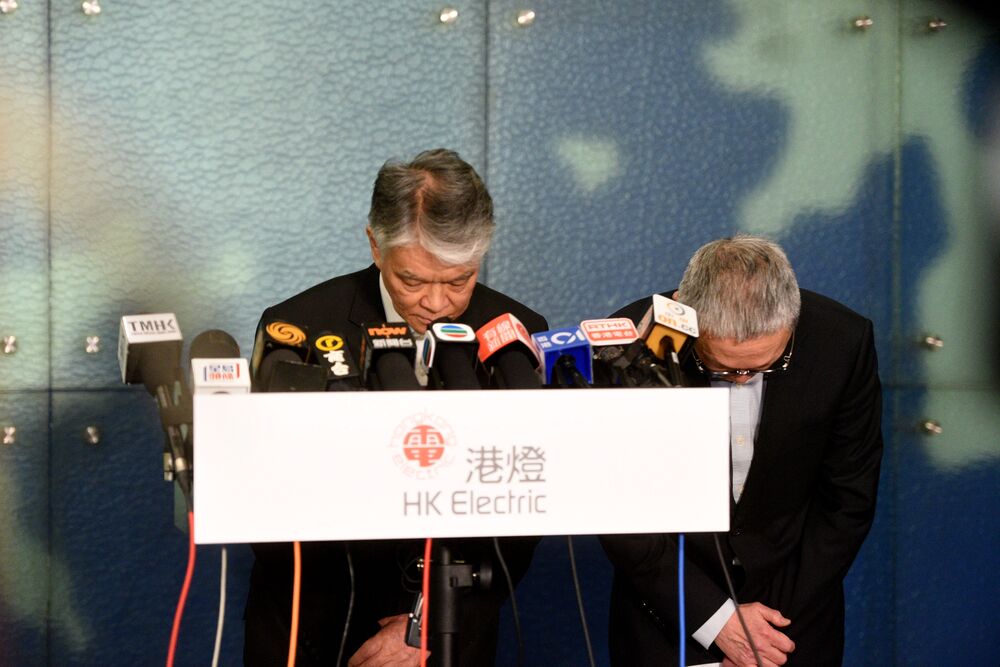
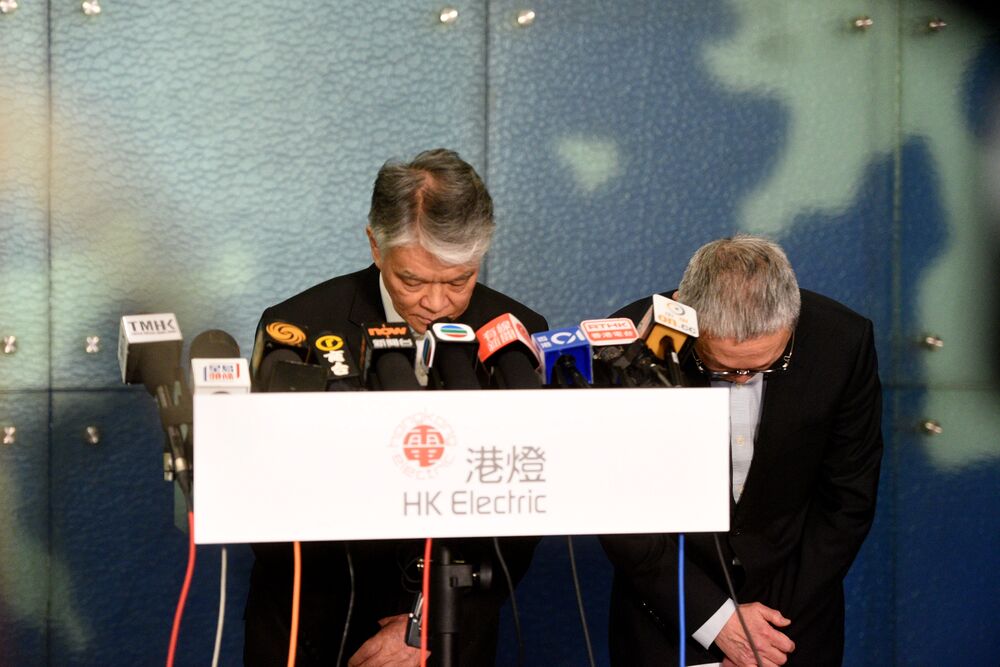
This was revealed late last night at a 14-minute briefing by two Hong Kong Electric officials - almost 45 hours after the blackout that affected Southern, Eastern, Wan Chai, Pok Fu Lam and Central districts.
HKE general manager of transmission and distribution Ip Sung-tai said the outage was triggered after a backup cable placed inside a Cyberport electrical substation over a decade ago was accidentally energized.
When carrying out maintenance in the early hours of Wednesday, engineers who were not aware of the existence of the cable accidentally electrified it, causing a short circuit, Ip said.
As the backup cable had no protective cover, it took the company a longer time to separate the cable from the circuit, he added.
Ip said the company found a similar backup cable in the same substation and has suspended maintenance there.
Operations director Francis Cheng Cho-ying, who with Ip bowed to apologize to affected customers, said the company leads the world in the stability of power supply.
He stressed the accident was "rare" and the company will deploy more staff to review circuit diagrams of other substations to prevent similar incidents.
HKE said the outage was triggered at 12.49am and that power was restored fully at 1.37am.
Sources earlier said company engineers started repairs immediately and used backup cables to resume the power supply. But it took a while to carry out examinations to avoid another mistake.
It was noted too that human error was involved so the company had an undeniable responsibility.
"It was fortunate that there were backup cables this time," one expert said. "Otherwise the oxygen concentrators at hospitals that require constant power supply would shut down and many patients might die."
Hours before the briefing, legislators called for the plugging of a "loophole" as HKE is entitled to incentive awards even when it is at fault for an outage so long as it restores electricity within a certain time period.
According to a scheme of control agreement between the government and power suppliers the firms qualify for a reward based on earnings should they achieve an average grid supply restoration time of less than 65 minutes. HKE last year earned HK$2.95 billion, and Wednesday's incident means it could receive a HK$5.5 million reward.
Power firms can receive a 0.01 percent reward if they manage to restore the power supply between 65 and 70 minutes. But they face a 0.01 percent penalty if they restore power within 80 to 85 minutes and a 0.015 percent penalty for more than 85 minutes.
Legislator Edward Leung Hei of the Democratic Alliance for the Betterment and Progress of Hong Kong described the incentive adjustment arrangement as a loophole.
It is the power suppliers' responsibility to ensure a stable supply of electricity, he said, and it was unacceptable that HKE could still be rewarded for power outages. A power company is already allowed an 8 percent annual rate of return and they can raise tariffs yearly.
Leung also said authorities should set up punishment arrangements for each blackout incident - similar to the MTR fare adjustment mechanism, instead of calculating the average power restoration time.
"It is unacceptable power companies can be rewarded for their mistakes," he said. "I believe citizens feel the same way."
Legislator Kwok Wai-keung of Hong Kong Federation of Trade Unions, who criticized HKE for responding slowly, asked whether there is a manpower shortage in the engineering sector.
Eric Cheng Ka-wai, a professor in Polytechnic University's Department of Electrical Engineering, said human error could have been avoided.
"The engineer should have detected the connection error when changing the power system, so some steps during maintenance were left out," he said.
The maintenance should be supervised by multiple engineers and they must double check all the switches and cables are in the right places before turning on the power, he said.
Edward Lo Wai-chau of the Hong Kong Institution of Engineers' electrical division said power suppliers should make risk assessments and prepare emergency plan when maintaining high-voltage components.
He also appealed to the power firms to strengthen training for their engineers.
CLP, the other power giant in the SAR and which also signed the agreement with the government, yesterday said authorities will review the arrangement with the two companies this year, including discussing the incentive adjustments.
wallis.wang@singtaonewscorp.com