Student activist Lin Lin led protests against Myanmar's junta, defying the generals for months before being hunted down and caught.
Now serving a 15-year sentence, she regrets nothing.
"I wanted to do that more than anything else," she said during her trial.
"And if you ask what I will do if I am released, I will do it again."
The 25-year-old psychology student grew up during a rare semi-democratic interlude in Myanmar.
When the military staged a coup in February 2021 citing unsubstantiated claims of electoral fraud, she joined millions demonstrating in the streets.
Soldiers fired live bullets into the crowds, arrested thousands and carried out nighttime raids on suspected dissidents.
The protests fizzled out, but she was determined to find a way to keep anti-junta defiance at the top of people's minds.
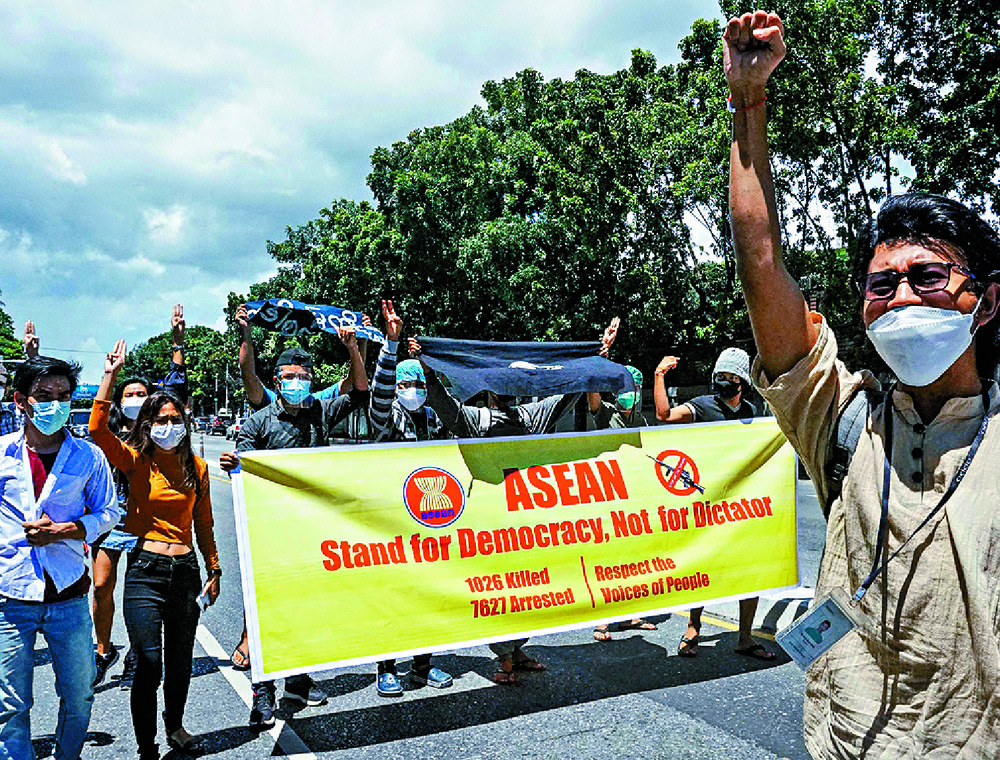
Inspired by democracy flashmobs, she began organizing protests around Yangon.
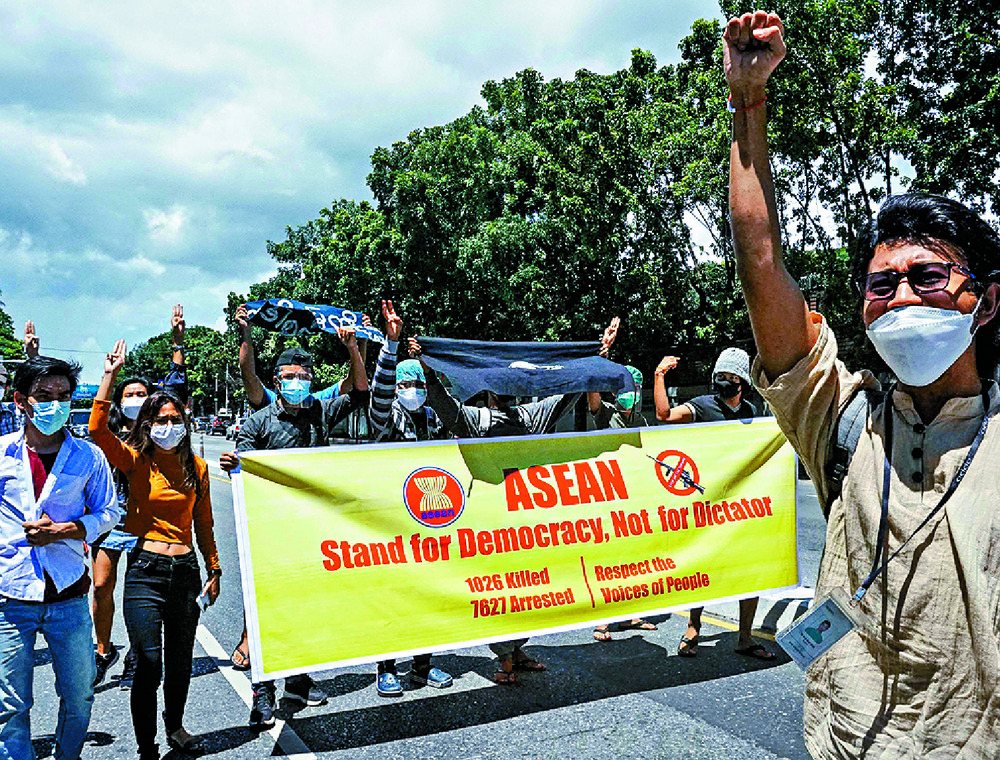
She used messaging apps to summon dozens of young protesters, who would converge under colonial-era tenements, outside malls, or at parks and markets.
They would light flares and unfurl banners, a thicket of hands raised in the Hunger Games-inspired three finger salute popular among democracy activists.
Others criticized the junta through megaphones as passers-by looked on.
Seconds later, they would break apart, scattering down side streets or into waiting vehicles before security forces could arrive.
Each event was filmed and the footage uploaded to social media or sent to journalists abroad.
"During protests, I have so much adrenalin," she said from a dim, bare room that would be home for two days. "It's like my heart is trying to come out of my mouth."
With the military tightening its grip on Yangon, the rush of each protest was followed by fear.
Lin Lin said goodbye to her family and went underground in the city of eight million, changing safehouses every few days and always dreading a knock at the door.
"I can't sleep the whole night," she said then. "When I see the sun's rays, I feel like I'm safe. After that, I can sleep well."
Security forces have used torture and sexual violence in their crackdown on dissent, rights groups say, and in 2022, the United Nations rights office said at least 290 people had died in custody.
A flash protest in December 2021 organized by another student group in Yangon was rammed by a passing military vehicle, leaving at least three wounded.
Lin Lin's luck ran out that same month.
As she made her way to a protest rendezvous, plainclothes police arrested her.
"I had prepared for the worst but when suddenly faced by it, I just said 'Huh?'" she said from prison. "I was also thinking to run at first, but the road was very open and they had guns."
In March 2022 a junta-controlled court jailed her for three years under a law that outlaws any action deemed to undermine the military.
The junta has exploited this law - authored during the colonial era - as a catch-all weapon against dissent, using it to jail protesters, actors, and journalists.
Lin Lin was jailed another two years for possessing a fake ID.
More than 26,000 political prisoners have been arrested since the start of the coup, according to a local monitoring group.
The monotony of life in prison is broken occasionally by food parcels from home.
Only when she sees family members in court is Lin Lin able to hear news of the turmoil that continues to rock Myanmar more than three years since the coup.
"I avoid depression by thinking of what I did before I was arrested," she said.
She also writes letters to the friends she protested alongside.
"She never mentions her feelings," said Helen, who helped Lin Lin organize flashmob protests and also spent time in jail.
"She doesn't want us to be depressed," she said.
With the military monitoring letters to inmates, political topics are off-limits.
Instead, they write of hotpot and plan trips they will take together in the future.
But last month, a court sentenced Lin Lin to another 10 years for contact with a "terrorist" organization.
"I'm worried she can't make it if she has to stay in prison for too long," Helen said.
Lin Lin has stopped counting down the days to her release date.
"I don't want to ask myself how long it is before I can come home," she said. "I just accept I can come back home after the revolution [against the junta] has won."
Lin Lin says she would stillorganize flash mob protests if she were out of prison.