Co-organized by The Standard and Sing Tao The Standard Overseas Property Online, the Overseas Property FB Live gathers insights from industry professionals and introduces outstanding property projects from top markets around the world.
ADVERTISEMENT
SCROLL TO CONTINUE WITH CONTENT
Cambodia’s property market is on a roll. Buoyed by strong economic growth and an attractive investment environment, the sector continues to trend upward.
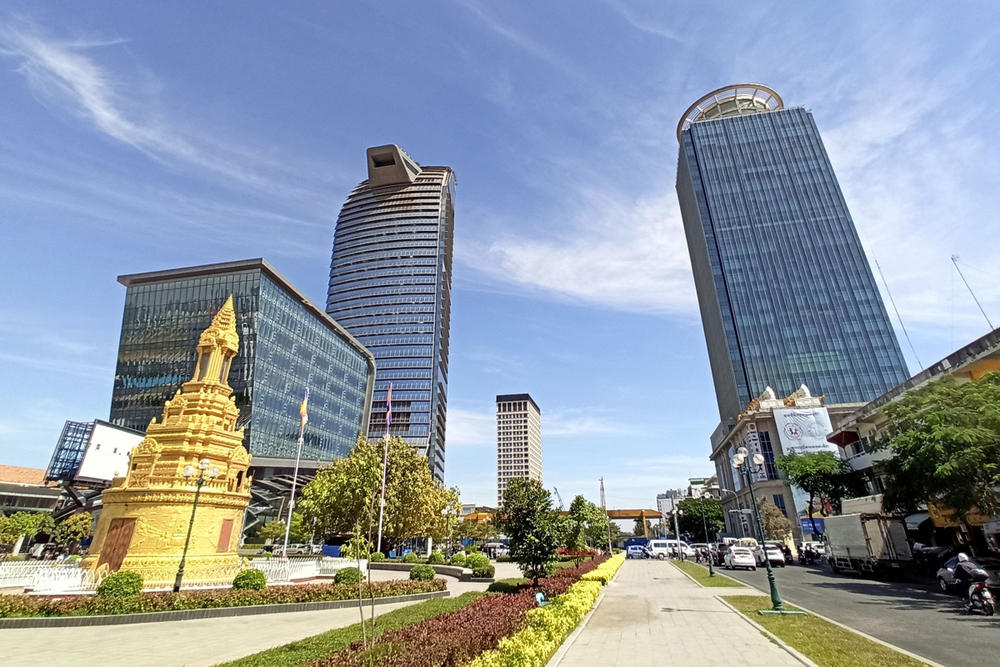
Phnom Penh, as the capital and most populous city in Cambodia, has grown to become the nation’s economic, industrial and cultural center. Having undergone a rapid transformation, recent years have seen modern infrastructure and comprehensive transportation network being developed in the city.
George Lee, Director – Marketing of Penta Global Ltd, a leading Hong Kong developer with projects in Cambodia, likens Phnom Penh to fast-growing Shanghai and Shenzhen in the 1990s. “With a low entry threshold, investors should seize the opportunity to enter the housing market,” he notes.
The use of the US dollar in Cambodia is a major attraction for foreign investors. “As the HK Dollar is pegged to the US Dollar, it hedges against currency exchange risks,” Lee explains. “There is no foreign exchange control – money can be transferred freely and easily to and from Cambodia.”
Commenting on the investment climate, Cecilia Wong, Director – Business Development of Penta Global Ltd., points out that the local government has since 2010 allowed for permanent property ownership by foreigners, meaning overseas investors can own 100 percent of their properties by strata title with stamp duty.
Another incentive, she says, is that flexi-payment plan based on the property construction progress is a common practice to protect investors.
An integral member of the ASEAN community and a major starting point of China’s Belt and Road Initiative, Cambodia has in recent years witnessed a massive inflow of investments, especially factories that have relocated or expanded there to take advantage of the cheap labor.
“The large youthful population with an average age of only 24, and an influx of foreign labors, boost demand for housing,” says Wong. She adds that investors can capitalize on the Southeast Asian country’s robust economic growth, which has sustained a strong average annual growth rate of more than 7 per cent since 2010.
News are also pouring in about foreign corporations investing in Cambodia’s nascent oil and gas industry, with a particular interest in an area southwest of Phnom Penh where thermal conditions indicate a possibility for oil or dry gas.
“The country will have its first oil field on stream by the end of 2021. The oil production will further support industrial development and sustain its economic growth,” says Wong.
In Phnom Penh, town planning reform is being implemented to reduce the need for a large number of citizens to commute to a central location, like the CBD, for work and essential services. The coming sprawls of Phnom Penh’s redeveloped areas and new satellite cities bring about endless opportunities.
“These smaller municipalities that are adjacent to a major city are transforming rapidly. Offering lower-priced housing than the city centre, real estate in these areas bode well for appreciation,” says Lee.
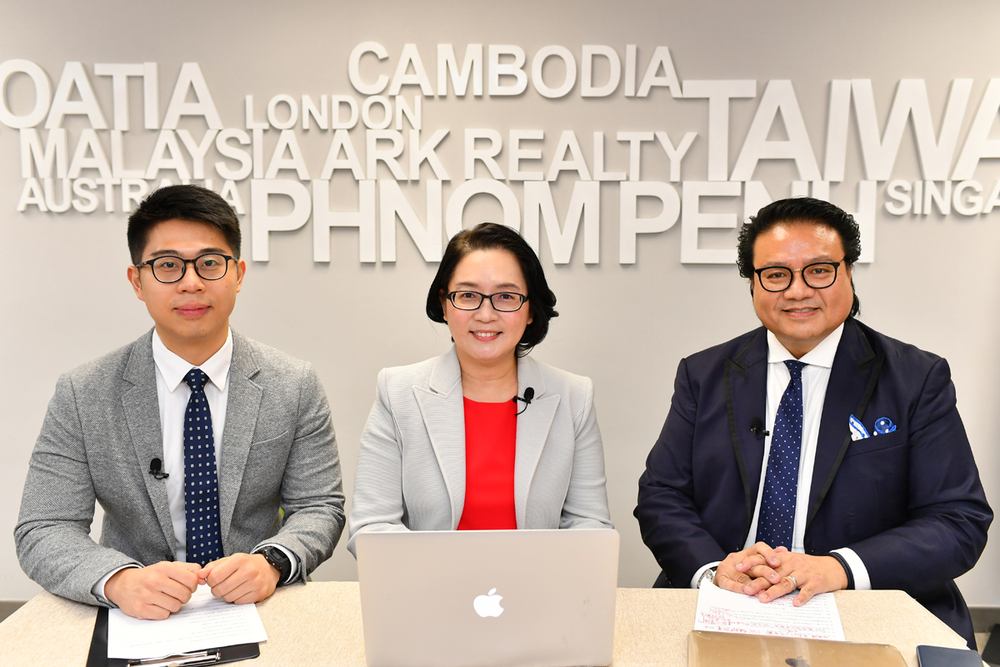
From left: Tsang Kwong Yue, Cecilia Wong, George Lee